

Have you ever sat down to meditate and found your mind racing with grocery lists, old conversations, and random song lyrics? You are not doing it wrong. That is exactly where every beginner starts, and it is the most honest and human part of the whole journey.
Meditation for beginners is not about emptying your mind. It is about learning to watch it without judgment. Over 275 million people practice meditation worldwide today, yet most of them started exactly where you are right now: curious, a little skeptical, and unsure where to begin. This guide covers everything you need to know, from your very first breath to understanding the deeper stages of practice. By the end, you will have a clear, simple roadmap to build a meditation habit that actually sticks.
How Should a Beginner Start Meditating?
Starting a meditation practice does not require a mountain retreat, a special cushion, or years of spiritual study. All you need is a quiet spot, a few minutes, and a willingness to simply sit with yourself. The research backs this up. According to a 2025 mindfulness report, the most common session length among practitioners is just 10 to 20 minutes, and morning practice is the most popular, with 57.8% of meditators choosing to sit right after waking up.
The single most important thing a beginner can do is choose consistency over duration. Five minutes every day will transform your mind far more reliably than a 45-minute session once a week. Think of it the same way you think about physical exercise. A short daily walk builds more lasting fitness than one exhausting weekend hike.

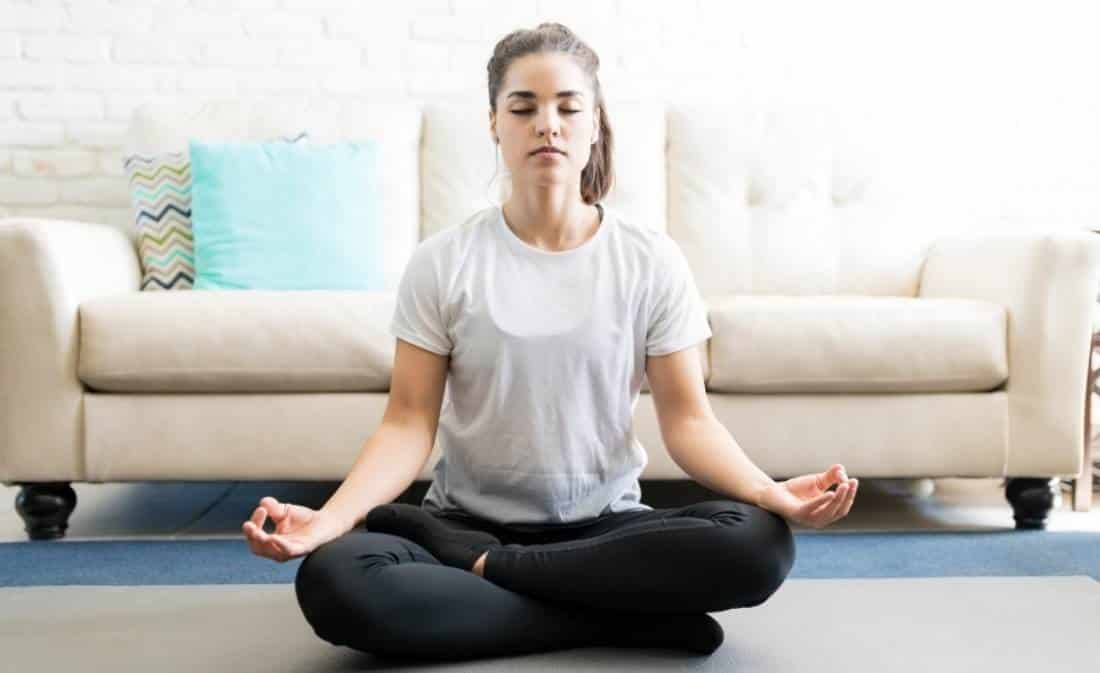
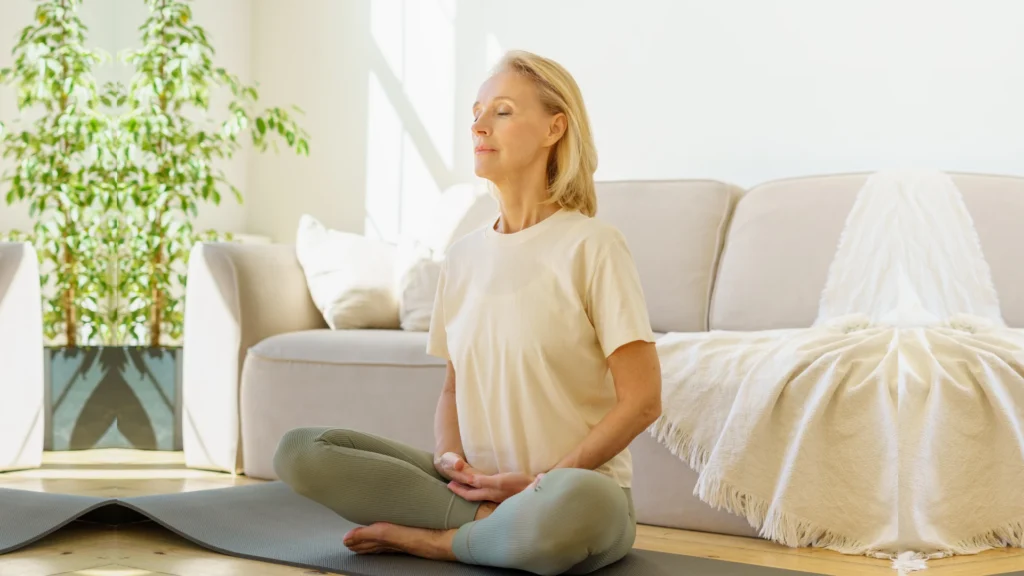
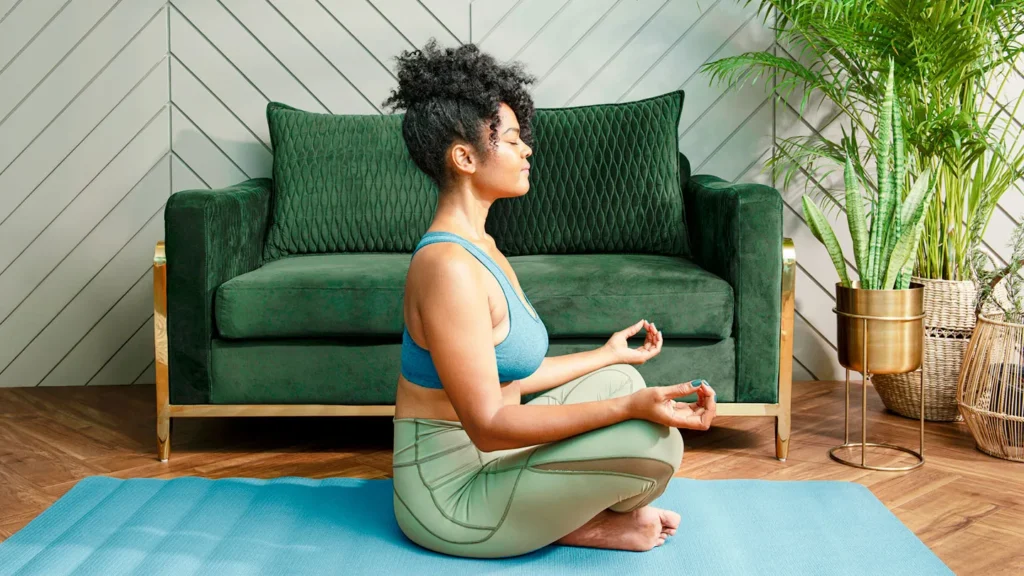
Here is a simple starting framework. Sit in a comfortable position, either on a chair with your feet flat on the floor or cross-legged on a cushion. Close your eyes gently. Take three slow, deep breaths to signal to your nervous system that it is safe to slow down. Then let your breathing return to its natural rhythm and simply observe it. Notice the sensation of air entering your nostrils. Feel your chest or belly rise and fall. When a thought appears, and it will, simply notice it without engaging it, and return your attention to your breath. That is the entire practice for a beginner.
Setting Up Your Space for Success
Your environment shapes your state of mind more than most people realize. You do not need a dedicated meditation room. A corner of your bedroom, a spot on the living room floor, or even a park bench can work beautifully. What matters is that the space feels intentional. A small candle, a plant, or a yoga mat laid in the same corner each day signals to your brain that it is time to settle. Over time, your body begins to drop into a calmer state the moment you enter that space. This is a concept rooted in behavioral psychology, where environmental cues become anchors for specific mental states.
Choosing the Right Type of Meditation
Breath awareness is the most beginner-friendly form of meditation and the one recommended by most yoga and mindfulness teachers for first-timers. However, other approaches work beautifully depending on your personality. Body scan meditation guides your attention slowly through different parts of your body, which is especially helpful if you carry physical tension from stress. Guided meditation, available through apps or audio recordings, gives your wandering mind a gentle voice to follow. Loving-kindness meditation, known in Sanskrit as Metta, focuses on generating feelings of warmth toward yourself and others, and research suggests it can reduce social anxiety significantly within just a few weeks of daily practice.
What Are the 5 R’s of Meditation?
The 5 R’s of meditation form a practical framework that helps beginners navigate the mental activity that arises during a session. Many yoga and mindfulness teachers use this model because it removes the frustration of feeling like you are “failing” every time a thought appears. Thoughts during meditation are not obstacles. They are the practice itself.
The 5 R’s give beginners a repeatable process instead of a vague instruction to “clear the mind.” Here is how each one works in practice.
Recognize is the first step. The moment you notice that your attention has drifted away from your breath or your point of focus, you have already done something remarkable. You have caught yourself in a moment of unconscious thinking. Most people go through entire days without this level of self-awareness. Simply noticing that you wandered is the whole point of the practice.

Release follows immediately. Once you have recognized that a thought has grabbed your attention, you release it without analysis, without criticism, and without curiosity about where it came from. You do not need to solve the thought. You do not need to push it away with force. You simply let it go the way you would let go of a balloon, watching it float upward and out of your immediate focus.
Relax is the gentle reset that comes next. After releasing a thought, many beginners unconsciously tense their jaw, shoulders, or forehead in the effort of concentrating. Before returning your attention to the breath, take one conscious, easy exhale and allow your face and shoulders to soften. This prevents meditation from becoming a strain rather than a practice of ease.
Return is where you bring your attention back to your anchor. Your anchor is whatever you chose to focus on at the start of the session, whether that is the sensation of your breath, a repeated word or phrase, or a physical sensation in your body. Returning your attention after distraction is not a failure. It is literally the exercise. Every return is a repetition, exactly like a curl in the gym.
Repeat is the final and most important R. You will repeat this cycle many times in a single session, sometimes dozens of times in just five minutes. Each repetition strengthens the neural pathways associated with focused attention and emotional regulation. A 2023 peer-reviewed study published in a major medical journal found that MRI scans showed measurable positive changes in brain structure among regular meditators, particularly in areas linked to attention and self-awareness.
What Are the 7 Stages of Meditation?
Understanding the 7 stages of meditation gives beginners a sense of the larger landscape they are entering. This model comes from classical contemplative traditions and has been refined by modern mindfulness researchers. You do not need to rush through these stages. Many practitioners spend months or years at a single stage, and that is perfectly normal.
The 7 stages describe a progressive deepening of concentration, awareness, and inner stillness that unfolds naturally as your practice matures over time.
Stage 1: Directed Attention
This is where every beginner lives at the start. Your attention is placed deliberately on a single object, usually the breath. It keeps slipping away to thoughts, sounds, and physical sensations. Your job at this stage is simply to keep bringing it back. The frequency of distraction is high, but your ability to recognize distraction is growing with every session.
Stage 2: Interrupted Attention
At this stage you can sustain focus for longer stretches, sometimes a minute or two at a time, before a thought pulls you away. The interruptions are still frequent, but they feel less like derailments and more like gentle detours. Most beginners reach this stage within the first two to four weeks of daily practice.
Stage 3: Extended Attention
Your ability to maintain focus has noticeably improved. Thoughts still arise, but they no longer sweep you away for long periods. You begin to notice a quality of quiet in the gaps between thoughts, even if those gaps last only a few seconds. This stage often brings a new motivation, because practitioners begin to feel the real benefits of meditation in their daily life, including calmer reactions to stress and a greater sense of presence.
Stage 4: Continuous Attention
Sustained attention becomes your default during a session. Thoughts continue to arise, but they no longer break your connection to your anchor. You observe them from a slight distance, the way you might watch cars pass on a street from inside a cafe. Research shows that practitioners at this stage often report a 60% reduction in anxiety symptoms after six to nine months of consistent practice.
Stage 5: Tamed Attention
The mind begins to settle naturally at the start of each session, rather than requiring considerable effort to calm down. Your body recognizes the posture and the environment and begins dropping into stillness more quickly. This is where meditation starts to feel genuinely pleasurable rather than effortful.
Stage 6: Pacified Attention
Subtle distractions that previously went unnoticed, tiny physical discomforts, faint background sounds, and micro-thoughts begin to surface and dissolve on their own. The mind at this stage resembles a lake that has stopped being stirred. The surface is largely still, and the depth beneath becomes visible.
Stage 7: Refined and Unified Attention
This is the stage where deep meditative states become accessible. Practitioners report a quality of effortless awareness where concentration no longer requires willpower. The boundary between the meditator and the act of meditating begins to feel thin. Classical traditions describe states such as Dhyana, which is a seamless flow of attention, and ultimately Samadhi, a state of complete absorption. Most modern practitioners may glimpse aspects of these states during retreat or extended practice, and they serve as a north star for the journey.

What Not to Do While Meditating
Most beginner guides focus entirely on what to do during meditation. Equally important is understanding the common mistakes that quietly undermine your practice before it has a chance to take root. Avoiding these errors can shorten your learning curve significantly and prevent the frustration that causes most beginners to quit within the first few weeks.
Do Not Try to Stop Your Thoughts
This is the single most common misconception about meditation, and it causes more people to give up than any other mistake. The goal of meditation is not a blank mind. Thoughts are a natural and continuous function of the human brain. Trying to force them to stop creates tension, not stillness. Instead of fighting thoughts, simply observe them. Let them pass through your awareness the way clouds move across a sky. You are the sky. The thoughts are just weather.
Do Not Meditate When You Are Overly Tired
Many people choose to meditate lying down before sleep, which is a valid practice for relaxation, but it is not ideal for developing concentration. When you are exhausted, the mind slips into drowsiness rather than alert stillness. If you consistently fall asleep during meditation, shift your practice to the morning or a time when your energy level is moderate. Sitting upright with a tall spine helps maintain alertness naturally.
Do Not Expect Instant Results
Modern culture is wired for instant feedback. Meditation does not work that way. The benefits, including reduced stress, better emotional regulation, and sharper focus, accumulate gradually over weeks and months of consistent practice. A large mindfulness research report found that new practitioners with less than two years of experience were significantly less likely to practice daily than experienced meditators. The ones who stayed were the ones who set low expectations and showed up anyway. Commit to 30 days of five minutes each morning before you evaluate whether meditation is working for you.
Do Not Sit in a Position That Creates Pain
Discomfort during meditation is normal. Pain is a signal worth listening to. You do not need to sit in a full lotus position to meditate effectively. If your hips are tight from desk work, sitting in a chair with your feet flat on the floor is a completely legitimate and effective position. Your physical position is a vehicle, not a destination. Forcing an uncomfortable posture will fill your session with distraction and frustration rather than focus and ease.
Do Not Check the Clock
One of the most effective things a beginner can do is set a timer at the start of a session and then commit to ignoring the time completely until it rings. Checking the clock repeatedly destroys any momentum your mind has built toward stillness. Use a gentle timer sound, a soft chime rather than a jarring alarm, so that the end of your session feels like a natural arrival rather than an interruption.
How Long Should Beginners Meditate Each Day?

The answer is shorter than you think, and more consistent than you expect. Research and real-world experience both point to the same conclusion. Ten minutes of daily meditation is enough to produce measurable benefits in stress reduction, emotional regulation, and focus within the first few weeks.
The most common trap beginners fall into is planning long sessions that never happen. A 20-minute intention becomes a 0-minute reality because the bar feels too high on a busy morning. Start with five minutes. Prove to yourself that you can do it every single day without exception. After two weeks, extend to eight minutes. After another two weeks, move to ten or twelve. By the time 10 minutes feels effortless, you will likely find yourself wanting to sit longer naturally.
A practical morning routine that works beautifully for yoga and meditation beginners is to wake up, drink a glass of water, roll out your mat, and sit for ten minutes of breath-focused meditation before any screen time. Then move into a short yoga flow or stretching sequence. This combination primes both your nervous system and your body for the day ahead, and it takes less than 25 minutes total.
Over 56% of regular meditators report practicing daily, with morning being the most common time. The habit sticks when it is attached to an existing anchor in your routine, something you already do every single morning without thinking. Pairing meditation with your morning tea or coffee ritual is one of the most effective ways to make the habit automatic over the first 30 days.
FAQ
Q: How should a beginner start meditating? A: Start with just five minutes of breath-focused meditation each morning. Sit comfortably, close your eyes, and observe the natural rhythm of your breathing. When your mind wanders, gently return your attention to the breath without judgment. Consistency matters far more than duration at the beginning. Five minutes every day is far more effective than 30 minutes once a week.
Q: What are the 5 R’s of meditation? A: The 5 R’s are Recognize, Release, Relax, Return, and Repeat. When a thought appears during meditation, you recognize it, release it without engaging, relax any tension that formed, return your attention to your breath or anchor, and repeat this process as many times as needed throughout the session. Each cycle strengthens your capacity for focused awareness.
Q: What are the 7 stages of meditation? A: The 7 stages move from Directed Attention (early beginner) through Interrupted Attention, Extended Attention, Continuous Attention, Tamed Attention, and Pacified Attention, all the way to Refined and Unified Attention. Each stage represents a deepening of concentration and stillness. Most beginners progress through the first three stages within their first few months of daily practice.
Q: What should you not do while meditating? A: Do not try to stop your thoughts, meditate when you are exhausted, expect instant results, force uncomfortable postures, or check the clock mid-session. These habits create frustration and interfere with the natural settling that meditation requires. The most important thing to avoid is judging yourself when your mind wanders. That is a normal and expected part of every session.
Q: How long does it take to see results from meditation? A: Most beginners notice subtle shifts in mood and stress response within two to three weeks of daily practice. More significant changes in anxiety and emotional regulation are typically reported after six to nine months of consistent practice. Research shows that practitioners who meditate for six to nine months report up to a 60% reduction in anxiety symptoms.
Conclusion
Meditation for beginners is one of the most rewarding and underestimated skills you can build in 2026. It costs nothing, requires no special equipment, and asks for just a few minutes of your morning. The path is not about perfection or a silent mind. It is about showing up, sitting down, and practicing the act of returning your attention, over and over, with patience and without judgment.
You now have everything you need to start. You know how to set up your space, how the 5 R’s guide your in-session practice, what the 7 stages of meditation look like as your practice deepens, and which common mistakes to sidestep before they derail your progress. The only step left is the one you take today.
Start with five minutes tomorrow morning, and let the practice grow from there. When you are ready to explore more deeply, visit YogaSniff to learn more about combining meditation with yoga, breathwork, and mindful living for a practice that transforms every part of your day.