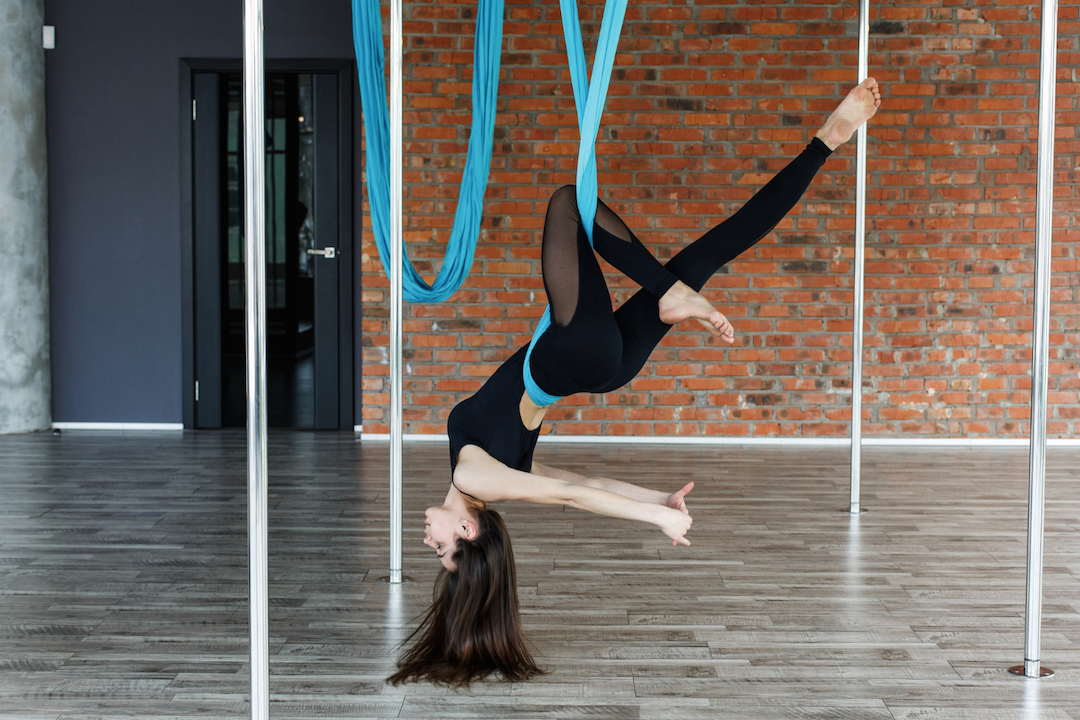


Imagine doing yoga while suspended in a silk hammock, somewhere between the floor and the ceiling — defying gravity in a downward-facing dog that floats, a backbend that requires no strength to hold, an inversion that completely decompresses the spine. This is aerial yoga: simultaneously one of the most playful, most therapeutic, and most photogenic forms of yoga available in 2026.
Aerial yoga — also called anti-gravity yoga — has exploded from a niche circus-arts curiosity into a mainstream practice offered in thousands of studios worldwide. And the growth is accelerating: aerial yoga appears in every major 2026 yoga trend report as one of the fastest-growing formats, drawing in participants who would never set foot in a conventional yoga class. If you have been curious but intimidated, this complete beginner’s guide is your invitation.
If you want to understand the broader aerial yoga landscape before getting started, our complete guide to aerial yoga covers the full history, styles, and options available in 2026.
What Is Aerial Yoga?
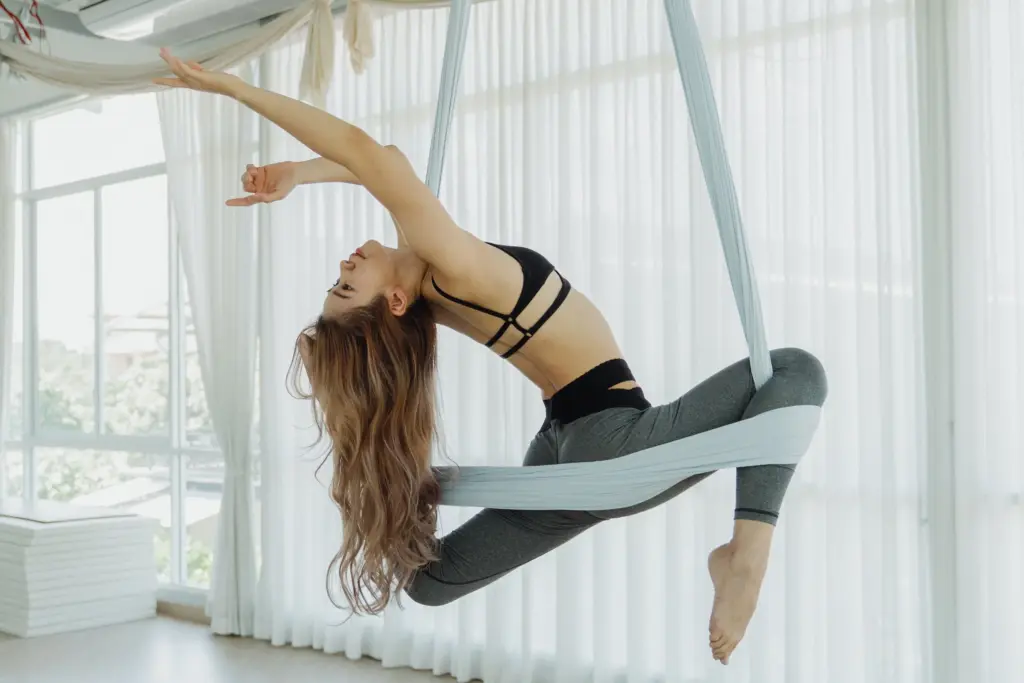
Aerial yoga uses a fabric hammock — typically made of ultra-strong, stretch-resistant nylon or Tricot silk — suspended from the ceiling at approximately hip height to support, assist, and deepen yoga poses. The hammock supports between 300 and 1,000 kilograms of weight (depending on the rigging system) and can be used in multiple ways:

- As a prop: supporting poses like restorative yoga props, allowing deeper stretches and relaxation without muscular effort
- As a suspension point: allowing partial or full body inversions that would be impossible or unsafe without support
- As a resistance tool: creating additional challenge for balance, core strength, and proprioception
- As a complete decompression system: full inversions in the hammock completely unload the spine from gravity, creating therapeutic traction that cannot be replicated on the ground
Benefits of Aerial Yoga (Especially for Beginners)
Spinal Decompression
Gravity compresses the intervertebral discs continuously throughout every waking hour. A full inversion in the aerial yoga hammock — where you hang completely inverted, supported by the fabric around the hips — reverses this compression entirely. The discs re-absorb fluid, the nerve root spaces widen, and the paraspinal muscles completely release. Many practitioners with chronic back pain report aerial yoga as one of the most effective therapies they have found.
If spinal decompression and back relief are your primary goals, compare aerial yoga with the restorative yoga for back pain approach covered on this site to determine which is most appropriate for your specific situation.

Overcome Ground-Level Flexibility Barriers
Many yoga beginners struggle with poses because of insufficient flexibility to achieve correct alignment — the classic example being tight hamstrings making forward folds inaccessible. The aerial hammock effectively removes gravity’s resistance in many poses, allowing beginners to experience the full range of motion of a pose immediately, which accelerates the neuromuscular learning and fascial adaptation that makes the pose achievable independently over time.
Full Body Strength With Lower Joint Impact
Aerial yoga requires significant engagement from the core, arms, and shoulders to maintain positions and control movement in the hammock. This builds genuine functional strength without the compressive joint loading of weight-bearing exercises on the ground. Many people with joint pain, arthritis, or post-injury rehabilitation needs find aerial yoga allows them to build strength comfortably.
The Psychological Benefits of Inversion
Being upside down changes everything. The perspective shift of seeing the world from an inverted position is genuinely and immediately mood-lifting — and this is not just anecdote. Inversions increase blood flow to the brain, stimulate the pineal and pituitary glands, and produce an endorphin response that is reliably described by beginners as joyful. Many people who struggle with motivation for conventional yoga find aerial yoga immediately engaging in a way that makes them want to return.
What to Expect in Your First Aerial Yoga Class
The Environment
An aerial yoga studio typically has individual hammocks hung from purpose-built ceiling rigs at roughly hip height, spaced to allow movement without tangling. The floor is usually padded or mat-covered. The room may be heated, depending on the studio.

The Hammock Setup
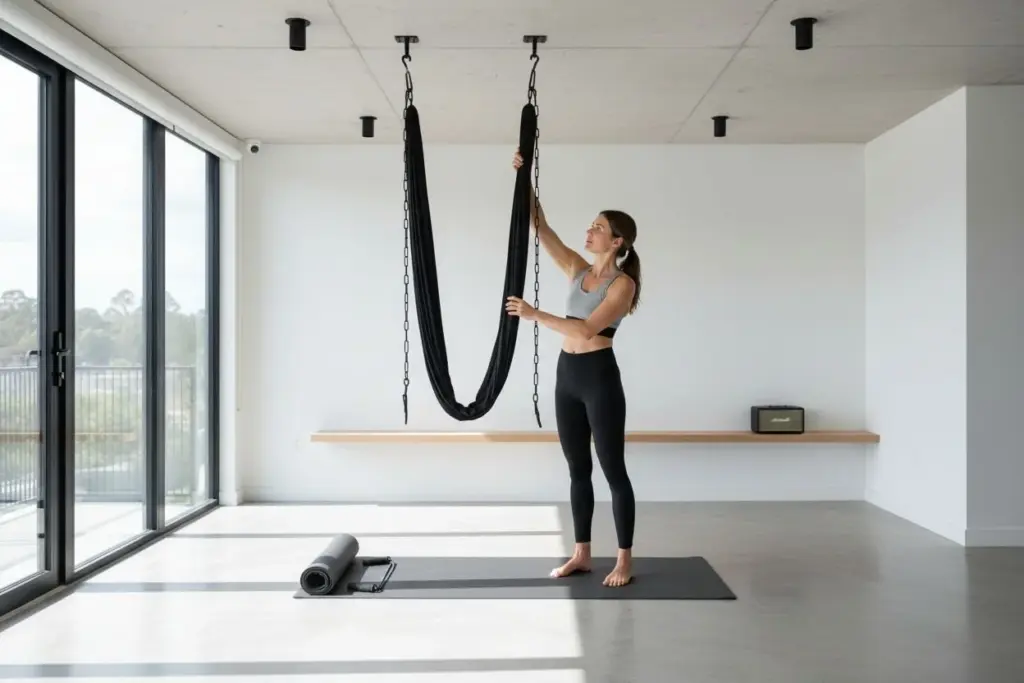
Your instructor will show you how to adjust the hammock height and how to weight-test it before use. The fabric is typically set at hip height for standing poses and adjusted for inversions. You will learn how to sit in, stand in, and transition in and out of the hammock safely.
Common Beginner Poses in the First Class
A typical beginner aerial yoga class includes: seated rest in the hammock, standing supported forward fold with hammock under hips, supported bridge using the hammock, reclined inversions where the body is supported at the hips, and a restorative Savasana in the hammock (the most immediately beloved experience in all of aerial yoga — being fully cocooned and cradled is profoundly restful).
What Beginners Find Challenging
The most common beginner challenges are: mild fear of the height or instability of the hammock (which typically disappears within the first 15 minutes as trust builds), mild upper body fatigue (the hands and arms work harder than in floor yoga), and some bruising around the hips and thighs from the hammock fabric in the first few sessions (this reduces as the body adapts and as you learn how to position the fabric).
Essential Safety Guidelines for Aerial Yoga Beginners
- Always take your first classes with a qualified instructor — do not learn aerial yoga from video alone. Incorrect rigging or technique can cause injury.
- Contraindications: avoid aerial yoga if you have glaucoma, recent eye surgery, high blood pressure, vertigo, recent shoulder injury, or are pregnant. Consult your doctor if you have cardiovascular conditions.
- Do not force inversions in your first sessions. Allow your body to acclimatise to the sensation of inverted blood flow gradually over multiple classes.
- Wear fitted clothing: loose clothing catches in the hammock and interferes with movement.
- Empty stomach: practise 2 to 3 hours after your last meal to avoid nausea during inversions.
Setting Up Aerial Yoga at Home
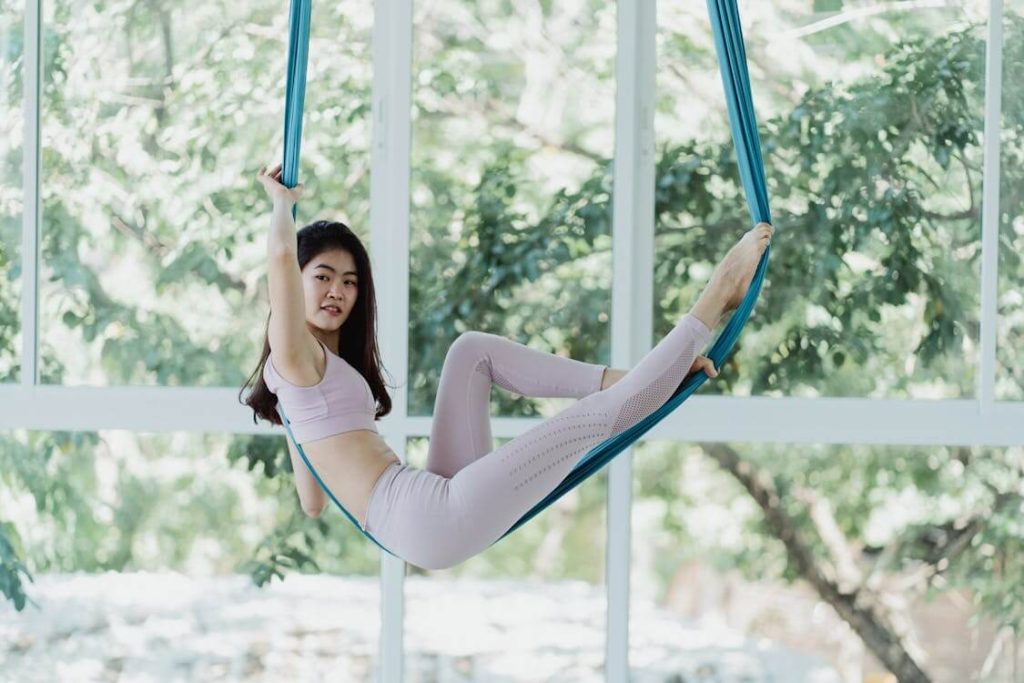
Home aerial yoga setups have become increasingly accessible. A quality aerial yoga hammock kit — including the silk, rigging hardware, and carabiners — costs between £80 and £200 (or USD equivalent). Ceiling rigging requires either a purpose-built aerial rig frame (the safest option for renters) or professional installation of ceiling anchor points rated for dynamic load (not all ceilings are suitable — always consult a structural engineer or experienced aerial rigger before installing ceiling hooks).
For home practice, combine aerial yoga with Yin yoga for flexibility on non-aerial days for a comprehensive flexibility and recovery programme.
Building Your First Month of Aerial Yoga Practice
- Week 1 to 2: attend 2 studio classes. Focus entirely on hammock familiarisation and confidence building.
- Week 3: add one home session using online guided beginner content. Focus on seated and standing poses only.
- Week 4: begin introducing gentle supported inversions. Always have a spotter or experienced guidance.
- Month 2 onwards: add progressively more complex poses. Trust builds rapidly, and within two months most beginners are comfortable with full inversions.
Complement your aerial practice by reading our guide to chakra meditation for beginners — the energy-centre awareness developed in meditation deepens the body awareness aerial yoga cultivates, creating a beautifully synergistic combination.
Discover more expert yoga guides at YogaSniff.com