

The word ‘chakra’ has entered mainstream wellness vocabulary, but for many people it remains vague, mystical, and frankly a little intimidating. Crystals, incense, Sanskrit chanting — it can all feel very far from where you are right now. Here is the truth: chakra meditation is one of the most practical, grounded, and immediately accessible forms of meditation available, and you don’t need any prior spiritual background to begin.
This guide strips away the mystery and gives you a clear, science-informed, and spiritually respectful introduction to chakra meditation for beginners — including what each chakra represents, how energy imbalances show up in daily life, and a complete seven-chakra meditation sequence you can do in under 30 minutes.
What Are Chakras? The Original Framework
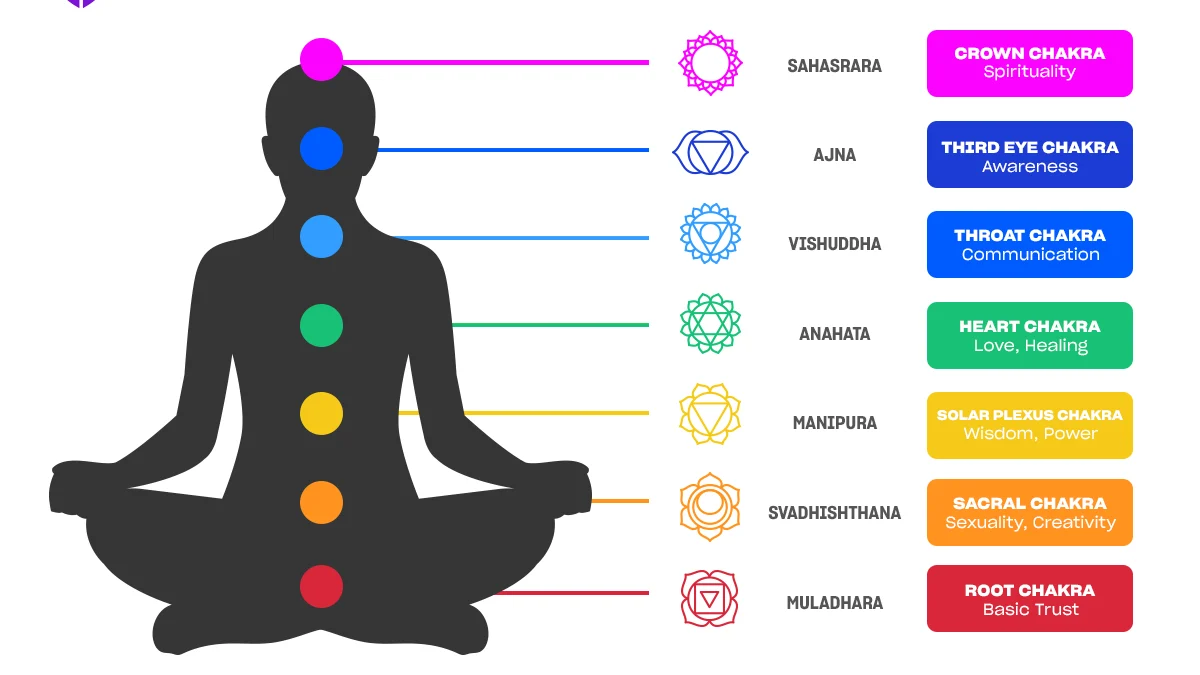
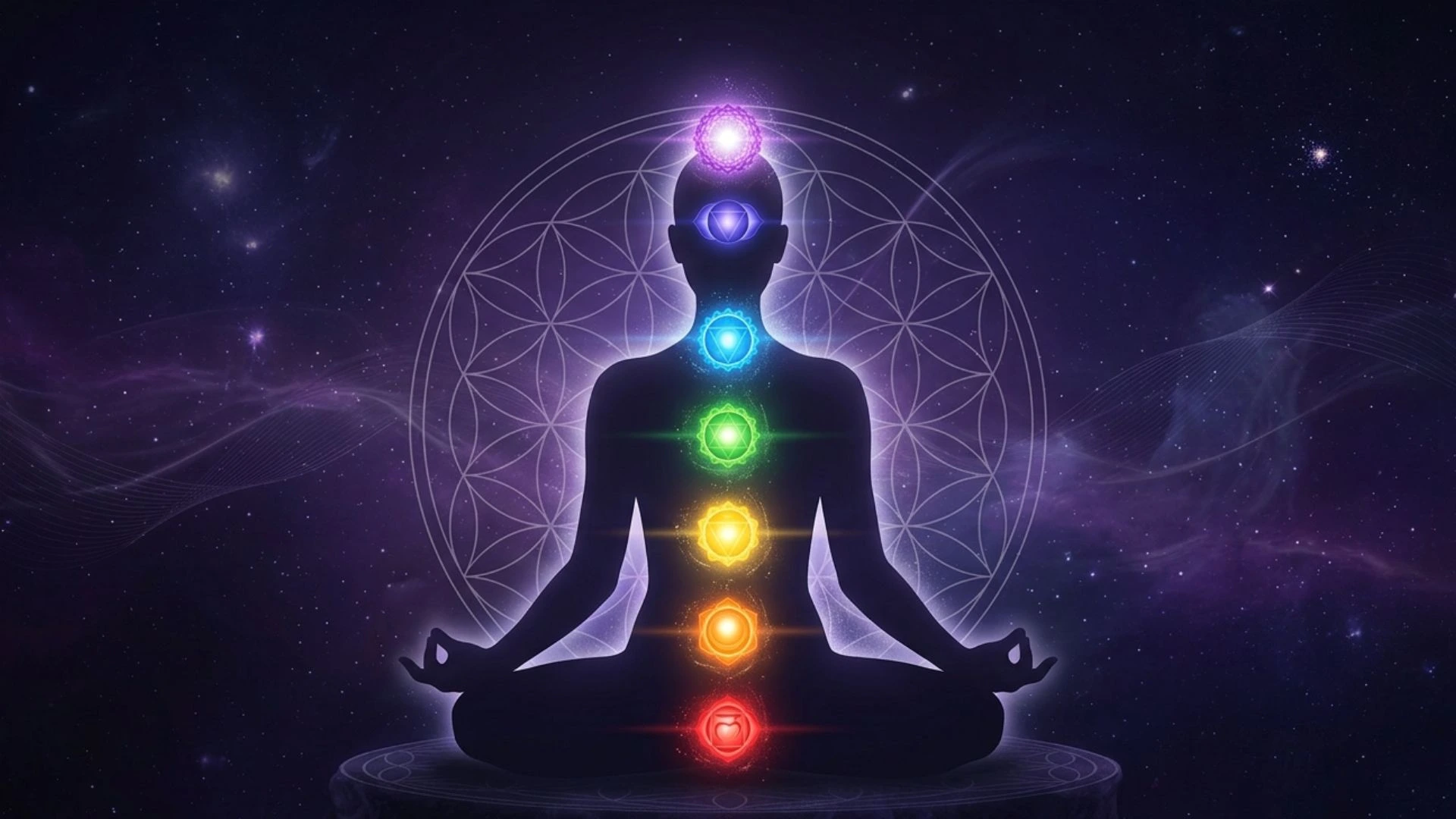
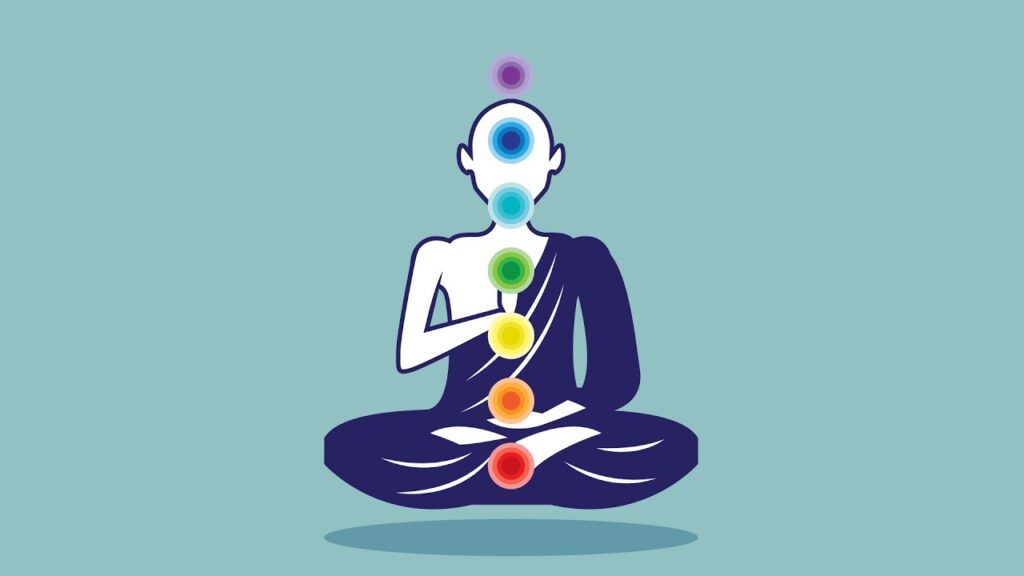
Chakras are described in ancient Indian texts — particularly the Vedas and the Tantric scriptures — as spinning centres of energy located along the central axis of the body. The word ‘chakra’ means ‘wheel’ or ‘disc’ in Sanskrit. The most widely taught system describes seven major chakras, running from the base of the spine to the crown of the head.
Each chakra is associated with specific physical regions of the body, emotional themes, psychological functions, and spiritual qualities. When energy flows freely through all seven chakras, the result is a state of physical health, emotional stability, mental clarity, and spiritual connectedness. When a chakra is blocked, overactive, or underactive, it can manifest as physical symptoms, emotional imbalance, or psychological patterns that feel stuck.

The 7 Chakras: Locations, Meanings, and Imbalance Signs
Root Chakra — Muladhara
Location: Base of the spine | Colour: Red | Element: Earth. The Root Chakra governs your sense of safety, stability, and belonging. When balanced: you feel grounded, secure, and present. When blocked or underactive: chronic anxiety, financial worry, feeling unsafe, disconnection from your body. When overactive: materialism, hoarding, resistance to change.
Sacral Chakra — Svadhisthana
Location: Lower abdomen, below the navel | Colour: Orange | Element: Water. The Sacral Chakra governs creativity, pleasure, sexuality, and emotional fluidity. When balanced: creative flow, healthy relationships, enjoyment of life. When blocked: low libido, creative blocks, emotional numbness, guilt around pleasure. When overactive: addictive patterns, emotional overwhelm, boundary issues.
Solar Plexus Chakra — Manipura
Location: Upper abdomen | Colour: Yellow | Element: Fire. The Solar Plexus Chakra governs personal power, confidence, willpower, and self-esteem. When balanced: strong sense of identity, healthy boundaries, decisive action. When blocked: low confidence, powerlessness, digestive issues. When overactive: control issues, aggression, domineering behaviour.
Heart Chakra — Anahata
Location: Centre of the chest | Colour: Green | Element: Air. The Heart Chakra bridges the lower (physical) and upper (spiritual) chakras. It governs love, compassion, forgiveness, and connection. When balanced: open to giving and receiving love, compassionate with self and others. When blocked: grief, loneliness, fear of intimacy, resentment.
Throat Chakra — Vishuddha
Location: Throat | Colour: Blue | Element: Ether/Space. The Throat Chakra governs communication, truth, and authentic self-expression. When balanced: able to speak your truth clearly and kindly. When blocked: fear of speaking up, chronic sore throats, inability to express emotions. When overactive: talking excessively, inability to listen, dominating conversations.
Third Eye Chakra — Ajna
Location: Between the eyebrows | Colour: Indigo | Element: Light. The Third Eye Chakra governs intuition, inner wisdom, imagination, and the ability to see the bigger picture. When balanced: strong intuition, clarity of thought, vivid inner life. When blocked: confusion, poor decision-making, lack of imagination, scepticism.
Crown Chakra — Sahasrara
Location: Top of the head | Colour: Violet or White | Element: Consciousness. The Crown Chakra governs spiritual connection, universal consciousness, and a sense of life’s meaning and purpose. When balanced: a felt sense of connection to something greater than yourself; peace, wisdom, presence. When blocked: spiritual disconnection, existential emptiness, depression.
A Complete 7-Chakra Meditation for Beginners
Find a comfortable seated position on the floor or in a chair. Close your eyes. Take three long, deep breaths to settle. You will spend 2 to 3 minutes on each chakra.
Step 1 — Root Chakra
Bring your awareness to the base of your spine and your seat. Imagine a spinning red wheel of light at this point, slowly rotating. With each inhale, imagine the wheel growing brighter. Silently repeat the affirmation: ‘I am safe. I am grounded. I belong.’ Feel the weight of your body against the earth.
Step 2 — Sacral Chakra
Move your awareness to just below your navel. Visualise a warm, glowing orange light, fluid and creative. Breathe into your lower belly, allowing it to expand fully. Affirmation: ‘I am creative. I allow myself to feel and enjoy life.’ Notice any areas of tightness in the lower abdomen and breathe space into them.
Step 3 — Solar Plexus Chakra
Shift your attention to your upper abdomen, just above the navel. Picture a bright, golden-yellow sun spinning confidently here. Inhale deeply, letting the belly and chest expand. Affirmation: ‘I am powerful. I trust myself. I am capable.’ Notice how it feels to inhabit your own power.
Step 4 — Heart Chakra
Bring your awareness to the centre of your chest. Visualise a radiant green light, warm and open, expanding with every breath. Place one hand over your heart. Affirmation: ‘I give and receive love freely. I forgive. I am open.’ Breathe into any tightness in the chest with kindness.
Step 5 — Throat Chakra
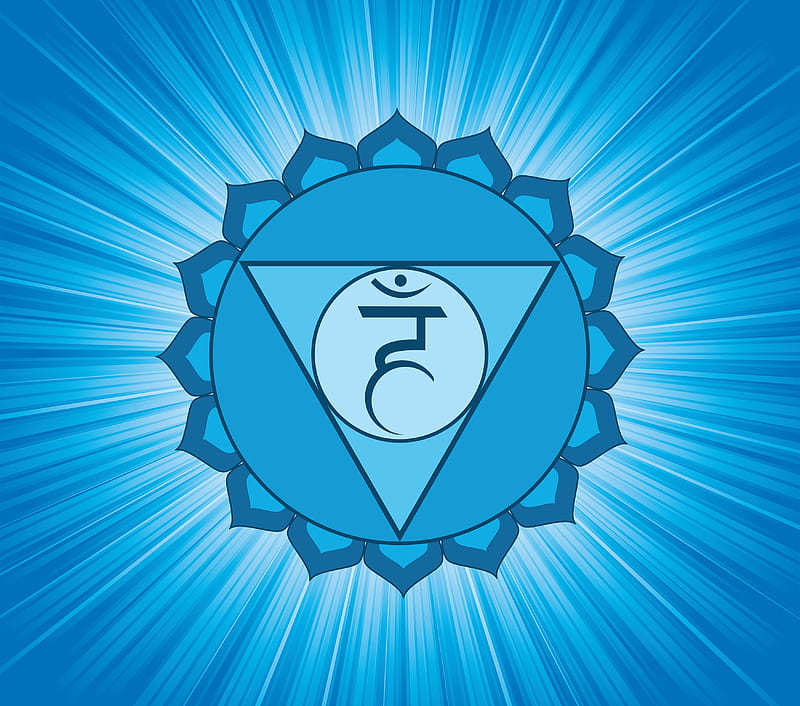
Focus on your throat. See a clear, sky-blue light at this point. Soften your jaw and the muscles around your neck. Affirmation: ‘I speak my truth with clarity and love. My voice matters.’ If there is tension here, try a gentle swallow or yawn to release it.
Step 6 — Third Eye Chakra
Bring your inner gaze to the point between your eyebrows. See a deep indigo light, steady and luminous, like a lantern in a dark room. Affirmation: ‘I trust my intuition. I see clearly. I am guided by my inner wisdom.’ Let thoughts arise without grasping them.
Step 7 — Crown Chakra
Allow your awareness to rise to the very top of your head. Visualise a pure violet or brilliant white light opening like a lotus flower. Let it expand upward, connecting you to the space above and around you. Affirmation: ‘I am connected to all of life. I am at peace. I am whole.’ Sit here for as long as feels nourishing.
Bringing It All Together
After completing all seven centres, spend a final minute visualising a golden light flowing up from the root through all chakras simultaneously, unifying the entire system. Take three deep breaths. Slowly open your eyes.
For beginners, practising this meditation three to four times per week produces the most noticeable results within two to three weeks. You may find that different chakras feel clearer or more blocked on different days — this is completely normal and is itself valuable self-knowledge.
The Science Perspective on Chakra Meditation
Modern research does not study chakras directly, but it does study the outcomes of chakra meditation practices — with consistently positive findings. Mindfulness-based meditation (the foundation of most chakra practices) has been shown to reduce cortisol, improve emotional regulation, enhance immune function, and increase grey matter in regions of the brain associated with self-awareness and compassion.
Whether you approach chakra meditation as a spiritual practice, a psychological tool, or simply a structured form of body-based mindfulness, the benefits are real and well-documented. The framework of the seven chakras offers something genuinely useful: a map of your inner landscape that makes the invisible (emotional patterns, energetic blocks, psychological themes) feel visible and workable.
Explore more yoga and meditation guides at YogaSniff.com