

Polycystic Ovary Syndrome — PCOS — affects an estimated 6 to 13 percent of women of reproductive age worldwide, making it the most common hormonal disorder among women. Yet despite its prevalence, PCOS remains widely misunderstood, underdiagnosed, and undertreated. The conventional medical response typically centres on the pill, metformin, or “just lose weight” — advice that feels frustratingly incomplete for the millions of women who want to understand and address the underlying hormonal drivers of their condition.
Yoga for PCOS is not a miracle cure. But a growing body of peer-reviewed research — including a landmark 2026 systematic review published in Frontiers in Reproductive Health — confirms it is one of the most effective natural, non-pharmacological interventions available for managing PCOS symptoms. And if you already practice yoga for hormonal balance, you will find PCOS-specific yoga a powerful extension of that work. Read our dedicated guide: Yoga for Hormonal Balance.
What Is PCOS and Why Does It Make You Feel the Way It Does?
PCOS is fundamentally a hormonal and metabolic disorder characterised by elevated androgens (male hormones, particularly testosterone), insulin resistance, and disrupted ovulation. These three factors create a cascade of symptoms that affect nearly every system in the body.
Symptoms commonly include: irregular or absent periods, weight gain particularly around the abdomen, acne and oily skin, excess facial or body hair (hirsutism), thinning scalp hair, fertility challenges, chronic fatigue, mood disorders including anxiety and depression, and digestive issues. No two women with PCOS present identically, which is part of why it is so frequently misdiagnosed.

The stress connection is particularly important to understand. Chronic stress elevates cortisol, which directly worsens insulin resistance and increases androgen production — both core drivers of PCOS. This is why stress-reduction practices, including yoga and the breathwork techniques covered elsewhere on this site, are not peripheral additions to PCOS management — they are central to it.
How Yoga Specifically Addresses the Three Root Causes of PCOS
1. Reducing Insulin Resistance
Insulin resistance means the body’s cells do not respond efficiently to insulin, causing the pancreas to produce more and more of it. Excess insulin signals the ovaries to produce more testosterone — directly worsening PCOS symptoms. Multiple studies have shown that regular physical activity, including yoga, improves insulin sensitivity. A 2023 study found that women with PCOS who practised yoga three times weekly for three months showed significant reductions in fasting insulin levels and improved HOMA-IR scores (a key insulin resistance marker).

2. Lowering Androgens Through Cortisol Reduction
When the stress response is chronically activated, the adrenal glands produce elevated DHEA-S — a precursor to testosterone. Yoga systematically reduces cortisol through parasympathetic activation. Research published in the Journal of Clinical Endocrinology found that one hour of yoga, three times per week, reduced free testosterone levels by 29 percent over three months in women with PCOS. That is a clinically meaningful reduction achievable without medication.
3. Restoring Hypothalamic-Pituitary-Ovarian Axis Regulation
The HPO axis — the hormonal communication network between the brain and ovaries — is disrupted in PCOS. Yoga’s effects on the nervous system, and particularly its regulation of the hypothalamus through slow, deep breathing and meditative practices, help restore more regular HPO axis signalling. This is why some women with PCOS report improvements in menstrual regularity after consistent yoga practice. You can deepen this hormonal work by exploring our full guide on
10 Best Yoga Poses for PCOS
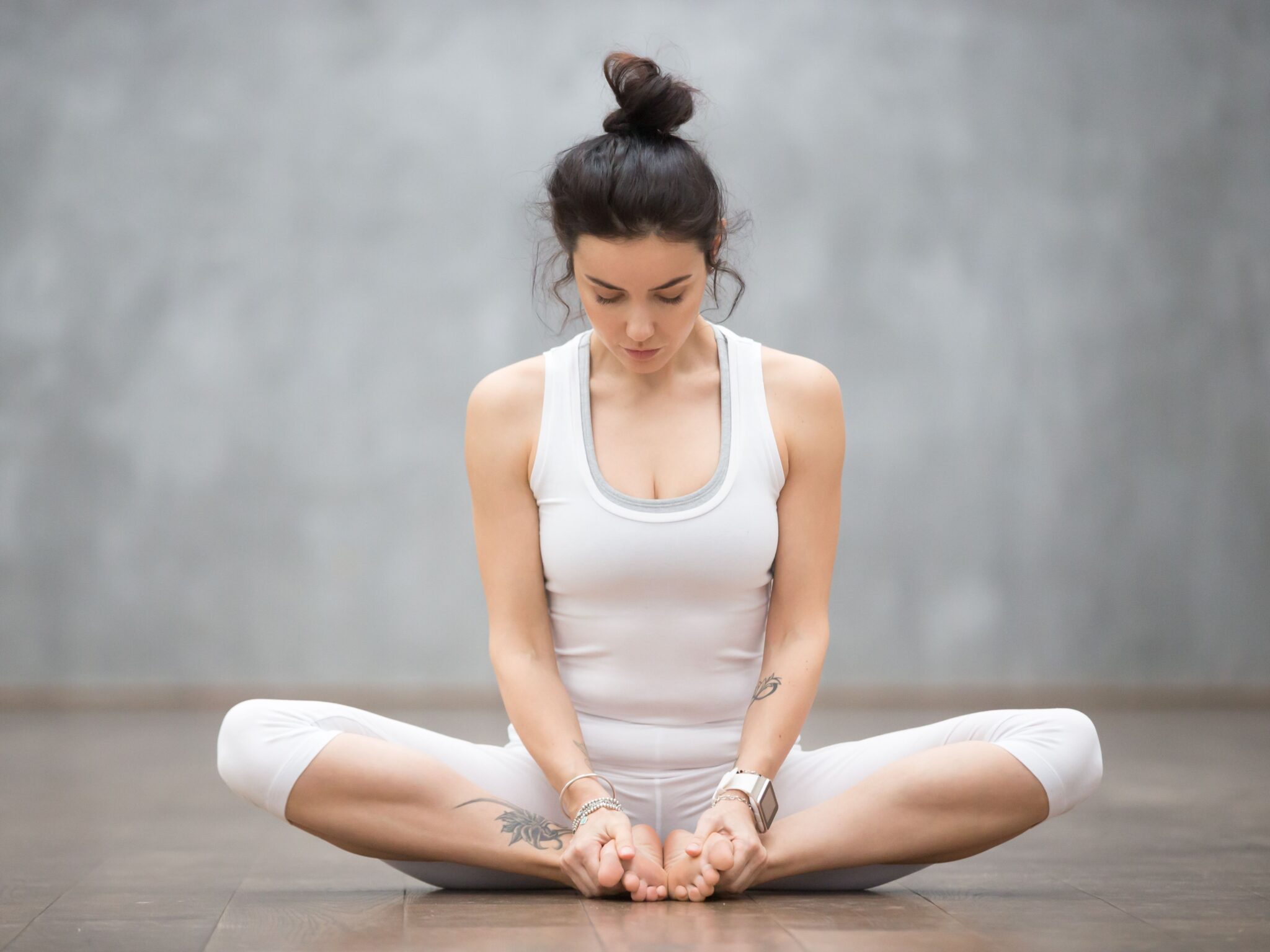
1. Butterfly Pose — Baddha Konasana (5 minutes)
Sit with the soles of your feet together, knees falling open. Hold your feet and fold gently forward. This pose increases blood circulation to the pelvic region and stimulates the ovaries and uterus directly. It is one of the most specific yoga poses for reproductive health, and a consistent favourite in PCOS yoga research protocols.
2. Supported Bridge Pose — Setu Bandha Sarvangasana (3 minutes)
Lie on your back, knees bent, feet flat. Lift the hips and either hold the pose actively or place a block under the sacrum for a restorative version. Bridge pose stimulates the thyroid gland (supporting metabolism), activates the adrenals, and opens the hip flexors — all critical for PCOS management.

3. Legs Up the Wall — Viparita Karani (10 minutes)
This gentle inversion is the single most calming pose in yoga. It dramatically lowers cortisol, reduces inflammation in the pelvic region through reversed venous return, and activates the parasympathetic nervous system. For women with PCOS-related anxiety or insomnia, this pose is non-negotiable. Practise for 10 minutes every evening.
4. Seated Wide-Angle Forward Fold — Upavistha Konasana (3 minutes)
Sit with legs spread wide and fold forward from the hips. This pose directly stimulates blood flow to the ovaries and fallopian tubes and stretches the inner thigh and groin area — where lymphatic stagnation often contributes to hormonal imbalance.
5. Reclined Bound Angle — Supta Baddha Konasana (8 minutes)
Lie on your back with feet together, knees falling open, fully supported by props. This is the most restorative PCOS pose available. Its long hold time allows the reproductive organs to receive sustained parasympathetic-activated blood flow while the body completely releases protective muscular tension.
6. Child’s Pose — Balasana (3 minutes)
Child’s Pose is the foundation of parasympathetic activation in yoga. The gentle forward fold and abdominal compression stimulate the vagus nerve and signal safety to the endocrine system. Our complete guide to Child’s Pose covers all the variations and modifications available.
7. Cat-Cow — Marjaryasana-Bitilasana (3 minutes)
The rhythmic spinal movement of Cat-Cow massages the ovaries and uterus through the abdominal wall, stimulates digestive organ function (important given PCOS’s metabolic component), and gently activates the adrenal glands without overstimulating them.
8. Twists — Seated and Supine (2 minutes each side)
All spinal twists compress and release the adrenal glands and liver — two organs deeply implicated in PCOS hormonal processing. The liver metabolises and clears excess oestrogen and androgens; healthy liver function is essential for hormonal balance. Regular twisting yoga practice directly supports this clearance pathway.
9. Warrior II — Virabhadrasana II (1 minute each side)
This standing pose builds strength in the legs and core — important for improving insulin sensitivity — while opening the hips and stimulating the reproductive region. It is also empowering: research has shown that expansive, strong postures increase testosterone in healthy individuals, but in the context of PCOS yoga, the overall cortisol-reducing and metabolic benefits outweigh any temporary androgen effect.
10. Nadi Shodhana — Alternate Nostril Breathing (10 minutes)
Alternate nostril breathing is one of the most powerful tools in this list. A 2017 study found it significantly reduced cortisol, lowered heart rate, and improved cardiovascular markers in women after just 30 minutes. Practise 10 minutes daily — morning is ideal. For a full breathwork toolkit, see our guide to breathwork techniques for stress.
A Weekly Yoga for PCOS Practice Schedule
- Monday: 45 min flow — Butterfly, Warrior II, Cat-Cow, Bridge, Supine Twist, Savasana
- Tuesday: 15 min Nadi Shodhana + 20 min Yoga Nidra before bed
- Wednesday: 45 min Yin yoga — Wide Angle Forward Fold, Reclined Bound Angle, Sleeping Swan, Supported Bridge
- Thursday: 20 min restorative poses + 10 min Legs Up the Wall
- Friday: 45 min flow — repeat Monday sequence with variations
- Saturday: Rest or gentle walk
- Sunday: 60 min full restorative sequence + meditation
Cycle Syncing Your Yoga for PCOS
For women who do have some menstrual cycle regularity, syncing your yoga practice to your cycle phases amplifies results significantly.
- Menstrual phase (days 1-5): Restorative yoga only. Reclined Bound Angle, Legs Up the Wall, Supported Child’s Pose. Avoid inversions.
- Follicular phase (days 6-13): Build energy gradually. Increase standing poses, add light Sun Salutations.
- Ovulatory phase (days 14-16): Higher-intensity flows are well-tolerated. Partner yoga, balancing poses, heart openers.
- Luteal phase (days 17-28): Return to gentler practices. Yin yoga, restorative poses, breathwork. Prioritise sleep.
Complementary Lifestyle Factors
Yoga for PCOS delivers the most powerful results when embedded in a broader lifestyle approach. The most important complementary practices include: a low-glycaemic, anti-inflammatory diet (reducing refined carbohydrates, increasing fibre and omega-3 fats); adequate sleep of 7 to 9 hours (poor sleep directly worsens insulin resistance and cortisol regulation); stress management beyond yoga; and medical monitoring of key PCOS markers through your GP or gynaecologist.
If you are also managing PCOS-related sleep disruption, our guide to Yoga Nidra for sleep provides a complete practice protocol that has been specifically validated in women with hormonal sleep disorders.
What to Realistically Expect
Most women practising yoga for PCOS three to four times per week report noticeable improvements in mood stability and energy within two to four weeks. Measurable changes in hormonal markers — cortisol, testosterone, insulin — typically appear after eight to twelve weeks of consistent practice. Menstrual regularity improvements, where they occur, are typically observed after three to six months.
Be patient with yourself. PCOS took time to develop; healing it is a gradual process. But yoga offers something no medication does: a practice that improves in its effectiveness the longer and more consistently you engage with it.
Discover more expert yoga guides at YogaSniff.com