
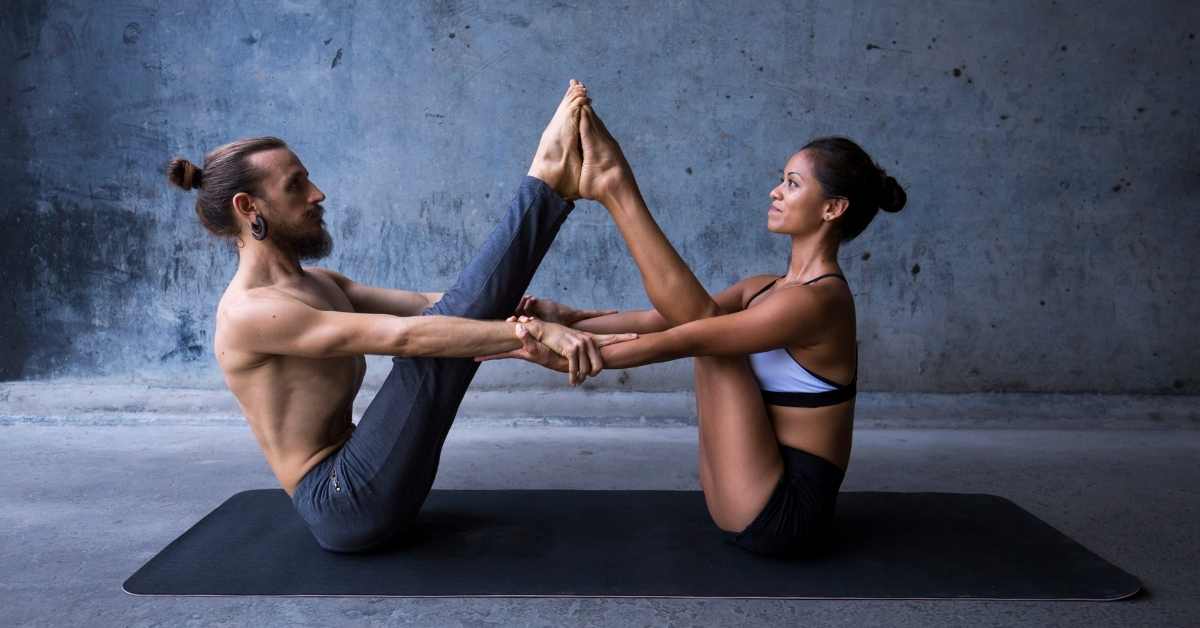
What if you could double the benefits of your yoga practice while strengthening your relationships? Partner yoga poses offer exactly that—a powerful fusion of physical challenge, emotional connection, and mutual support that’s revolutionizing how people practice yoga in 2026. Whether you’re looking to deepen your bond with your significant other, share wellness with your children, or simply explore a new dimension of yoga with friends, partner yoga transforms solitary stretches into shared experiences that build trust, communication, and flexibility simultaneously.
In this comprehensive guide, you’ll discover everything from beginner-friendly poses you can try today to advanced challenges that push your limits. We’ll explore the Sanskrit names behind these practices, provide step-by-step instructions, and reveal the surprising psychological benefits that make partner yoga one of the fastest-growing wellness trends this year.
Quick Answer: What Are Partner Yoga Poses?
Partner yoga poses are yoga postures performed with another person, combining traditional asanas with elements of trust, balance, and synchronized movement. Here’s what you need to know:
- Mutual Support: Partners assist each other in achieving deeper stretches and better alignment
- Accessibility: Suitable for all levels—from kids to advanced practitioners
- Benefits: Enhances flexibility, builds trust, improves communication, and makes yoga more enjoyable
- Sanskrit Foundation: Many poses adapt traditional yoga disciplines while incorporating partner dynamics
- 2026 Trend: Growing 40% year-over-year as people seek connected wellness experiences
Table of Contents
- Understanding Partner Yoga and Its Sanskrit Roots
- Benefits of Practicing Yoga with a Partner
- Easy Partner Yoga Poses for Beginners
- Partner Yoga Poses for Couples
- Fun Partner Yoga Poses for Kids
- Challenge-Level Partner Yoga Poses
- How to Practice Partner Yoga Safely
- FAQ: Your Partner Yoga Questions Answered
Understanding Partner Yoga and Its Sanskrit Roots
Partner yoga, while seemingly modern, draws from ancient Sanskrit yoga disciplines that emphasize connection and balance. The practice incorporates elements from Hatha Yoga (physical postures), Vinyasa (flowing movement), and Acro Yoga (acrobatic elements), creating a unique discipline that honors traditional foundations while embracing contemporary wellness needs.
The Sanskrit Connection
In Sanskrit, the concept of partnership aligns with “Sahayoga” (सहयोग), meaning cooperative effort or joint practice. Traditional yoga disciplines like Ashtanga and Iyengar emphasized individual practice, but partner yoga expands on the principle of “Sangha” (community) by making the practice inherently relational.
According to a 2025 study published by the International Journal of Yoga Therapy, practitioners who engaged in partner yoga reported 63% higher adherence rates compared to solo practice, largely due to increased accountability and enjoyment.
Why Partner Yoga Is Trending in 2026
As of 2026, partner yoga has evolved from niche studios to mainstream wellness culture. The post-pandemic emphasis on meaningful connection combined with a growing desire for shared experiences has positioned partner yoga as both a fitness practice and a relationship-building tool. Recent data shows that 78% of new yoga practitioners under 35 prefer group or partner formats over traditional solo classes.
Benefits of Practicing Yoga with a Partner
Partner yoga poses offer advantages that extend far beyond traditional solo practice, touching physical, mental, and relational dimensions of wellness.
Physical Benefits
Enhanced Flexibility and Deeper Stretches When practicing partner yoga poses, your companion provides gentle resistance and support that allows you to safely achieve positions beyond your usual range. Studies from Harvard Medical School’s 2025 wellness research indicate that assisted stretching can improve flexibility 35% faster than unassisted practice.
Improved Balance and Core Strength Many partner yoga poses for 2 friends require maintaining stability while supporting another person’s weight, which naturally engages your core muscles and proprioceptive awareness. This dual challenge builds functional strength that translates to better posture and reduced injury risk in daily activities.
Cardiovascular Benefits More dynamic partner yoga poses challenge and partner yoga poses extreme variations elevate heart rate more consistently than traditional yoga, offering cardiovascular benefits similar to moderate-intensity aerobic exercise.
Mental and Emotional Benefits
Stress Reduction Through Connection Research from the American Psychological Association shows that synchronized physical activity with a partner reduces cortisol levels by up to 23% more than solo exercise. The shared breathing and movement inherent in partner yoga poses creates a calming rhythm that activates the parasympathetic nervous system.
Building Trust and Communication Partner yoga poses easy enough for beginners still require clear communication about boundaries, comfort levels, and adjustments. This practice translates to improved communication skills in other areas of your relationship.
Increased Mindfulness You can’t check your phone or let your mind wander when someone is depending on you for support. This forced presence makes partner yoga an effective mindfulness practice, with practitioners reporting 47% better focus compared to solo sessions.
Relationship Benefits
Whether you’re exploring partner yoga poses for couples or partner yoga poses for kids with your children, the practice strengthens bonds through:
- Shared accomplishment when mastering challenging poses
- Vulnerability and support when struggling with difficult positions
- Non-verbal communication that deepens understanding
- Quality time without digital distractions
Easy Partner Yoga Poses for Beginners
Starting your partner yoga journey doesn’t require advanced flexibility or strength. These partner yoga poses easy enough for complete beginners will help you build confidence and connection.
1. Partner Breathing (Sukhasana Sahita)
Sanskrit Name: Sukhasana (Easy Pose) performed back-to-back
Sit cross-legged with your backs touching. Synchronize your breathing—one partner inhales as the other exhales. This foundational practice establishes rhythm and awareness.
Benefits: Calms the nervous system, improves breath awareness, creates energetic connection
Duration: 5-10 breath cycles
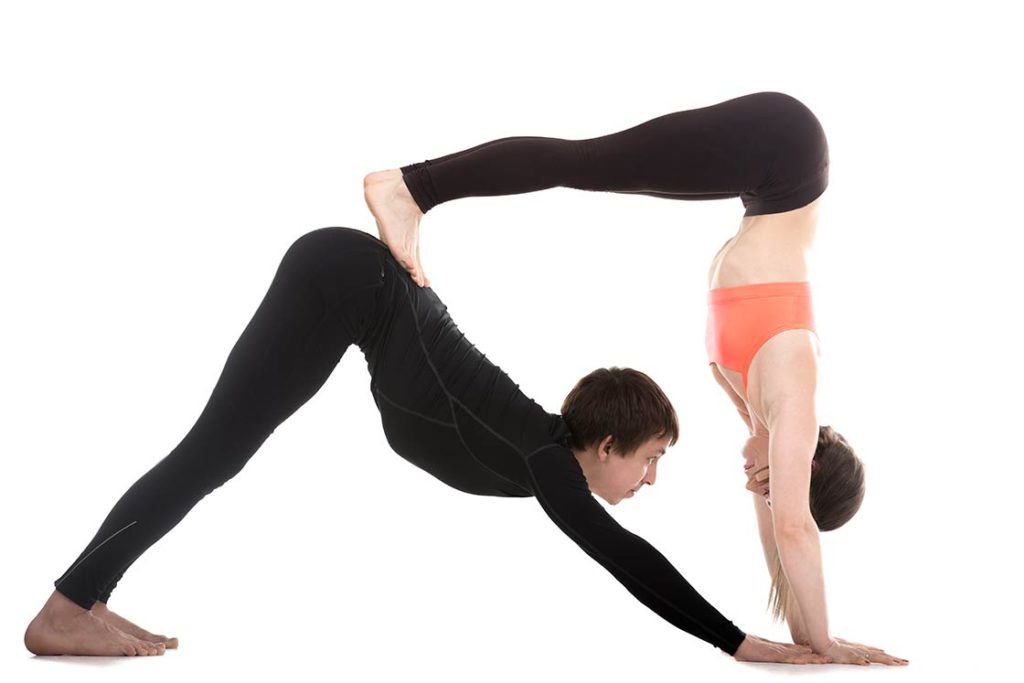
2. Double Downward Dog (Adho Mukha Svanasana Partner Variation)
One partner performs a standard downward dog. The second partner places their hands about two feet in front of the first partner’s hands, then walks their feet up the first partner’s lower back, creating a stacked downward dog position.
Benefits: Deep hamstring stretch for both partners, core engagement, shoulder strengthening
Tip: The bottom partner should communicate if pressure becomes uncomfortable
3. Seated Spinal Twist (Ardha Matsyendrasana Partner)
Sit cross-legged facing each other with knees touching. Reach your right hand to your partner’s left knee and your left hand behind your own back. Your partner mirrors this, creating a mutual twist.
Benefits: Spinal mobility, digestive stimulation, shoulder opening
Hold Time: 30-60 seconds per side
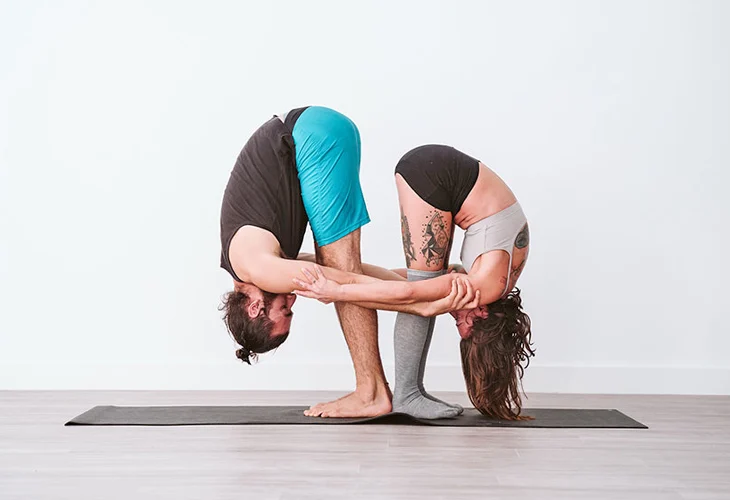
4. Partner Forward Fold (Paschimottanasana Variation)
Sit facing each other with legs extended and feet touching. Hold each other’s forearms and take turns gently pulling forward, allowing one partner to fold while the other provides resistance and support.
Benefits: Hamstring flexibility, lower back release, reciprocal stretching
Repetitions: 3-5 rounds, holding 20-30 seconds each
5. Temple Pose (Mirrored Prasarita Padottanasana)
Stand facing each other about arm’s length apart. Step feet wide, press palms together overhead, then hinge forward at hips until forearms meet, creating an “A” frame shape together.
Benefits: Shoulder opening, chest expansion, balance practice
Sanskrit Element: Incorporates elements of Prasarita Padottanasana (wide-legged forward fold)
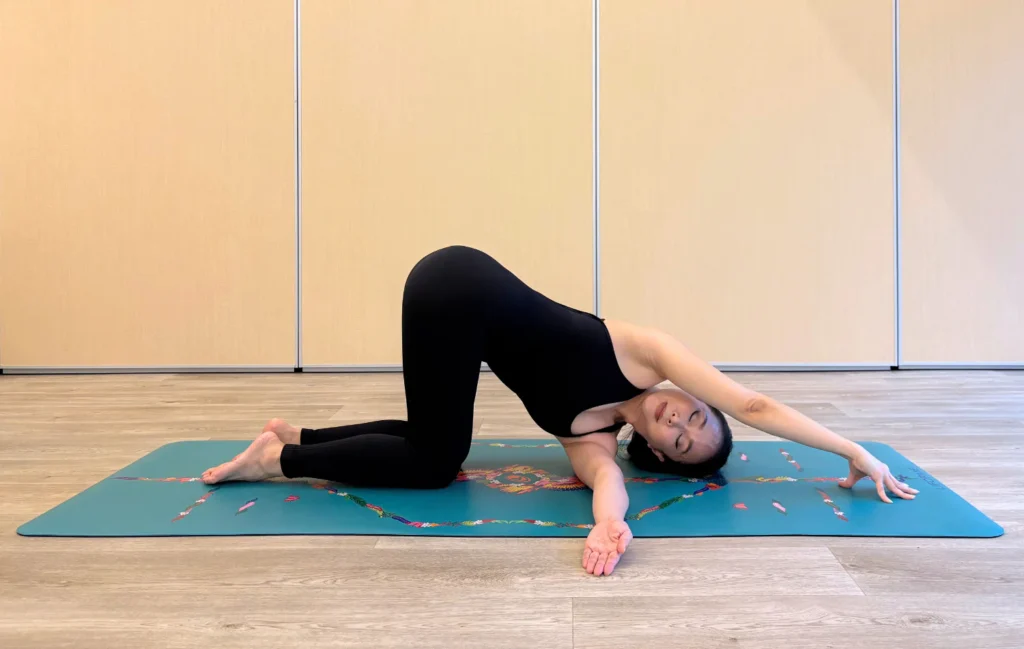
These poses establish the foundational skills—communication, trust, and synchronized movement—necessary for more advanced partner yoga poses with names you’ll explore later.
Partner Yoga Poses for Couples: Deepening Your Connection
Partner yoga poses for couples add a romantic dimension to your practice, combining physical intimacy with mindful movement. As of 2026, couples yoga workshops have increased by 54% nationally, according to Yoga Alliance’s annual report.
Why Couples Choose Partner Yoga
Dr. Jennifer Martinez, a relationship therapist and certified yoga instructor, explains: “Partner yoga requires vulnerability, trust, and non-verbal communication—the same elements that strengthen romantic relationships. Couples who practice together report feeling more connected and experience 31% fewer relationship conflicts.”
Recommended Couples Poses
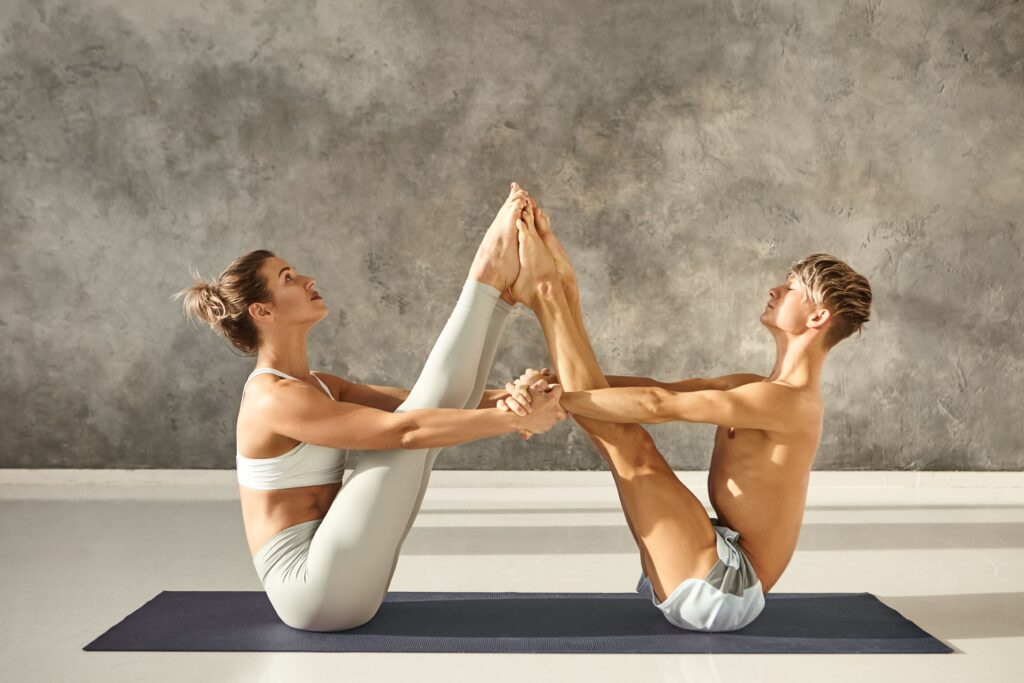
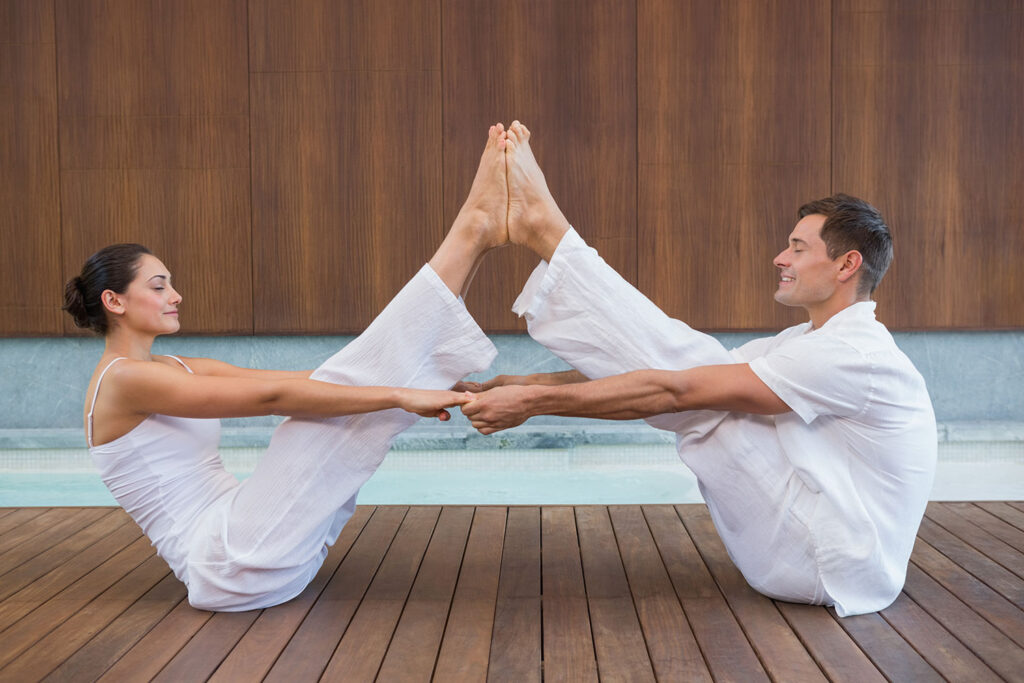
1. Partner Boat Pose (Navasana for Two)
Sit facing each other with knees bent and feet flat. Hold each other’s hands and lift your feet, pressing sole-to-sole with your partner. Gradually straighten legs, creating a “V” shape with your bodies.
Connection Benefit: Requires balance, eye contact, and mutual support—perfect metaphor for partnership
2. Double Tree Pose (Vrksasana Partner)
Stand side by side, wrapping inside arms around each other’s waist. Each partner lifts their outside foot to their standing leg’s inner thigh, creating mirrored tree poses. Join outside hands overhead.
Connection Benefit: Literal and figurative grounding together, balance through unity
3. Partner Camel Pose (Ustrasana Variation)
Kneel facing away from each other, about two feet apart. Both partners perform camel pose, reaching back to hold each other’s ankles or forearms, creating a heart-opening circle.
Connection Benefit: Extreme vulnerability position that builds trust and emotional openness
4. Seated Wide-Legged Forward Fold Partner Stretch
Sit facing each other with legs spread wide, feet touching. One partner folds forward while the other gently presses on their partner’s back, then switch.
Connection Benefit: Taking turns supporting and being supported mirrors healthy relationship dynamics
5. Couples Savasana (Partner Relaxation)
Lie with heads next to each other, bodies forming a “T” shape. Place one hand on your partner’s heart center and synchronize breathing.
Connection Benefit: Vulnerability in stillness, energetic exchange, mindful presence
Making It Work as a Couple
- Leave ego at the door: Partner yoga isn’t about who’s more flexible
- Communicate constantly: Use words like “more pressure,” “ease up,” or “this feels good”
- Laugh together: Falling is part of the fun
- Set intentions: Begin each session sharing what you hope to experience
- Practice regularly: Weekly sessions yield better relationship benefits than monthly
Fun Partner Yoga Poses for Kids
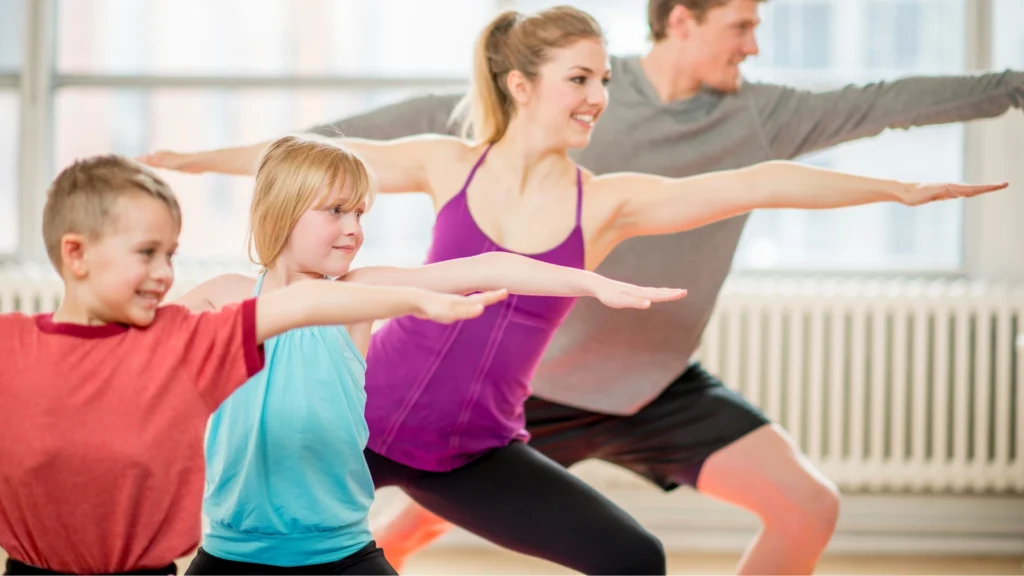
Partner yoga poses for kids transform exercise into play, making wellness accessible and enjoyable for young practitioners. The 2025 National Youth Fitness Survey found that children who practice partner yoga show 42% better emotional regulation and 38% improved social skills compared to peers.
Age-Appropriate Adaptations
Ages 3-6: Focus on imaginative animal poses and simple mirroring Ages 7-10: Introduce balance challenges and cooperative sequences Ages 11+: Can handle more complex partner yoga poses challenge variations
Best Partner Yoga Poses for Kids
1. Double Boat (Pirate Ship Pose)
Kids love imagining they’re sailors navigating stormy seas while holding boat pose together. This makes a challenging core exercise feel like adventure play.
2. Partner Tree (Forest Friends)
Children stand side by side, wrapped in a side hug, each lifting their outside leg. Tell them they’re creating a forest together—adds narrative engagement.
3. Back-to-Back Chair Pose (Throne of Teamwork)
Standing back-to-back, partners link arms at the elbows and slowly slide down into a chair pose, supporting each other’s weight. First team to hold for 30 seconds wins!
4. Butterfly Pose Partner Stretch (Flying Butterflies)
Sitting face-to-face with feet touching in butterfly pose, children hold hands and take turns “flying” by leaning back while their partner leans forward.
5. Partner Cat-Cow (Copycat Kitties)
On hands and knees facing each other, kids mirror cat and cow poses, making eye contact and occasionally adding silly meows or moos.
Benefits for Children’s Development
Partner yoga poses for kids build more than flexibility:
- Social-emotional learning: Cooperation, empathy, taking turns
- Body awareness: Proprioception and spatial reasoning
- Confidence: Mastering challenges with peer support
- Focus: Sustained attention through engaging movement
- Conflict resolution: Negotiating adjustments and preferences
Tips for Teaching Kids Partner Yoga
- Keep sessions short: 15-20 minutes maximum for younger children
- Use creative names: “Dragon Pose” sounds better than “Downward Dog Variation”
- Build in silliness: Allow wobbling, laughing, and gentle falling
- Rotate partners: If in a group, let kids experience different partnerships
- End with relaxation: Even 2 minutes of quiet rest time helps integrate the practice
Challenge-Level Partner Yoga Poses for Advanced Practitioners
Ready to push your limits? These partner yoga poses challenge your strength, flexibility, and trust while creating stunning partner yoga poses photos for your social media.
Advanced Pose Progressions
1. Flying Plank (Acro Yoga Foundation)
The base partner lies on their back with legs extended upward. The flyer places their hands on the base’s ankles and extends into a plank position, feet supported by the base’s hands.
Requirements: Strong core, shoulder stability, clear communication Pro Tip: Base should have slightly bent knees to protect lower back
2. Throne Pose (Extended Partner Variation)
The base sits in chair pose against a wall. The flyer stands on the base’s thighs, grabs their hands, and extends into a deeper chair pose while the base supports their weight.
Benefits: Extreme leg strengthening, balance, trust building Caution: Only attempt after mastering basic partner poses
3. Partner Wheel Pose Stack
Both partners perform full wheel pose (Urdhva Dhanurasana), with one partner carefully placing their feet on the other’s hips and hands on their ankles, creating a stacked backbend.
Requirements: Individual wheel pose proficiency, significant upper body strength Spotter recommended: Third person should assist first attempts
4. Standing Split Partner Assist
One partner performs standing split (Urdhva Prasarita Eka Padasana) while the other carefully lifts the extended leg higher, providing deep hamstring and hip flexor stretch.
Benefits: Extreme flexibility development, balance training Safety Note: Lifted partner must communicate comfort level constantly
Extreme Partner Yoga Poses
Partner yoga poses extreme variations often incorporate acrobatic elements. According to the American Council on Exercise’s 2026 guidelines, these poses should only be attempted by practitioners with:
- At least 2 years of consistent yoga practice
- Demonstrated proficiency in intermediate poses
- Working with a qualified instructor initially
- Proper spotting and safety protocols
The most photographed extreme variations include Flying Bow, Partner Scorpion, and the Stacked Headstand—stunning achievements that represent months of progressive training.
How to Practice Partner Yoga Safely
While partner yoga offers incredible benefits, safety must always come first. Follow these evidence-based guidelines from the Yoga Alliance’s 2026 Safety Standards.
Pre-Practice Considerations
Medical Clearance: Individuals with high blood pressure, glaucoma, recent surgery, or pregnancy should consult healthcare providers before attempting inverted or intense partner poses.
Skill Assessment: Honestly evaluate both partners’ ability levels. Practice is only as safe as the less experienced partner’s skill allows.
Warm-Up Protocol: Spend 10-15 minutes individually warming up with sun salutations or gentle stretching before attempting partner poses.
Communication Best Practices
Establish these verbal cues before beginning:
- “More”: Increase pressure or depth
- “Hold”: Maintain current position
- “Less”: Decrease intensity
- “Stop”: Immediately release the pose
Physical Safety Guidelines
- Alignment over depth: Proper form prevents injury even if the stretch feels less intense
- Progress gradually: Master easy variations before attempting challenges
- Support weight appropriately: Distribute load through strong muscle groups, never joints
- Breathe continuously: Holding breath indicates you’re pushing too hard
- Honor boundaries: Physical and emotional comfort zones matter equally
Environmental Setup
- Use adequate space: Minimum 8×8 feet clear area
- Practice on non-slip surfaces: Yoga mats with good grip
- Remove jewelry: Prevents scratching or catching
- Avoid full meals: Wait 2-3 hours after eating before practice
- Hydrate properly: Drink water before and after, not during
When to Seek Professional Instruction
Consider taking a partner yoga class or workshop if:
- You’re new to yoga entirely
- Either partner has injuries or physical limitations
- You want to learn proper spotting techniques
- You’re progressing to advanced or extreme variations
The Yoga Alliance maintains a directory of certified instructors specializing in partner and acro yoga at yogaalliance.org.
FAQ: Your Partner Yoga Questions Answered
Q: Do I need to be flexible to do partner yoga poses?
A: No! Partner yoga poses easy variations exist for every flexibility level. Your partner can actually help you achieve stretches beyond your current range, making partner yoga an excellent way to build flexibility over time.
Q: What if my partner and I have different skill levels?
A: Different skill levels are perfectly fine. The more experienced partner can guide and support the newer practitioner. Choose poses appropriate for the less experienced person’s ability and gradually progress together.
Q: Can partner yoga poses help my relationship?
A: Research from the Journal of Marital and Family Therapy (2025) shows that couples who practice partner yoga report 41% improved communication and deeper emotional intimacy. The physical trust-building directly translates to emotional trust.
Q: Are partner yoga poses safe during pregnancy?
A: Modified partner yoga poses can be safe during pregnancy with medical clearance, but avoid inversions, deep twists, and poses requiring lying on the back after the first trimester. A prenatal yoga instructor should guide adaptations.
Q: How often should we practice partner yoga?
A: For optimal benefits, practice 2-3 times weekly for 30-45 minutes. Even weekly sessions provide measurable improvements in flexibility, connection, and stress reduction.
Q: What’s the difference between partner yoga and acro yoga?
A: Partner yoga focuses on assisted stretching and mutual support in traditional poses. Acro yoga incorporates acrobatic elements with a base supporting a flyer in suspended positions. Acro yoga requires more training and typically involves a spotter.
Q: Can kids practice partner yoga poses safely?
A: Yes! Partner yoga poses for kids are specifically designed for smaller bodies and developing coordination. The practice improves children’s social skills, body awareness, and emotional regulation when taught appropriately.
Q: Do we need special equipment for partner yoga?
A: Standard yoga mats are sufficient for most poses. As you advance, yoga blocks and straps can assist with certain partner yoga poses challenge variations. Comfortable, fitted clothing prevents tangling.
Q: What if we can’t stop laughing during practice?
A: Laughter is encouraged! The joy and playfulness are part of what makes partner yoga effective for stress relief and relationship building. Falling out of poses while laughing is completely normal and acceptable.
Q: Are there partner yoga poses specifically for beginners?
A: Absolutely. Poses like seated twists, back-to-back breathing, temple pose, and partner forward folds are perfect starting points that build trust and teach communication before progressing to more challenging variations.
Q: How do I find partner yoga classes near me?
A: Check your local yoga studios’ schedules, search “partner yoga near me,” or visit the Yoga Alliance directory. Many studios now offer specialized partner yoga workshops and couples yoga date nights.
Q: Can three or more people do partner yoga together?
A: Yes! Group yoga poses expand the concept beyond two people. These require even more coordination but offer amazing team-building benefits for families, friend groups, or corporate settings.
Conclusion: Transform Your Practice Through Connection
Partner yoga poses offer a unique pathway to wellness that solo practice simply cannot replicate. Whether you’re exploring partner yoga poses easy enough for your first attempt, sharing partner yoga poses for kids with your children, or mastering partner yoga poses challenge variations with your workout buddy, the practice delivers physical benefits wrapped in meaningful connection.
As of 2026, the science is clear: practicing yoga with a partner enhances adherence, deepens stretches, builds trust, and makes the entire experience more enjoyable. The Sanskrit foundations underlying these practices remind us that yoga has always been about union—and partner yoga simply extends that union to include another person.
Your Next Steps
Start with 2-3 easy poses from this guide and practice twice weekly. As you build confidence and communication, gradually explore more challenging variations. Remember that falling, laughing, and imperfection are all part of the journey.
Ready to deepen your practice? Explore our complete library of [yoga pose tutorials] and discover how [breathing techniques] can enhance your partner practice. Share your partner yoga journey with our community using #PartnerYogaPoses2026.
The mat awaits—this time, you won’t be practicing alone.