
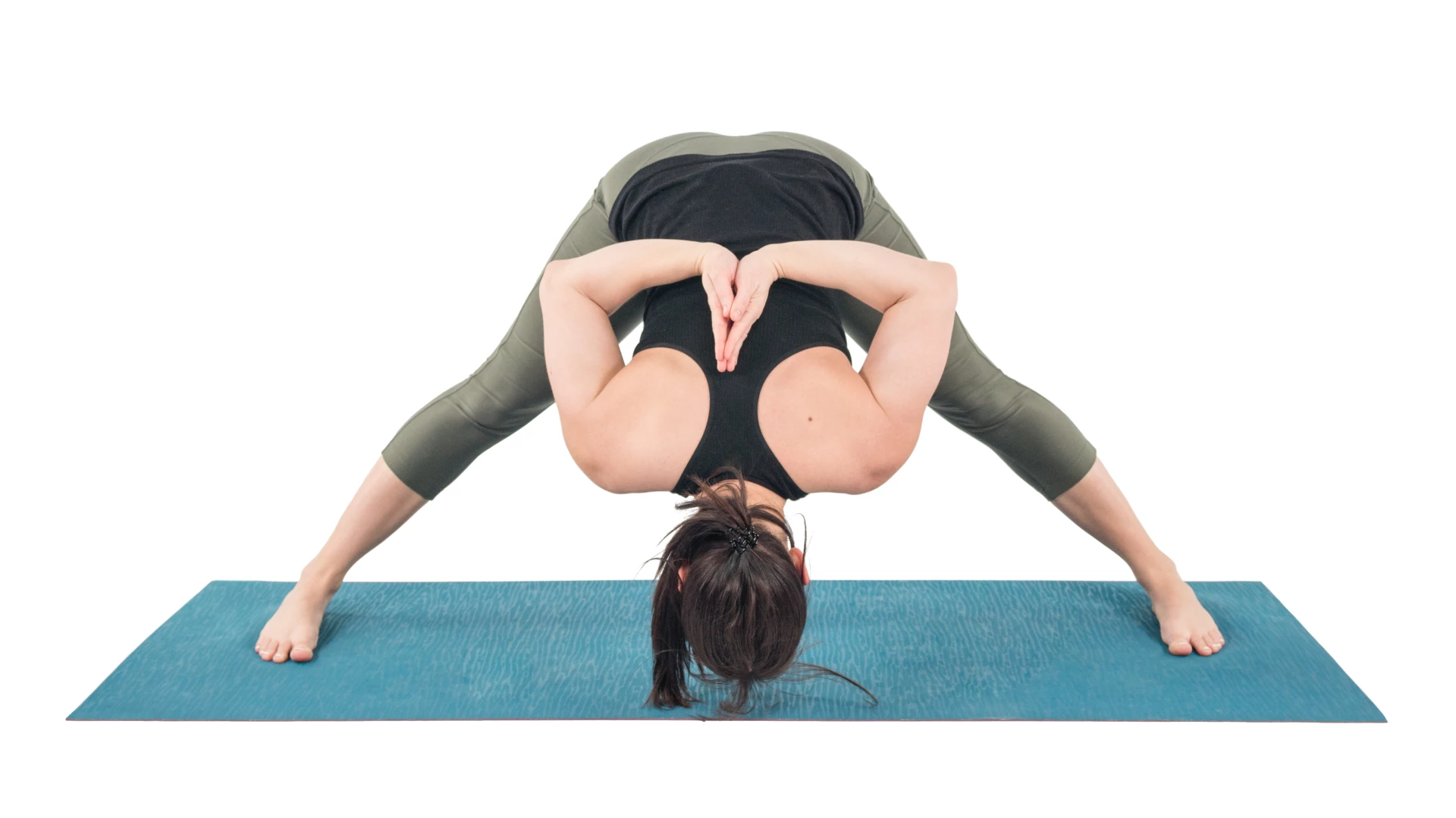
Below are accessible poses that target the deltoids, chest muscles, traps, and upper back without requiring deep stretching.
1. Cow Face Arms (Beginners Variation)
How to do:
- Sit or stand tall
- Bring one arm overhead
- Bend elbow behind head
- Use opposite hand to gently guide elbow
Benefits:
✔ opens shoulders & triceps
✔ increases mobility for overhead movements
✔ great for people who lift weights
Use a strap or towel if hands don’t meet (very common!).
2. Thread the Needle Pose
How to do:
- Start on hands & knees
- Slide one arm under the other
- Rest shoulder and head on the floor
- Breathe slowly
Benefits:
✔ shoulder + upper back release
✔ improves rotation mobility
✔ great for desk workers
3. Puppy Pose (Uttana Shishosana)
How to do:
- Start on all fours
- Walk hands forward
- Lower chest toward the mat
- Keep hips above knees
Benefits:
✔ opens armpits & chest
✔ lengthens lats & shoulders
✔ gentle backbend without intense depth
4. Eagle Arms (Garudasana Arms)
How to do:
- Sit tall
- Wrap arms so elbows stack
- Lift elbows slightly while dropping shoulders
Benefits:
✔ stretches upper back & traps
✔ improves mobility in shoulder blades
✔ useful for tension from typing
5. Sphinx Pose
How to do:
- Lie on belly
- Place elbows under shoulders
- Lift chest gently
Benefits:
✔ targets chest opening
✔ strengthens upper back
✔ excellent prep for deeper backbends like Cobra
6. Reverse Prayer Pose (Beginners Variation)
How to do:
- Sit or stand tall
- Bring palms together behind back
- If difficult, hold elbows instead
Benefits:
✔ stretches chest & front shoulders
✔ improves posture mechanics
✔ increases shoulder extension
7. Extended Puppy with Blocks
How to do:
- Place blocks under elbows
- Bring palms together overhead
- Lower chest toward floor
Benefits:
✔ intensifies armpit & triceps stretch
✔ good for overhead mobility like pull-ups or handstands
8. Supported Fish Pose (Bolster Variation)
How to do:
- Place bolster or pillow vertically along spine
- Lie back with arms open
- Let shoulders gently drop
Benefits:
✔ passive chest opening
✔ rib expansion for better breathing
✔ great after screen-heavy days
9. Locust Pose (Salabhasana)
How to do:
- Lie on belly
- Lift chest & arms off floor
- Keep gaze forward and down
Benefits:
✔ strengthens upper back muscles
✔ supports shoulder alignment
✔ counteracts desk posture
A strong upper back often reduces shoulder tension long-term.
10. Shoulder Shrugs & Rolls
How to do:
- Sit tall
- Lift shoulders to ears
- Roll them back and down
Benefits:
✔ warms joints
✔ increases circulation
✔ great as a daily micro-break
Simple but surprisingly effective.
Beginner Shoulder Mobility Routine (7–12 Minutes)
Try this after work or during breaks:
- Shoulder Rolls — 1 min
- Cow Face Arms — 1 min each side
- Thread the Needle — 1 min each side
- Puppy Pose — 2 min
- Supported Fish Pose — 2–3 min
- Eagle Arms — 1 min
Total time: 7–12 minutes
Consistency > intensity.
Breathing Helps Shoulders Relax
Tight shoulders often come with shallow chest breathing.
Try this pattern during stretches:
➡ inhale through nose for 4 seconds
➡ exhale slowly for 6 seconds
Long exhalations encourage the nervous system to downshift, allowing muscles to soften.
If you’re learning breathwork, check out our guide on breathing exercises for beginners, which pairs well with shoulder-opening sequences.
Props That Make Shoulder Work Easier
✔ yoga blocks (support under elbows)
✔ yoga strap or belt (for Cow Face Arms)
✔ bolster or pillows (for chest openers)
✔ blanket for comfort under knees
Props help prevent over-stretching and encourage safe alignment.
Frequently Asked Questions
Q1: Why do beginners have tight shoulders?
Mostly from poor posture, sitting, phone use, and lack of upper back engagement.
Q2: Can yoga improve shoulder flexibility?
Gentle, consistent practice can support better mobility over time.
Q3: Do I need flexibility to begin?
No — the poses above are beginner-friendly.
Q4: How often should I practice shoulder yoga?
3–5 times per week is ideal for most beginners.
Q5: Are shoulder openers painful?
They should not be. Mild stretching is normal; sharp pain is not.
Final Thoughts
Tight shoulders don’t require extreme stretching or advanced yoga — just small, consistent movements that open the chest, mobilize the upper back, and release built-up tension.
Beginner-friendly poses like Cow Face Arms, Thread the Needle, and Puppy Pose can make typing, driving, sleeping, and daily movement feel more comfortable over time.
Practice slowly, breathe steadily, and let your shoulders unwind at their own pace.