

More than 350 million people worldwide live with arthritis, making it the leading cause of disability in the developed world. Whether you are managing rheumatoid arthritis, osteoarthritis, psoriatic arthritis, or another inflammatory joint condition, the experience is similar: stiffness that is worst after rest, pain that limits movement, and the gradual contraction of physical life as activities that once seemed simple become increasingly difficult.
The conventional advice — rest when it hurts, take your medication, avoid overloading joints — is not wrong. But it is incomplete. Decades of research now confirm that gentle, appropriate movement is one of the most powerful tools for arthritis management — not despite the pain, but through it. Yoga for arthritis specifically provides this movement in a form that is gentle enough to be safe during flare-ups, adaptable to every severity of joint limitation, and rich enough in benefit to address not just the joints but the stress, fatigue, and mood challenges that arthritis invariably creates.
What the Research Shows About Yoga and Arthritis
The evidence base for yoga as an arthritis intervention is robust and growing. Key research findings include:
- A Johns Hopkins University 8-week yoga programme for people with rheumatoid arthritis and knee osteoarthritis found significant improvements in pain scores, physical function, and overall quality of life compared to controls.
- A 2019 review of 13 studies found yoga significantly reduced pain, improved physical function, and enhanced mental wellbeing in people with osteoarthritis.
- Harvard Health Review notes that yoga produces both anti-inflammatory effects (through cortisol reduction and vagal stimulation) and joint-lubricating effects (through gentle range-of-motion movement that stimulates synovial fluid production).
- Research specifically on yoga for rheumatoid arthritis found improvements in disease activity scores, fatigue, and depression — conditions that significantly worsen arthritis outcomes.
How Yoga Helps Arthritis: The Mechanisms
Synovial Fluid Stimulation
Joints are lubricated by synovial fluid, produced by the synovial membrane lining each joint capsule. Synovial fluid production is stimulated by gentle, rhythmic movement of the joint through its range of motion — exactly the kind of movement yoga provides. The stiffness of arthritis is partly caused by insufficient synovial fluid distribution, which is why joints are stiffest after inactivity and improve with gentle movement. Regular gentle yoga ensures daily stimulation of synovial fluid production in all major joints.
Anti-Inflammatory Effects
Chronic inflammation is central to arthritis pathology, particularly in rheumatoid and psoriatic forms. Yoga reduces systemic inflammatory markers — C-reactive protein, interleukin-6, TNF-alpha — through its effects on the HPA axis and autonomic nervous system. These are the same inflammatory mediators that drive joint destruction in inflammatory arthritis, meaning yoga’s anti-inflammatory effects are directly relevant to disease modification, not just symptom relief.
Muscle Strengthening Around Joints
One of the most important but underappreciated aspects of arthritis management is maintaining muscle strength around affected joints. Muscles act as dynamic shock absorbers and load distributors; when they weaken through disuse (which happens rapidly when joint pain discourages movement), the joint itself bears more load, accelerating cartilage wear and pain. Gentle yoga strengthening — particularly around the knees, hips, and spine — is therefore directly protective for underlying joint health.
Essential Guidelines for Practising Yoga With Arthritis
- Always work with your rheumatologist or physiotherapist to identify which joints are most affected and which movements to avoid or modify.
- Never practise during an acute inflammatory flare with hot, swollen joints. Wait until inflammation has subsided and use only the gentlest restorative poses and breathing during flares.
- Warm up before practice: 5 to 10 minutes of warmth (a warm bath, warm towels on affected joints) before yoga significantly reduces stiffness and injury risk.
- Props are essential: blocks, bolsters, chairs, straps, and blankets allow every pose to be practised safely regardless of joint limitation.
- Never force a painful joint into deeper range. Work at 70 to 80 percent of your available range, never at the edge of pain.
12 Best Yoga Poses for Arthritis
1. Gentle Seated Cat-Cow
Sit in a chair with feet flat on the floor. Inhale and arch the back, lifting the chest and head. Exhale and round the spine, tucking the chin. Repeat 10 to 15 times. This lubricates every intervertebral joint in the spine and is the safest and most effective single warm-up exercise for arthritis affecting the back.
2. Seated Ankle Circles
Sit in a chair and lift one foot off the floor. Rotate the ankle clockwise 10 times, then counterclockwise 10 times. Repeat on the other side. This simple movement stimulates synovial fluid production in the ankle and smaller foot joints, addressing the morning stiffness that is characteristic of both osteoarthritis and rheumatoid arthritis.
3. Chair Mountain Pose — Seated Tadasana
Sit at the edge of your chair. Feel both feet flat on the floor. Lengthen the spine. Roll the shoulders back and down. Rest the hands on the thighs. Breathe slowly and deeply for 2 minutes. This posture awareness practice corrects the forward collapse and shoulder rounding that arthritis pain encourages, preventing the secondary postural problems that compound joint stress.
4. Reclined Knee to Chest — Apanasana
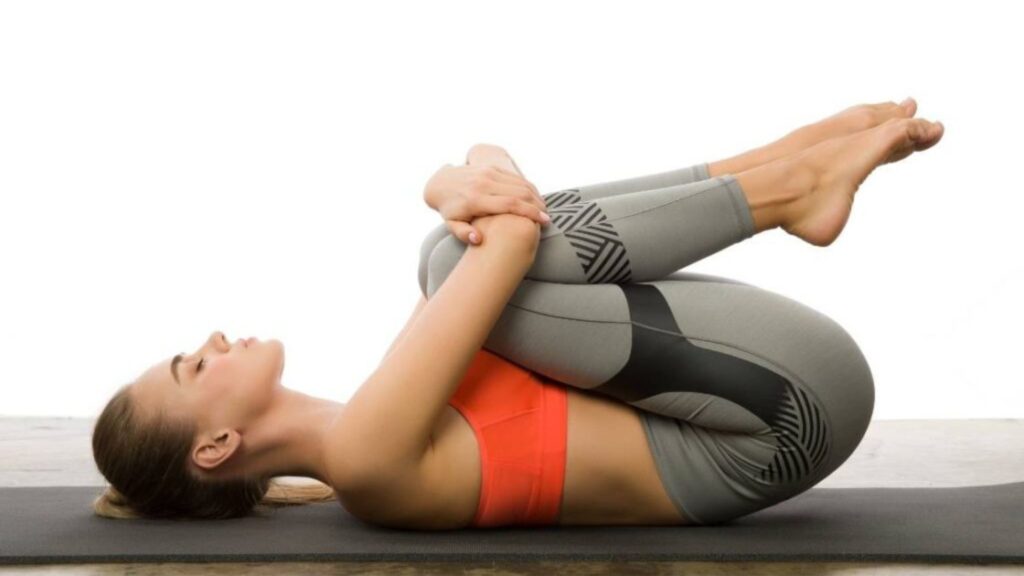
Lie on your back. Hug one knee gently to the chest, holding the thigh rather than the knee to avoid knee joint compression. Hold 30 seconds each side. This decompresses the lumbar spine, stretches the hip flexors, and provides the hip joint with gentle traction — particularly beneficial for hip osteoarthritis.
5. Supported Bridge Pose
Lie on your back with knees bent. Slowly lift the hips and place a yoga block or folded blanket under the sacrum. Rest completely. This gently strengthens the glutes without knee compression and opens the hip flexors passively. For knee arthritis sufferers, the supported version is far preferable to the active version.
6. Gentle Wrist Circles and Finger Extensions
For rheumatoid arthritis that affects the hands and wrists: sit comfortably and bring both hands in front of you. Slowly rotate the wrists clockwise and counterclockwise 10 times. Then spread the fingers as wide as possible, hold 3 seconds, make a loose fist, and repeat 10 times. These micro-movements maintain joint mobility and stimulate synovial fluid production in the most commonly affected RA joints.
7. Legs Up the Wall
This is one of the most beneficial poses for arthritis affecting the lower limbs. It reverses the fluid accumulation and swelling that gravity promotes in arthritic ankles, knees, and hips, while simultaneously activating the parasympathetic system to reduce the cortisol that worsens inflammatory arthritis. 10 to 15 minutes daily produces measurable improvements in lower limb swelling and morning stiffness.
8. Supported Child’s Pose
With a bolster supporting the torso, Child’s Pose completely unloads the spine while providing gentle traction to the lumbar region. It is one of the few yoga poses that can be practised safely even during mild flare-up periods. Full guide: Child’s Pose in yoga.
9. Seated Spinal Twist — Chair Version
Sit sideways in a chair. Hold the back of the chair and gently rotate the torso toward it. Go only as far as is comfortable. Hold 6 to 8 breaths each side. Spinal rotation lubricates the facet joints of the thoracic spine — commonly affected in ankylosing spondylitis and thoracic OA — and improves the rotational mobility essential for everyday activities.
10. Gentle Hip Circles — Standing With Wall Support
Stand with one hand on a wall. Slowly circle one hip — forward, out to the side, back, and in — creating a full circumduction of the hip joint. 10 circles each direction, each side. This is the most direct synovial fluid stimulation exercise for hip arthritis and is endorsed by most physiotherapy protocols for hip OA.
11. Warrior I — Chair-Supported
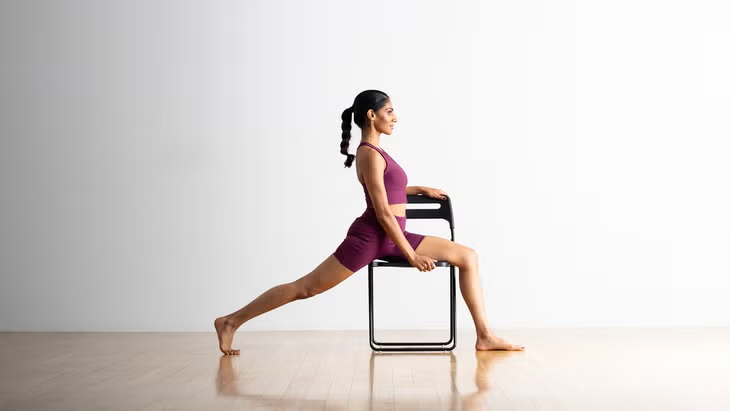
Stand behind a chair, one hand resting on the chair back. Step one foot back. Bend the front knee gently. Hold 6 breaths. This modified Warrior builds quadriceps and glute strength — the muscles that protect the knee joint — without requiring the balance or hip flexor flexibility of the unsupported version. Over weeks, this strength reduces knee pain significantly.
12. Nadi Shodhana — Alternate Nostril Breathing (10 minutes daily)
The anti-inflammatory effects of alternate nostril breathing have been specifically studied in arthritis populations, with significant reductions in pain VAS scores reported after 8 weeks of daily practice. The mechanism is consistent with yoga’s broader anti-inflammatory effects through vagal activation and cortisol reduction. See our complete breathwork guide for full instructions.
Adapting Your Practice During Flare-Ups
Inflammatory arthritis flare-ups require a different approach. During a flare: avoid the affected joint entirely in active poses; use only restorative and breathing practices; prioritise legs up the wall, supported savasana, and breath awareness; and apply gentle heat to affected joints (if OA) or cold (if RA flare with acute inflammation) before and after practice.
Build your wider yoga for arthritis practice alongside our guides to yoga for seniors and restorative yoga poses for a comprehensive joint health programme.
Discover more expert yoga guides at YogaSniff.com