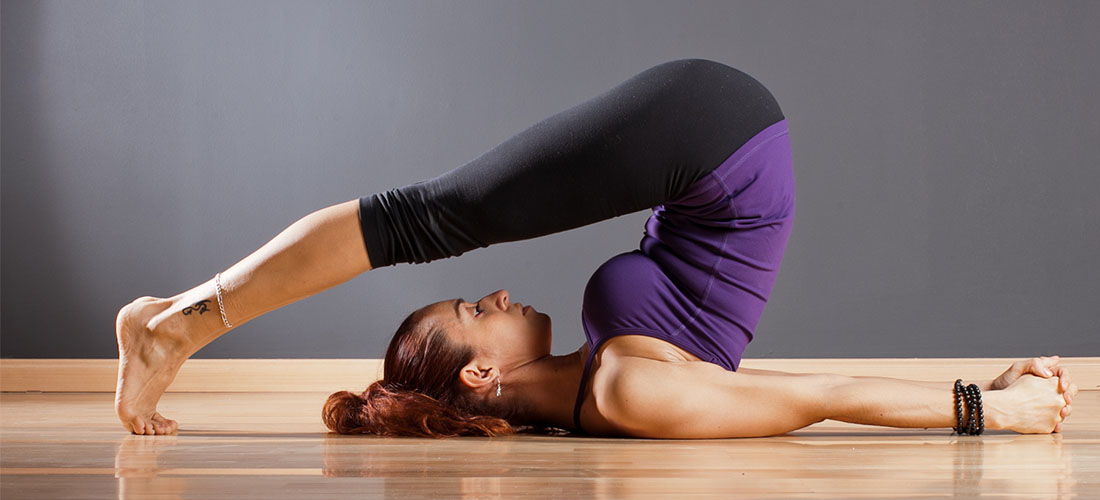


Plow Pose — known as Halasana in Sanskrit — is a traditional inverted yoga posture often practiced in Hatha and modern yoga sequences. This pose gently folds the body forward while the legs stretch overhead, resembling the shape of a traditional plough, which inspired its name.
- What Is Plow Pose (Halasana)?
- How to Do Plow Pose (Step-by-Step)
- Visual Shape Cue
- Benefits of Halasana (Informational Overview)
- Variations for Different Experience Levels
- Common Mistakes to Avoid in Plough Pose
- Safety Considerations & When to Avoid
- Breathing Techniques in Plow Pose
- Frequently Asked Questions
- Final Thoughts
Whether you’re searching for plow pose yoga, yoga plow position, or plough pose yoga, this guide explains everything beginners should know about Halasana: how to do it, benefits, variations, safety considerations, breathing techniques, and when to avoid it.
(Wellness information only — not medical advice.)
What Is Plow Pose (Halasana)?
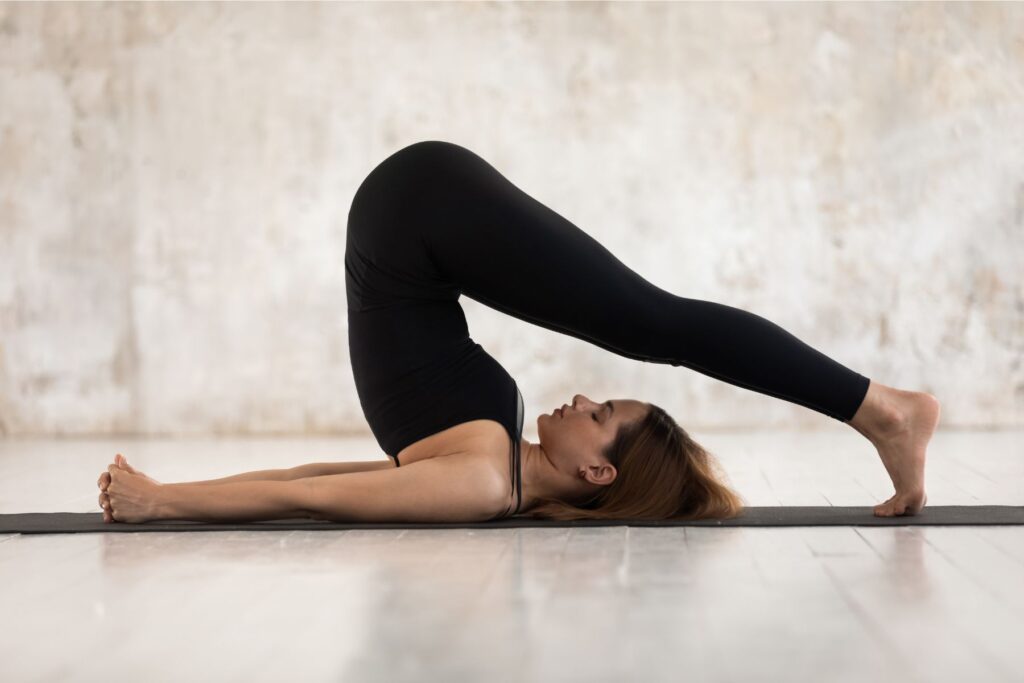
Plow Pose is an inverted forward bend where the legs move over the head while the shoulders support most of the body’s weight.
It combines:
✔ inversion
✔ forward fold
✔ upper back opening
✔ deep hamstring stretch
✔ mindful breathing
Because of its shape, you’ll also see it written as:
- plough pose
- plow pose yoga
- yoga plow position
- plough pose yoga
All names refer to the same posture: Halasana.
How to Do Plow Pose (Step-by-Step)
Beginners can follow this slow, controlled method:
- Start Position
Lie on your back with arms beside your body and legs extended. - Lift Legs
Inhale and lift both legs to a 90° angle using core strength or leg support. - Engage Core & Lift Hips
Use hands to support the lower back and gently lift hips off the floor. - Move into Position
Exhale as you slowly lower legs toward the floor behind your head. - Support Shoulders
Keep hands on the back or slide arms onto the floor with fingers interlaced. - Hold Gently
Stay for a few breaths without forcing feet to reach the floor. - Release Slowly
To exit, support your back and slowly roll down vertebra by vertebra.
Visual Shape Cue
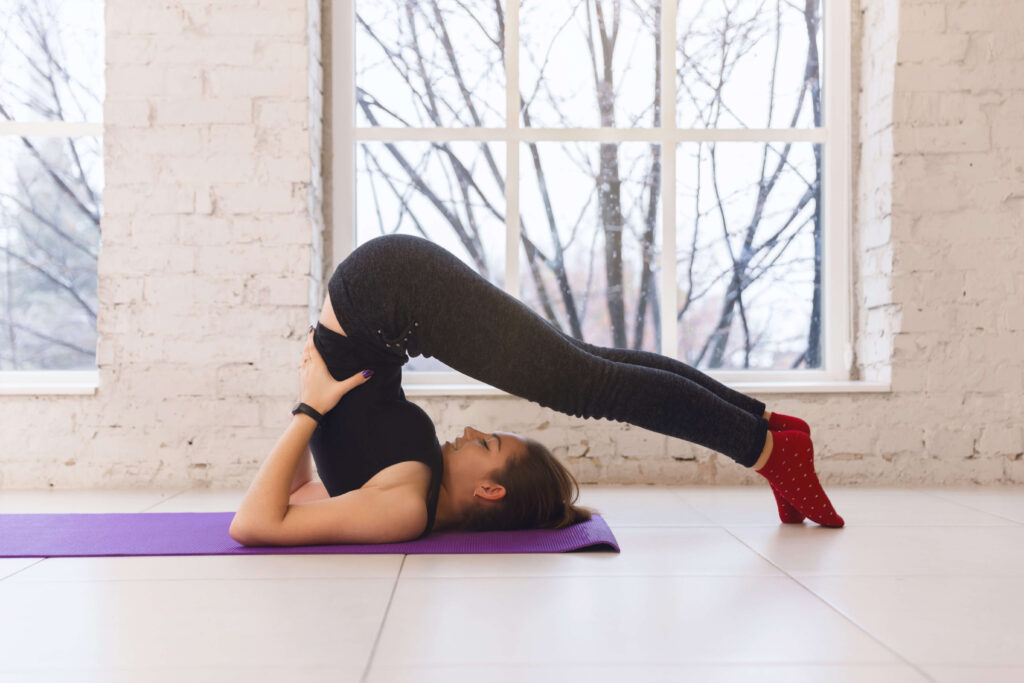
If you’re not sure how the yoga plow position looks:

- shoulders stay grounded
- torso lifts off the mat
- legs extend overhead
- feet may touch floor behind head (not required for beginners)
It resembles a curved shape similar to a farming plough — which is how plough pose got its name.
Benefits of Halasana (Informational Overview)
Here are commonly mentioned benefits of Halasana (from a general wellness perspective):
✔ lengthens hamstrings & calves
✔ increases back-body flexibility
✔ strengthens core & upper back muscles
✔ encourages slow, steady breathing
✔ enhances body awareness
✔ introduces gentle inversion to practice
✔ supports spinal mobility
This is general informational content — not a health claim or medical substitute.
Variations for Different Experience Levels
Beginner Variation: Supported Plow Pose
Use props for safety:
- place yoga blocks under feet
- use bolster or pillows under shoulders
- keep knees slightly bent
This reduces intensity and strain.
Intermediate Variation
Straighten legs fully and bring feet closer to the floor without forcing contact.
Advanced Variation
Feet reach the mat behind the head, arms extend forward with fingers interlaced and shoulders grounded.
Common Mistakes to Avoid in Plough Pose
Beginners often make these mistakes:
❌ jerking legs into position
❌ forcing feet to touch floor
❌ rounding cervical neck too deeply
❌ collapsing shoulders
❌ holding breath
Correct approach:
✔ move with breath
✔ keep neck neutral
✔ lift through core, not momentum
✔ support lower back with hands when needed
✔ use props for comfort
Safety Considerations & When to Avoid
Avoid plow pose yoga if you:
- are pregnant
- have neck injuries
- have recent spinal injury
- feel pain while inverting
- have high physical discomfort entering the pose
Always practice gently and respectfully.
If unsure, ask a certified yoga instructor for guidance.
Breathing Techniques in Plow Pose
Breath is essential in inversion work. Try:
➡ inhale slowly through the nose (4 seconds)
➡ exhale gently through the nose (6 seconds)
Long exhales help soften muscles and encourage relaxation.
If you’re new to breathing practices, explore our guide on breathing exercises for beginners, which pairs well with Halasana and other inversion poses.
Frequently Asked Questions
Q1: Is Plow Pose safe for beginners?
Beginners can practice modified versions with props and supervision.
Q2: What muscles does Plough Pose stretch?
It stretches hamstrings, calves, spinal muscles, and opens the shoulders.
Q3: What’s the difference between Plow Pose and Shoulder Stand?
Shoulder Stand is vertical and works more on balance; Plow Pose folds forward with legs overhead.
Q4: Is it necessary to touch the floor with feet?
No — feet touching the floor is optional and not required for benefits.
Q5: Why is it called Plough Pose?
The shape of the body resembles a traditional plough used in farming.
Final Thoughts
Plow Pose (Halasana) is a powerful inversion and forward fold that improves flexibility, builds awareness, and introduces a deeper relationship with breath and movement. Beginners should approach it slowly, with props and mindful support, as part of a well-rounded yoga sequence.
With time, patience, and consistent practice, Halasana becomes more accessible and enjoyable.