

Lower back stiffness has become extremely common, especially for people who sit for long hours, drive frequently, sleep in curled positions, or work on laptops and phones throughout the day. The good news is, you don’t need equipment or a gym to get relief — gentle yoga can help increase mobility, release tension, and improve posture naturally.
This beginner-friendly guide covers the best yoga poses for lower back stiffness, how to practice them safely, and how breathing supports relaxation.
(General wellness info only; not medical advice.)
Why Lower Back Stiffness Happens

Lower back stiffness often appears due to:
✔ long hours of sitting
✔ weak core muscles
✔ tight hamstrings
✔ tight hip flexors
✔ lack of movement
✔ poor posture
✔ shallow breathing
When surrounding muscles tighten, the lower back compensates, leading to limited mobility and discomfort.
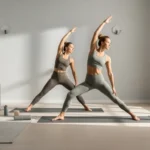
Yoga helps by:
✔ increasing flexibility in hips & hamstrings
✔ lengthening spinal muscles
✔ improving pelvic alignment
✔ enhancing posture awareness
✔ encouraging deeper breathing
Even a few minutes of gentle movement can make mornings and evenings feel better.
10 Best Yoga Poses for Lower Back Stiffness
Here are safe, beginner-friendly poses that help release tension in the lower back, hips, and hamstrings:

1. Cat–Cow Stretch (Spine Mobilizer)
How to do:
- Start on hands and knees
- Inhale: arch spine (Cow)
- Exhale: round spine (Cat)
- Move slowly with breath
Benefits:
✔ warms spine
✔ reduces morning stiffness
✔ improves mobility
2. Child’s Pose (Lower Back Release)
How to do:
- Kneel on mat
- Fold torso forward
- Extend arms or leave them by sides
- Breathe into the lower back
Benefits:
✔ gentle decompression
✔ lengthens spinal muscles
✔ calming for nervous system
3. Downward-Facing Dog (Hamstring + Spine Stretch)
How to do:
- From hands and knees, lift hips
- Bend knees slightly if hamstrings are tight
- Keep spine long
Benefits:
✔ stretches hamstrings and calves
✔ reduces back tension from tight legs
✔ activates upper body
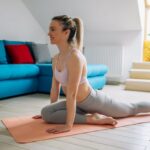
4. Low Lunge (Hip Flexor Opener)
How to do:
- Step one foot forward
- Lower back knee to mat
- Gently shift weight forward
Benefits:
✔ opens tight hip flexors (important for sitters)
✔ improves pelvic alignment
✔ reduces lower back strain
5. Supine Hamstring Stretch (Leg Raise)
How to do:
- Lie on back
- Lift one leg
- Hold behind thigh
- Keep knee slightly bent
Benefits:
✔ lengthens hamstrings
✔ supports lumbar spine
Repeat both sides.
6. Reclined Figure-4 (Hip + Glute Release)
How to do:
- Lie on back
- Cross ankle over opposite knee
- Pull legs toward chest gently
Benefits:
✔ releases glute muscles
✔ reduces pressure on lower back
✔ improves hip mobility
7. Seated Forward Bend (Paschimottanasana)
How to do:
- Sit with legs extended
- Hinge forward from hips
- Keep spine long
- Bend knees if tight
Benefits:
✔ stretches hamstrings + lower back
✔ decompresses spine gently
8. Bridge Pose (Back + Glute Activation)
How to do:
- Lie on back with knees bent
- Lift hips slowly
- Squeeze glutes
- Lower gently
Benefits:
✔ strengthens posterior chain
✔ counteracts sitting posture
✔ creates space in lumbar region
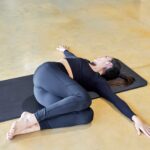
9. Supine Twist (Lower Back Mobility)
How to do:
- Lie on back
- Bring knees to chest
- Drop knees to one side
- Gaze opposite direction
Benefits:
✔ releases spinal tension
✔ improves rotational mobility
✔ feels relaxing after long days
10. Legs Up the Wall (Restorative)
How to do:
- Sit by wall
- Swing legs up
- Rest arms comfortably
- Close eyes and breathe
Benefits:
✔ releases lower back pressure
✔ aids recovery
✔ promotes relaxation
Suggested Beginner Routine (8–12 Minutes)
Try this after work, before bed, or in the morning:
- Cat–Cow — 1 minute
- Child’s Pose — 1 minute
- Low Lunge — 45 sec each side
- Figure-4 Stretch — 1 minute each side
- Seated Forward Bend — 1 minute
- Supine Twist — 1 minute each side
- Legs Up the Wall — 3 minutes
Total: 8–12 minutes
Consistency matters more than intensity.
Breathing Helps Reduce Tension
Most back stiffness worsens with shallow breathing.
Try this simple breath pattern:
➡ inhale 4 seconds
➡ exhale 6 seconds
Long exhalations signal the nervous system to relax, which helps muscles soften.
If you’re new to breathwork, our guide on breathing exercises for beginners pairs perfectly with lower back routines.
Tips for Beginners
✔ don’t force flexibility
✔ use pillows or blocks if needed
✔ move slowly and avoid bouncing
✔ focus on consistency, not depth
✔ stretching should be comfortable, not painful
Slow progress is still progress.
Frequently Asked Questions
Do I need to be flexible?
No — flexibility improves with practice.
Can yoga help tight hamstrings?
Gentle yoga is commonly used to improve hamstring flexibility over time.
Is it okay to practice daily?
Yes — gentle stretching can be done daily by beginners.
Morning or evening—what’s better?
Both work: morning reduces stiffness, evening supports relaxation.
Should stretches hurt?
Stretching should never be painful. Mild discomfort is normal, pain is not.
Final Thoughts
Lower back stiffness is common, especially in modern life. Yoga offers a simple, accessible way to support spinal mobility, hip flexibility, and general comfort without needing equipment or advanced skills.
Just a few minutes of slow movement each day can make walking, sitting, and bending feel easier — and help your body meet the day with less tension.
Start small, breathe deeply, and let your body ease into it.