
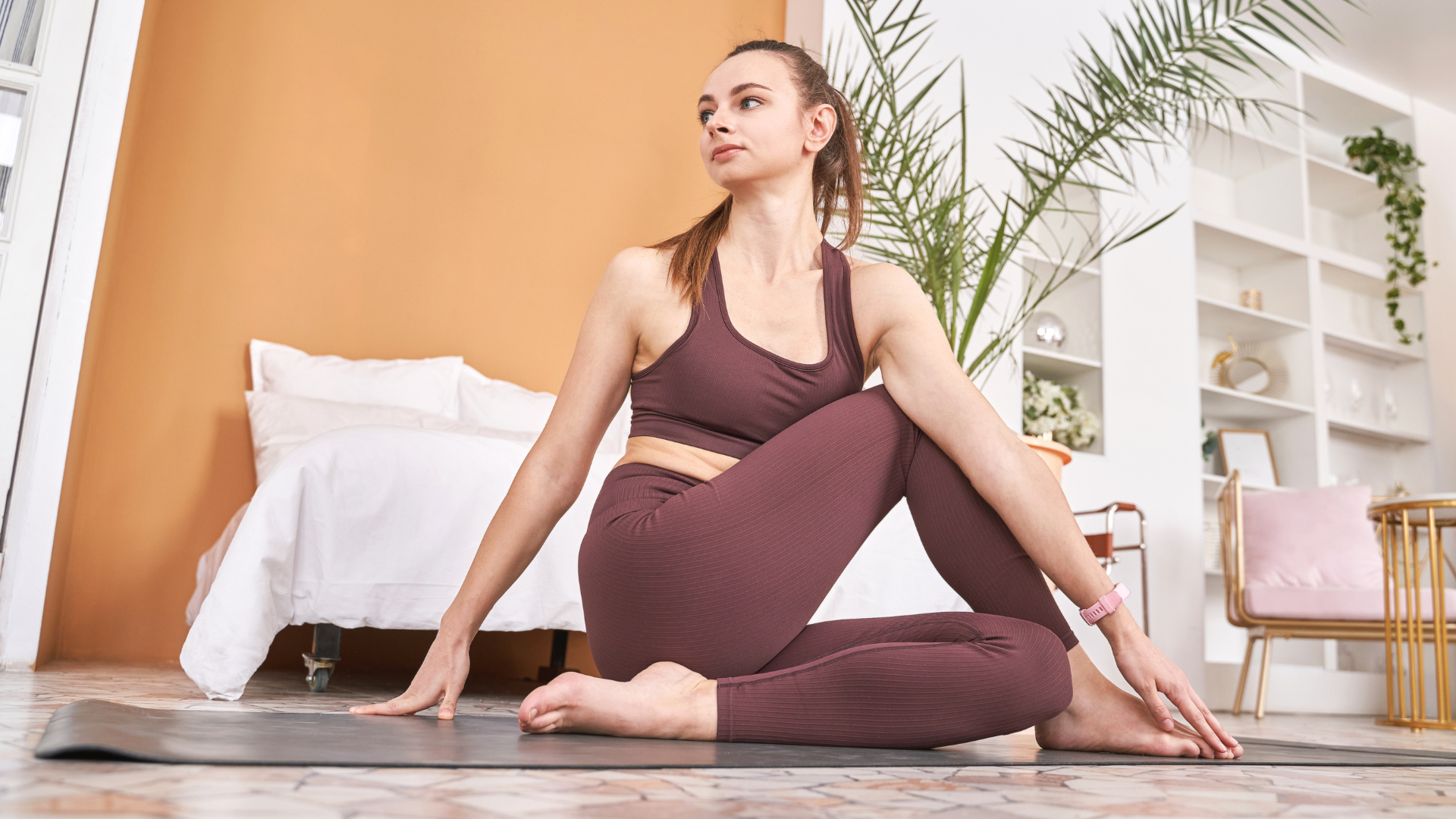
If you’ve decided, “Ab ghar pe yoga start karna hai” but don’t know where to begin — this guide is for you.
We’ll walk through:
- how to set up your home space
- essential beginner yoga poses
- simple 10–20 minute routines
- how often to practice
- common mistakes to avoid
All in simple, human language, without pressure or perfection.
What Does “Yoga for Beginners at Home” Actually Mean?
For our purpose, yoga for beginners at home means:
Simple postures + slow breathing + basic awareness,
done in a small space with minimal equipment.
You do not need:
- extreme flexibility
- advanced poses
- expensive gear
- an hour-long practice
You only need:
- 5–20 free minutes
- a little floor space
- willingness to move & breathe slowly
Step 1: Set Up Your Home Yoga Space
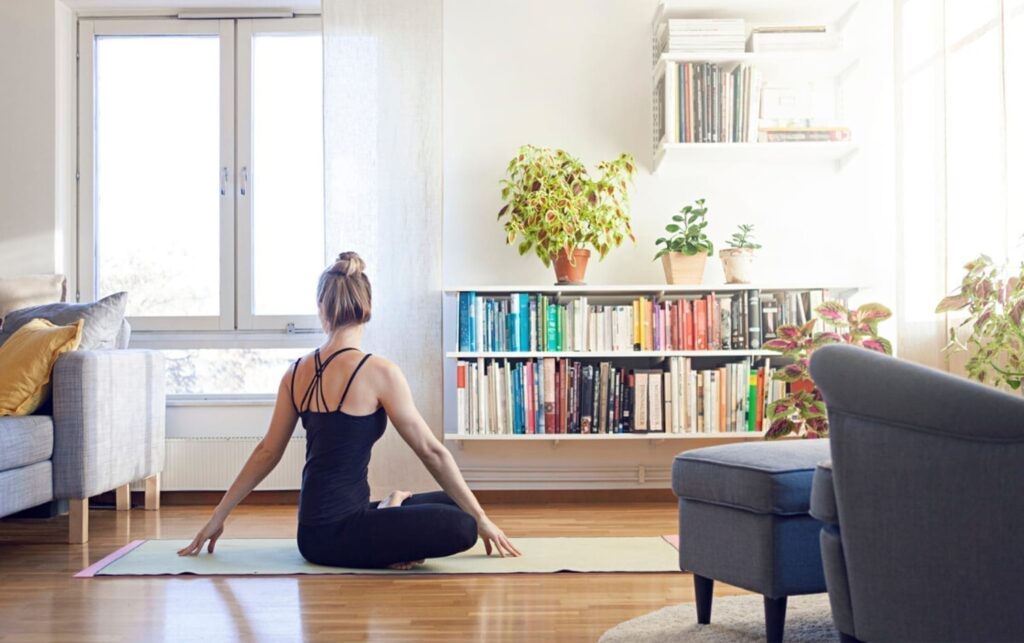
You don’t need a fancy studio. A quiet corner works.
1.1 Space Checklist
Try to find a place that is:
- big enough to lie down with arms stretched
- not too cluttered
- not too slippery
- reasonably quiet (or at least “less noisy”)
If possible:
- keep this as your regular yoga spot (helps habit & mood)
1.2 Basic Things You Can Use
| Item | Must-Have? | Notes |
|---|---|---|
| Yoga mat | Helpful | Prevents slipping, adds comfort |
| Cushion/pillow | Optional | Helps in seated poses & breathing |
| Yoga blocks | Optional | Support for tight hamstrings/hips |
| Blanket | Optional | Extra padding for knees or relaxation |
Budget setup = carpet + pillow → works totally fine.
Step 2: Key Principles for Beginners (Very Important)
Before poses, remember these 5 rules:
- No pain, only gentle stretch
- Breathe through the nose, slowly and naturally
- Never force flexibility — progress is gradual
- Focus on how it feels, not how it looks
- Consistency > intensity (short daily > long occasional)
Step 3: Essential Beginner Yoga Poses at Home
These are simple, safe, foundational poses you can do in a small room.
3.1 Mountain Pose (Tadasana)
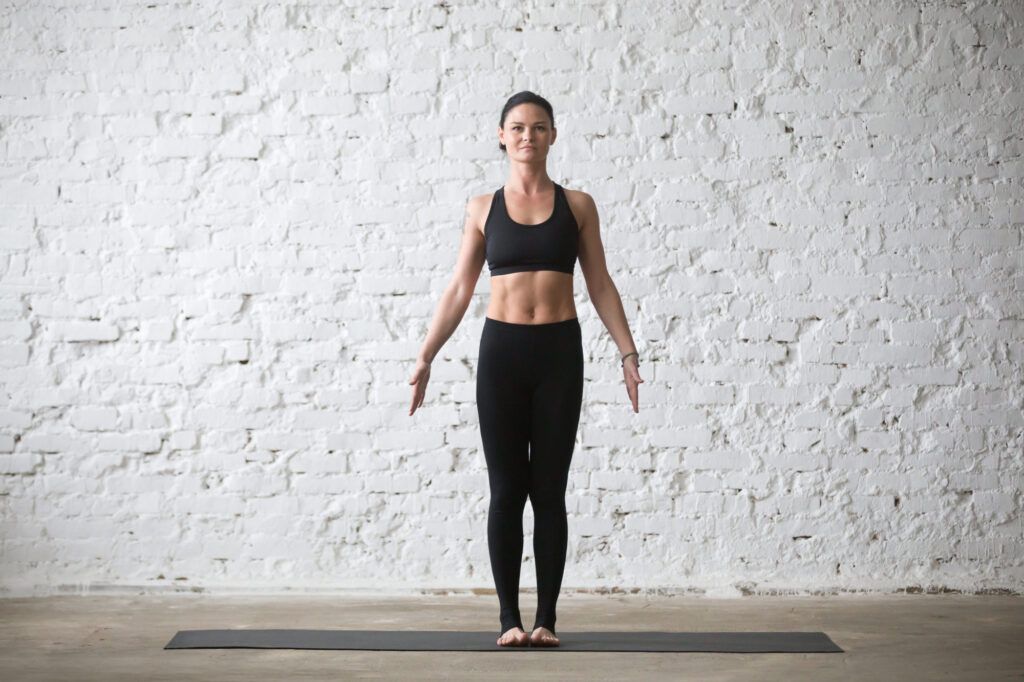
- Stand tall, feet hip-width
- Relax shoulders, arms by side
- Gently engage thighs & core
- Breathe slowly
Why: Builds posture awareness for the rest of your day.
3.2 Cat–Cow (Marjaryasana–Bitilasana)
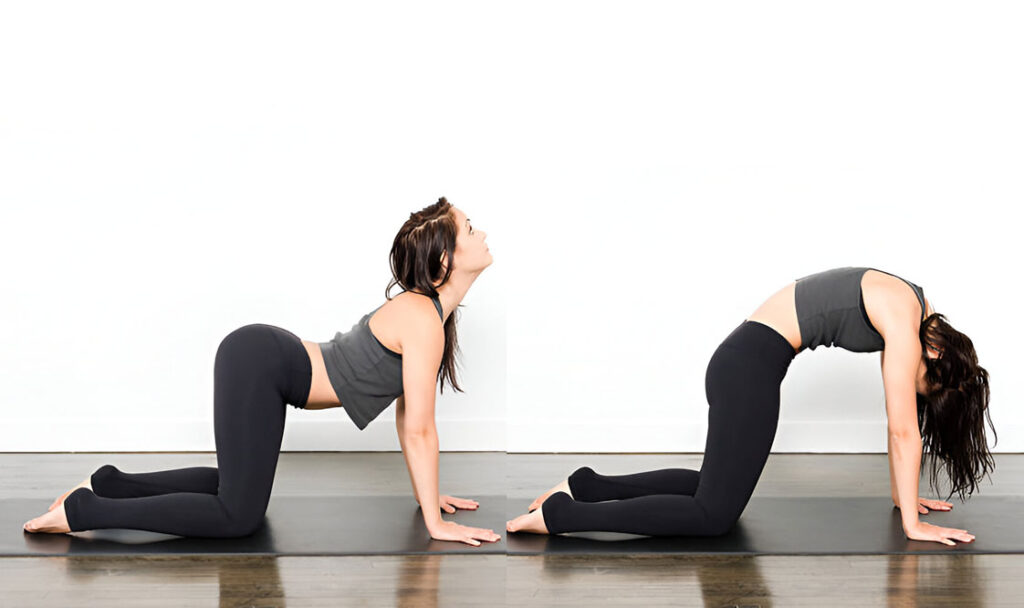
- Come on hands & knees
- Inhale → lift chest, arch back (Cow)
- Exhale → round spine, tuck chin (Cat)
Why: Gently wakes up the entire spine.
3.3 Downward-Facing Dog (Adho Mukha Svanasana)
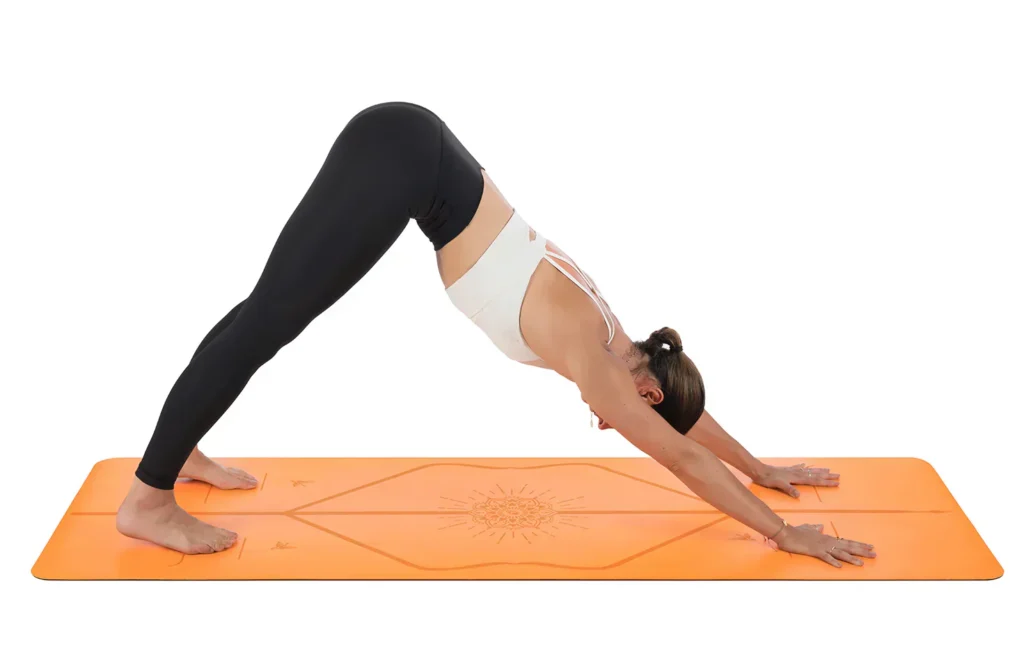
- From hands & knees, lift hips up and back
- Keep knees slightly bent if needed
- Press through palms
Why: Full body stretch—shoulders, back, hamstrings.
3.4 Low Lunge (Anjaneyasana)
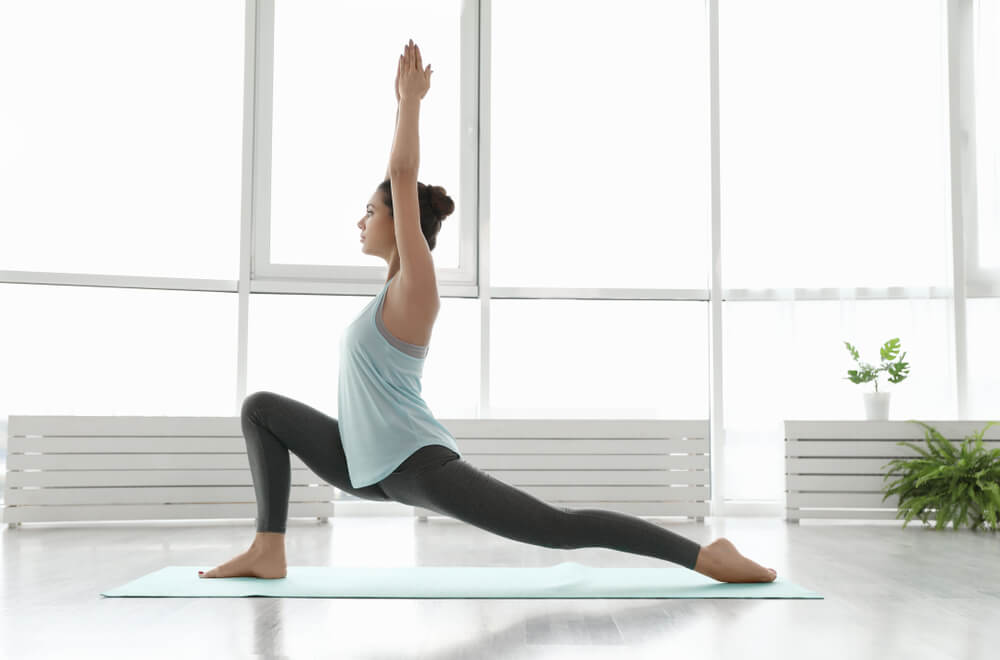
- Step right foot forward, left knee down
- Front knee above ankle
- Lift chest softly, breathe
- Repeat on left side
Why: Opens hip flexors (tight from sitting).
3.5 Child’s Pose (Balasana)
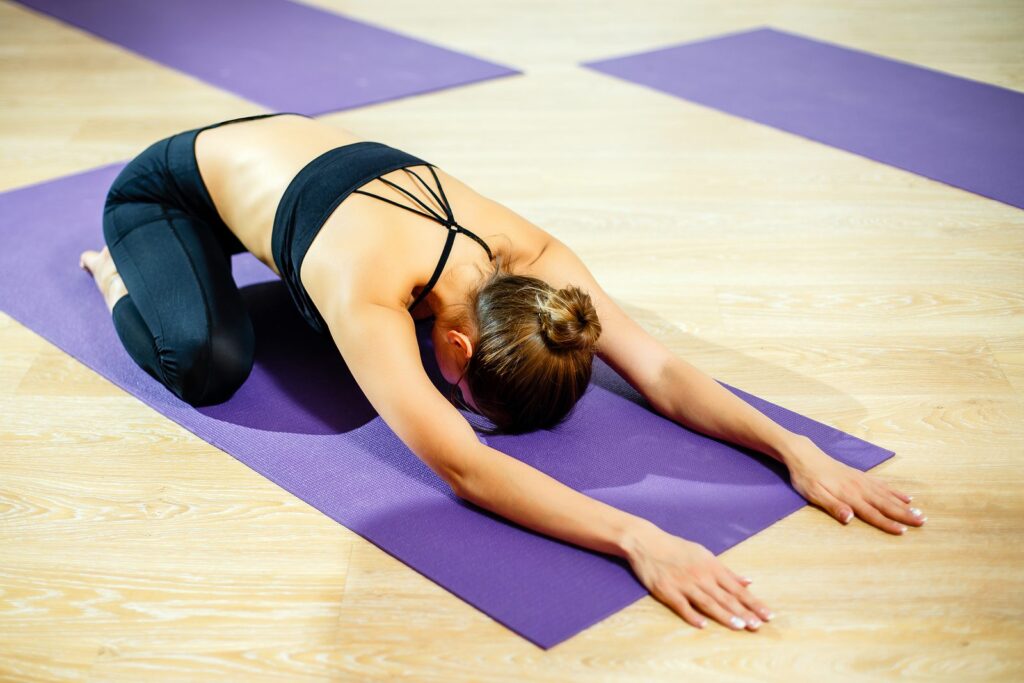
- Knees apart or together, sit back to heels
- Fold forward, arms ahead or by sides
- Rest forehead on mat
Why: Gentle rest pose to calm breathing & mind.
3.6 Seated Forward Fold (Paschimottanasana)
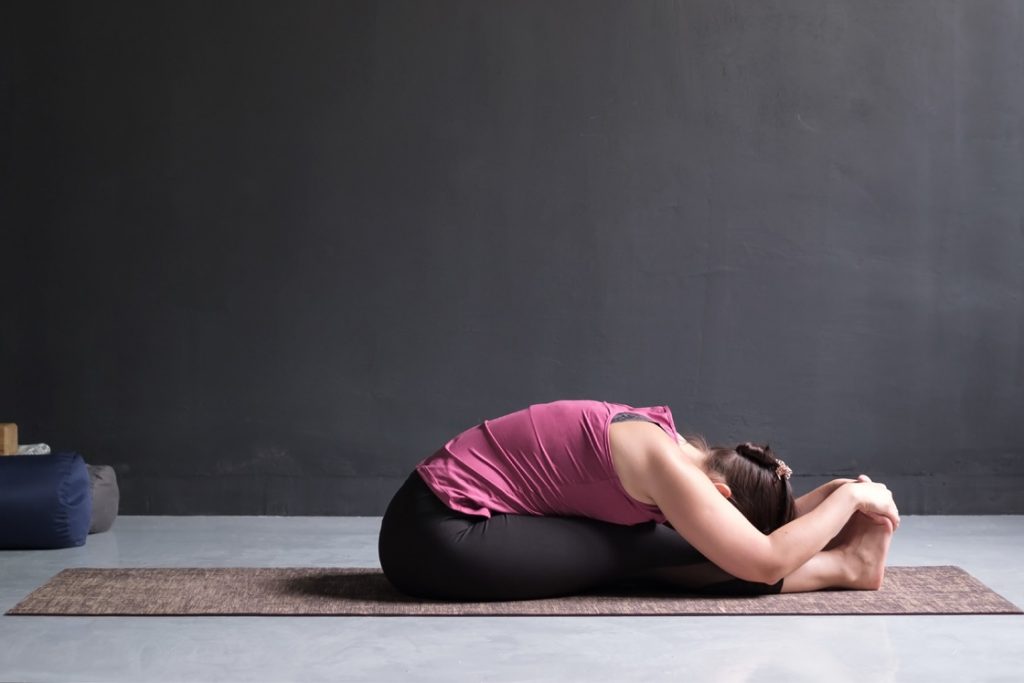
- Sit with legs extended
- Inhale lengthen spine
- Exhale fold forward from hips
- Bend knees if hamstrings are tight
Why: Stretches back of legs & relaxes the back.
3.7 Easy Seated Pose (Sukhasana) + Breathing
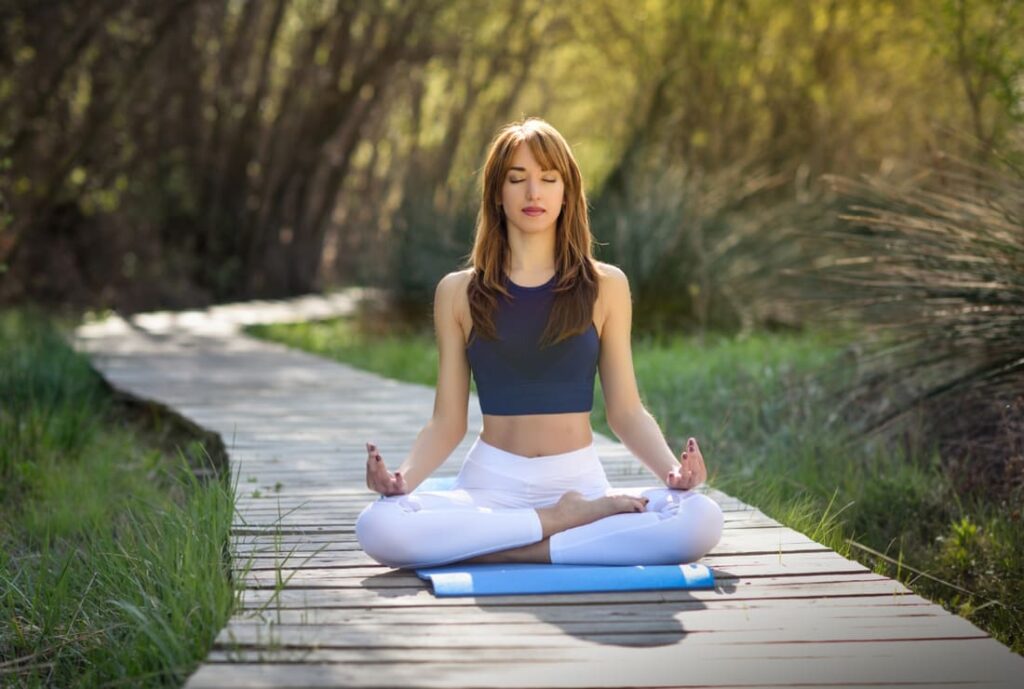
- Sit cross-legged (or on a cushion)
- Rest hands on knees
- Keep spine tall
- Breathe slowly in & out through the nose
Why: Great for breathing exercises for beginners.
Step 4: Simple 10-Minute Yoga for Beginners at Home
If you only have 10 minutes, start with this:
| Time | Pose / Practice |
|---|---|
| 1 min | Easy seated breathing |
| 2 min | Cat–Cow |
| 2 min | Downward Dog |
| 2 min | Low Lunge (1 min each side) |
| 2 min | Seated Forward Fold |
| 1 min | Child’s Pose (rest) |
Use slow nasal breathing all the way.
Step 5: 20-Minute Full-Body Beginner Routine
For days when you can practice longer:
Warm-Up (5 minutes)
- 1 min easy breathing (Sukhasana)
- 2 min Cat–Cow
- 2 min gentle neck & shoulder rolls
Standing Flow (8 minutes)
- 1 min Mountain Pose
- 2 min Forward Fold → Half-lift → Fold
- 2 min Low Lunge (R + L)
- 2 min Downward Dog with slow transitions
- 1 min gentle standing twist (each side 30s)
Floor & Cool Down (7 minutes)
- 2 min Seated Forward Fold
- 2 min Figure-4 stretch (on back, each side 1 min)
- 2 min Child’s Pose
- 1 min quiet rest (Savasana)
How Many Days a Week Should Beginners Do Yoga at Home?
There is no strict rule, but for general wellness awareness:
- 3 days/week → good start
- 4–5 days/week → steady progress
- Even 5–10 minutes daily helps build habit
Focus on what fits your life, not unrealistic targets.
Common Mistakes Beginners Make at Home (and Easy Fixes)
| Mistake | Fix |
|---|---|
| Comparing with YouTube/Instagram | Focus on your breath & comfort, not perfect shapes |
| Holding breath in poses | Keep breath slow & steady through nose |
| Forcing painful stretches | Back off until it’s just a mild, steady sensation |
| Doing too much on Day 1 | Start with 10 minutes, grow slowly |
| Skipping warm-up | Always do some spine + joint movement first (Cat–Cow, circles) |
Breathing: The Secret Weapon of Home Yoga
Most top guides also emphasize breathing, not just poses.
For beginners at home, you can start with:
Simple 4–6 Breathing
- Inhale 4 seconds
- Exhale 6 seconds
- Repeat for 2–5 minutes
This fits before or after your pose routine.
Suggested Weekly Plan for Yoga at Home (Beginner)
| Day | Focus | Duration |
|---|---|---|
| Monday | Full-body 10 min flow | 10 min |
| Tuesday | Hip-focused routine | 10–15 min |
| Wednesday | Rest or breathing only | 5–8 min |
| Thursday | Full-body 20 min routine | 20 min |
| Friday | Morning mobility & stretch | 10–15 min |
| Saturday | Free practice/play | 10–20 min |
| Sunday | Rest or gentle Child’s Pose | 5 min |
👉 From “hip-focused routine”, “yoga for stiff hips” article on YogaSniff .
- If you enjoy pairing yoga with adventure, you can also explore
SkydiveGuides.com for skydiving europe best places to balance calm + thrill in your lifestyle. - For people who love the ocean, ScoobaDiveGuide.com shares best scuba divers in the world — yoga-style breathing is helpful there too.
Frequently Asked Questions (Yoga at Home – Beginners)
Q1: Is it okay to learn yoga at home as a complete beginner?
Yes. Start with simple poses, short routines, and slow breathing. No need for advanced poses or long sessions.
Q2: How long should a beginner yoga session be at home?
Even 10–15 minutes is enough in the beginning. Focus on consistency.
Q3: Do I need a yoga mat to start?
No. A carpet or thick blanket works. A mat helps with grip, but it’s not mandatory on Day 1.
Q4: Should I practice in the morning or evening?
Whenever you can be consistent. Many people prefer morning yoga routines to feel fresh and focused.
Q5: I’m not flexible — can I still do yoga?
Absolutely. You practice yoga to gradually become more mobile and aware, not because you’re already flexible.
Final Thoughts: Your Home, Your Practice
You don’t need a studio, complicated sequences, or extreme flexibility to start yoga for beginners at home.
You need:
- a bit of floor
- a few simple poses
- slow breathing
- and a promise to yourself to show up — even for 5–10 minutes.