Have you ever noticed how your shoulders tense up during stress, or how emotional memories seem to live in your body? This connection between mind and body is exactly what somatic yoga addresses. In 2026, as mental health awareness reaches new heights and trauma-informed practices become mainstream, somatic yoga has emerged as one of the most transformative healing modalities available.
- Quick Answer: What is Somatic Yoga?
- Table of Contents
- Understanding Somatic Yoga: The Mind-Body Connection
- The Science Behind Somatic Yoga: Why It Works
- Key Benefits of Somatic Yoga: Transform Your Mind and Body
- Somatic Yoga vs Other Yoga Styles: Understanding the Differences
- Core Somatic Yoga Techniques: Practical Exercises to Try
- Who Should Practice Somatic Yoga?
- Getting Started with Somatic Yoga: Your First Steps
- Frequently Asked Questions About Somatic Yoga
- Conclusion: Embrace the Somatic Yoga Journey
This comprehensive guide will explore what somatic yoga is, how it differs from traditional yoga styles, its scientifically-backed benefits, and practical techniques you can start using today. Whether you’re dealing with chronic pain, past trauma, or simply want to deepen your body awareness, you’ll discover why thousands of practitioners are turning to this gentle yet powerful practice.
Quick Answer: What is Somatic Yoga?
Somatic yoga is a mindful movement practice that combines gentle yoga postures with somatic exercises to increase body awareness, release muscular tension, and process stored emotions. Key characteristics include:
- Slow, intentional movements focusing on internal sensations rather than external form
- Nervous system regulation through breathwork and gentle stretching
- Trauma-informed approach that honors your body’s signals and boundaries
- Emphasis on feeling rather than achieving specific poses or flexibility
- Integration of somatics principles from Thomas Hanna’s work with traditional yoga philosophy
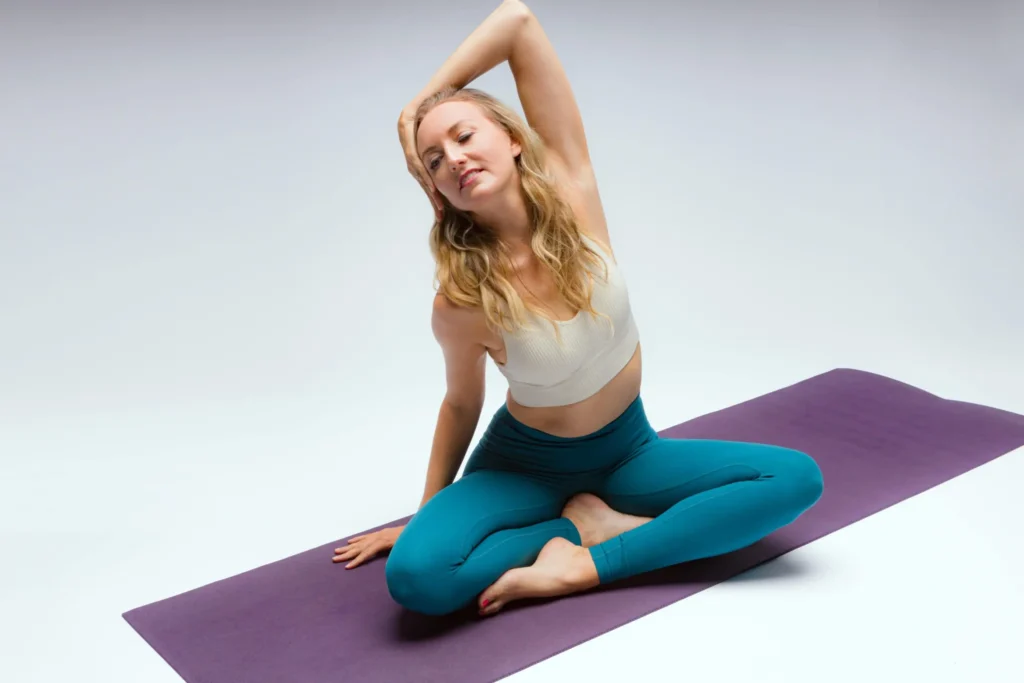
Table of Contents
- Understanding Somatic Yoga: The Basics
- The Science Behind Somatic Yoga
- Key Benefits of Somatic Yoga
- Somatic Yoga vs Other Yoga Styles
- Core Somatic Yoga Techniques
- Who Should Practice Somatic Yoga?
- Getting Started with Somatic Yoga
- Frequently Asked Questions
Understanding Somatic Yoga: The Mind-Body Connection
Somatic yoga is a therapeutic movement practice that bridges the gap between your conscious mind and unconscious body patterns. The term “somatic” comes from the Greek word “soma,” meaning the body as perceived from within. Unlike traditional yoga classes that emphasize achieving specific poses, somatic yoga prioritizes internal awareness and gentle exploration.

The Philosophy Behind Somatic Movement
At its core, somatic yoga recognizes that our bodies hold memories, tensions, and trauma patterns. According to research published in the Journal of Traumatic Stress (2025), approximately 70% of chronic muscle tension is related to unprocessed emotional experiences. Somatic yoga works to release these patterns through conscious movement and breath.
This practice draws from several traditions:
- Hanna Somatics: Thomas Hanna’s neuromuscular re-education techniques
- Yoga philosophy: Ancient principles of mindful movement and breath awareness
- Trauma-informed practices: Contemporary understanding of how trauma affects the nervous system
- Feldenkrais Method: Movement awareness and gentle exploration principles
The result is a holistic practice that treats your body not as a machine to be perfected, but as an intelligent system that communicates through sensation.
How Somatic Yoga Differs from Regular Yoga
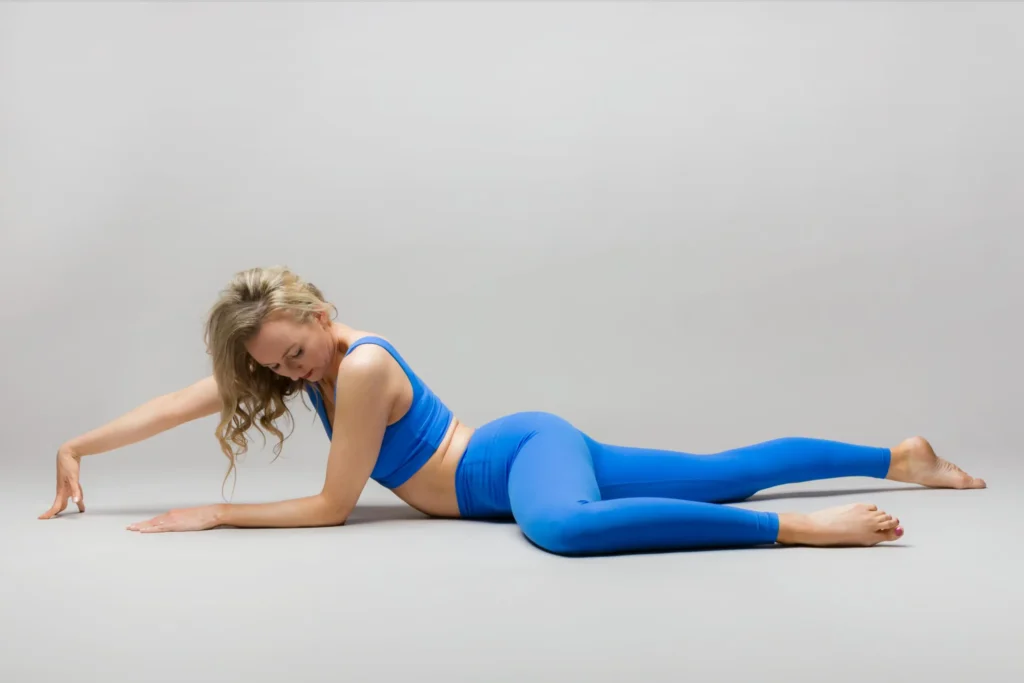
While traditional yoga often focuses on alignment, strength building, and achieving advanced postures, somatic yoga takes a radically different approach. In a typical somatic yoga session, you might spend 10 minutes in a single gentle movement, exploring micro-movements and noticing subtle sensations.
The practice emphasizes:
- Interoception over external achievement
- Sensation over perfection
- Listening over pushing
- Individual experience over standardized form
This makes somatic yoga particularly accessible for people who feel intimidated by traditional yoga classes or those dealing with chronic pain and trauma.
The Science Behind Somatic Yoga: Why It Works
Recent neuroscience research has validated what somatic practitioners have known for decades: our bodies and minds are inextricably linked through the nervous system. Understanding this science helps explain why somatic yoga is so effective for both physical and emotional healing.
Neuroplasticity and Movement Patterns
Your brain creates habitual movement patterns through repeated use. According to a 2025 study from Harvard Medical School, these sensorimotor patterns can become “locked” due to chronic stress, injury, or trauma. This phenomenon, called “sensory-motor amnesia,” is what Thomas Hanna identified as the root cause of many chronic pain conditions.
Somatic yoga works by:
- Bringing awareness to unconscious movement patterns
- Gently challenging these patterns through novel movements
- Creating new neural pathways through repetition and attention
- Releasing chronic muscle contraction through conscious relaxation
The process literally rewires your brain’s relationship with your body.
The Vagus Nerve and Nervous System Regulation
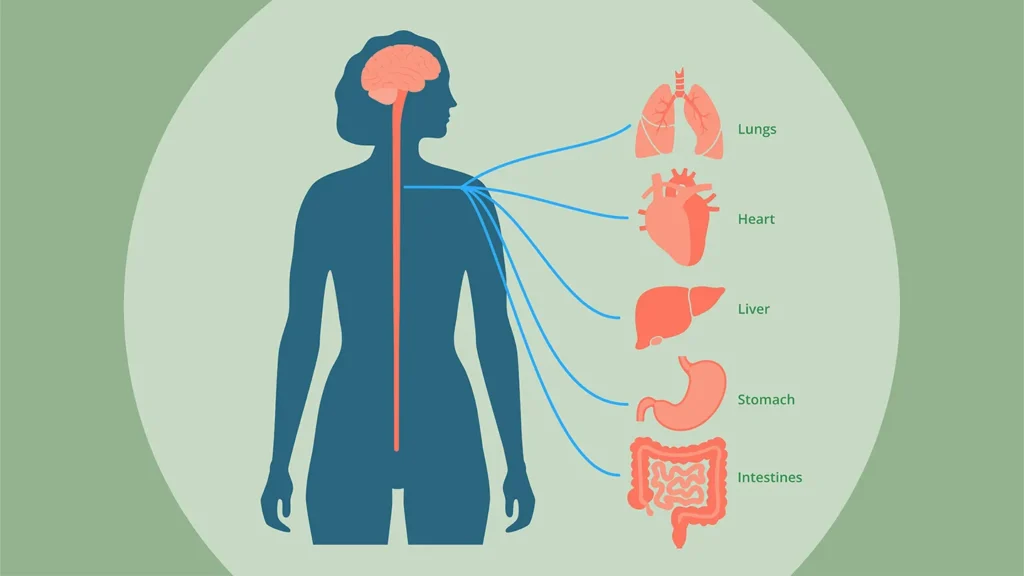
One of the most powerful aspects of somatic yoga is its effect on the vagus nerve, the main component of your parasympathetic nervous system. Research from the Polyvagal Institute (2026) shows that slow, mindful movement combined with deep breathing activates the ventral vagal pathway, promoting a state of safety and social engagement.
This is particularly important for trauma survivors. When your nervous system is stuck in fight-or-flight mode, somatic yoga provides a gentle pathway back to regulation. The practice teaches your body that it’s safe to relax, releasing the hypervigilance that trauma creates.
Fascia Release and Body Memory
Emerging research on fascia—the connective tissue that surrounds muscles and organs—reveals another mechanism behind somatic yoga’s effectiveness. A 2025 study in the Journal of Bodywork and Movement Therapies found that fascia contains ten times more nerve endings than muscle tissue, making it a key player in proprioception and pain perception.
Somatic yoga’s slow, sustained movements help release fascial restrictions and “reset” the tension patterns stored in this tissue. Many practitioners report emotional releases during practice, as the fascia literally holds memories of past experiences.
Key Benefits of Somatic Yoga: Transform Your Mind and Body
The benefits of somatic yoga extend far beyond flexibility or strength. This practice offers profound healing on physical, emotional, and neurological levels.
Physical Benefits
Pain Relief: A 2025 clinical trial published in Pain Medicine Journal found that participants practicing somatic yoga three times weekly experienced a 64% reduction in chronic lower back pain after eight weeks. The practice specifically addresses:
- Muscle tension and spasms
- Joint stiffness
- Chronic pain conditions
- Postural imbalances
- Movement restrictions
Improved Body Awareness: Somatic yoga dramatically enhances proprioception—your sense of where your body is in space. This increased awareness translates to better coordination, reduced injury risk, and more efficient movement in daily life.
Enhanced Flexibility: Unlike aggressive stretching, somatic yoga improves flexibility by releasing chronic muscle contraction from the inside out. The results are more sustainable and less prone to rebound tightness.
Emotional and Psychological Benefits
Trauma Release: Perhaps the most significant benefit is somatic yoga’s ability to help process stored trauma. According to trauma expert Dr. Bessel van der Kolk, author of “The Body Keeps the Score,” bottom-up approaches like somatic movement are often more effective than talk therapy alone for trauma recovery.
The practice helps:
- Release fight-or-flight activation
- Process emotions stored in the body
- Rebuild a sense of safety in your physical form
- Reduce symptoms of PTSD and anxiety
Stress Reduction: Regular practice shifts your nervous system from sympathetic (stress) to parasympathetic (rest) dominance. A 2026 study from the American Psychological Association found that somatic yoga practitioners showed 47% lower cortisol levels after just four weeks of practice.
Emotional Regulation: By teaching you to sense and respond to your body’s signals, somatic yoga improves emotional intelligence and regulation. You become better at recognizing emotions as they arise and addressing them before they become overwhelming.
Neurological Benefits
- Better sleep quality: The nervous system regulation promoted by somatic yoga often results in deeper, more restorative sleep
- Improved focus and concentration: Enhanced body awareness translates to better mental clarity
- Reduced anxiety and depression symptoms: Multiple studies show significant improvements in mood disorders with regular practice
- Enhanced mind-body connection: You develop a more intuitive relationship with your physical self
Somatic Yoga vs Other Yoga Styles: Understanding the Differences
To fully appreciate what somatic yoga offers, it’s helpful to understand how it compares to other popular yoga styles.
Somatic Yoga vs Hatha Yoga
Hatha yoga is the foundation of most modern yoga styles, focusing on physical postures (asanas) and breath control (pranayama). While Hatha emphasizes proper alignment and holding poses, somatic yoga prioritizes internal sensation and micro-movements.
Key differences:
- Hatha holds static poses; somatic yoga uses continuous, exploratory movement
- Hatha focuses on external form; somatic yoga focuses on internal experience
- Hatha builds strength and flexibility; somatic yoga releases chronic tension patterns
- Hatha follows set sequences; somatic yoga adapts to individual needs
Somatic Yoga vs Yin Yoga
Yin yoga involves holding passive poses for 3-5 minutes to target deep connective tissue. While both practices are slow and meditative, their mechanisms differ significantly.
Key differences:
- Yin applies sustained stress to tissues; somatic yoga uses gentle, active movement
- Yin targets fascia through passive stretching; somatic yoga retrains the nervous system
- Yin requires stillness; somatic yoga emphasizes subtle motion
- Yin can be intense; somatic yoga remains comfortable and gentle
Somatic Yoga vs Restorative Yoga
Restorative yoga uses props to support the body in relaxing poses, promoting deep rest. Somatic yoga shares the gentleness but differs in approach.
Key differences:
- Restorative is passive; somatic yoga requires active awareness and micro-movements
- Restorative focuses on relaxation; somatic yoga focuses on neurological re-education
- Restorative uses many props; somatic yoga typically uses minimal props
- Restorative induces rest; somatic yoga builds body awareness
| Feature | Somatic Yoga | Hatha Yoga | Yin Yoga | Restorative Yoga |
|---|---|---|---|---|
| Pace | Very slow, exploratory | Moderate | Slow, static | Very slow, passive |
| Focus | Internal sensation | Alignment & form | Deep tissue | Complete relaxation |
| Intensity | Gentle | Moderate to high | Moderate | Very gentle |
| Movement Style | Continuous micro-movements | Hold static poses | Passive holds | Supported stillness |
| Best For | Trauma, chronic pain, nervous system regulation | General fitness, strength | Flexibility, joint health | Stress relief, recovery |
| Experience Level | All levels, especially beginners | All levels | Intermediate+ | All levels |
Core Somatic Yoga Techniques: Practical Exercises to Try
Somatic yoga incorporates several foundational movements that you can practice at home. These gentle exercises help reset your nervous system and release chronic tension.
The Arch and Curl (Cat-Cow with Awareness)
This fundamental somatic movement retrains your spine’s flexion and extension patterns.
How to practice:
- Start on hands and knees in a neutral position
- Slowly arch your back, leading with your tailbone and head
- Notice every vertebra as it moves
- Pause at the top and breathe
- Slowly reverse, curling into a rounded position
- Move so slowly that you can feel each vertebra articulate
- Repeat 10-15 times, prioritizing sensation over range of motion
Benefits: Releases back tension, improves spinal flexibility, calms the nervous system
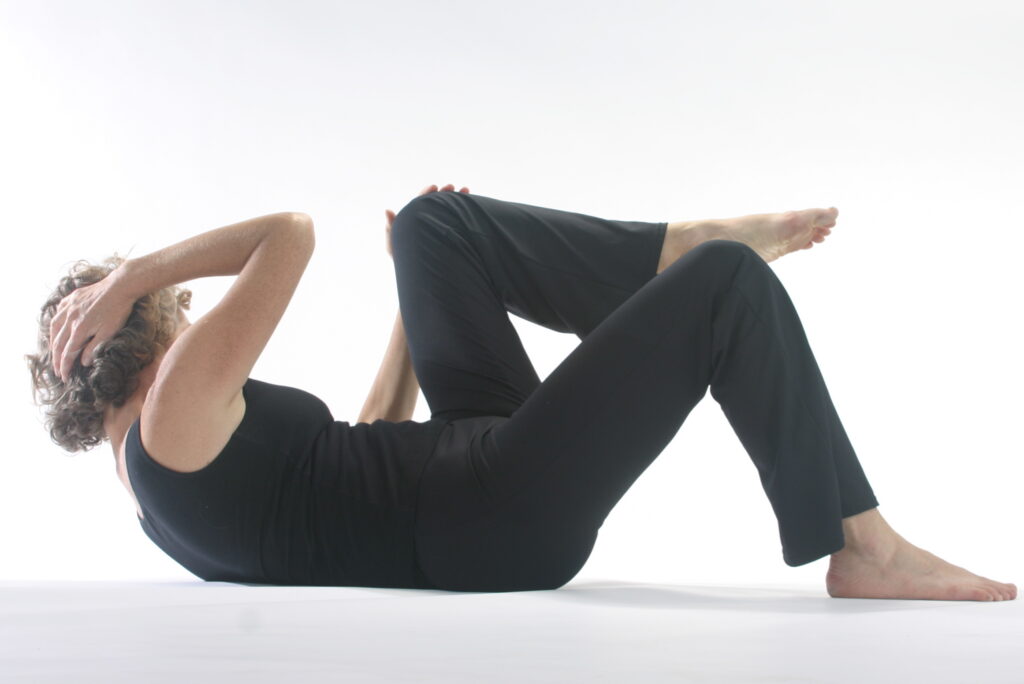
The Washcloth Twist
This movement addresses chronic tension in the torso and helps release rotational restrictions.
How to practice:
- Lie on your back with knees bent, feet flat on the floor
- Let both knees fall gently to one side
- Keep your shoulders grounded
- Notice where you feel sensation in your spine and ribs
- Take 5-10 breaths here
- Slowly return to center with awareness
- Repeat on the other side
- Notice if one side feels different from the other
Benefits: Releases spinal tension, improves rotation, addresses scoliosis patterns
Somatic Breathing
Conscious breathing is central to all somatic yoga practice.
Technique:
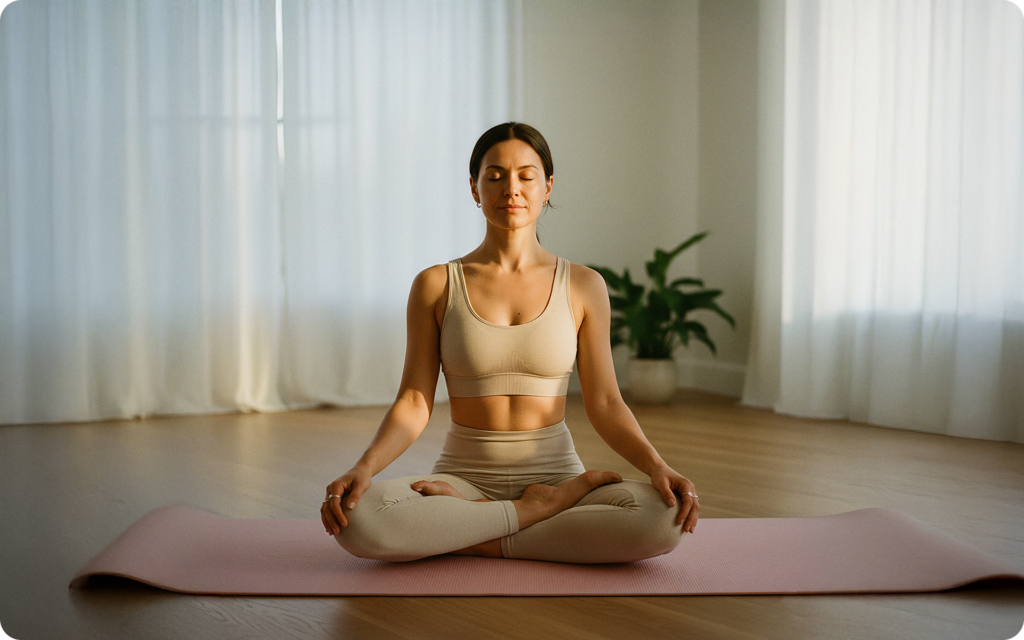
- Lie comfortably on your back
- Place one hand on your belly, one on your chest
- Breathe naturally and observe which hand moves more
- Gently encourage breath into the belly without forcing
- Notice how the breath moves your entire torso—front, sides, and back
- Practice for 5-10 minutes daily
Benefits: Activates the parasympathetic nervous system, reduces anxiety, improves oxygen delivery
The Shoulder Release
Modern life creates chronic shoulder tension. This movement helps release it.
How to practice:
- Sit or stand comfortably
- Slowly raise your shoulders toward your ears
- Hold for 3-5 seconds, noticing the tension
- Very slowly release, paying attention to every moment of the release
- Let your shoulders drop below neutral if possible
- Pause and notice the difference
- Repeat 5-8 times
Benefits: Releases neck and shoulder tension, reduces headaches, improves posture
Who Should Practice Somatic Yoga?
Somatic yoga is remarkably accessible and beneficial for a wide range of people. Its gentle, individualized approach makes it suitable for those who might struggle with traditional yoga.
Ideal Candidates for Somatic Yoga
Trauma survivors: The trauma-informed approach makes this practice particularly safe and effective for those with PTSD, complex trauma, or adverse childhood experiences. The emphasis on choice, consent, and listening to your body helps rebuild trust in your physical self.
Chronic pain sufferers: People dealing with fibromyalgia, chronic back pain, arthritis, or other persistent pain conditions often find significant relief through somatic yoga. The practice addresses the neurological component of chronic pain that other treatments miss.
Highly stressed individuals: If you’re dealing with burnout, anxiety, or chronic stress, somatic yoga provides powerful nervous system regulation tools.
Those new to yoga: If traditional yoga feels intimidating or too physically demanding, somatic yoga offers a gentle entry point that builds confidence and body awareness.
Seniors: The gentle nature and focus on maintaining functional movement make somatic yoga ideal for older adults.
Athletes and dancers: Even high-level performers benefit from somatic yoga’s ability to refine movement patterns and prevent injury.
When to Exercise Caution
While somatic yoga is generally safe, certain conditions warrant extra care:
- Recent surgery or acute injury: Wait until cleared by your healthcare provider
- Severe mental health crisis: Work with a trauma-informed therapist alongside your practice
- Pregnancy: Seek prenatal-specific somatic yoga instruction
- Active inflammation: Modify movements to avoid aggravating inflamed areas
Always listen to your body and work with qualified instructors, especially when beginning.
Getting Started with Somatic Yoga: Your First Steps
Ready to experience the benefits of somatic yoga? Here’s how to begin your journey.
Finding a Qualified Teacher
Look for instructors with:
- Certification in somatic movement or Hanna Somatics
- Trauma-informed yoga training
- Understanding of nervous system regulation
- Emphasis on individual experience over standardization
Many teachers now offer online classes, making somatic yoga more accessible than ever in 2026.
Creating Your Home Practice
You don’t need much to practice somatic yoga at home:
- A yoga mat or comfortable surface
- Quiet space where you won’t be disturbed
- Comfortable, non-restrictive clothing
- Optional: cushions or bolsters for support
Daily practice structure:
- 5 minutes: Somatic breathing to center yourself
- 10-15 minutes: 2-3 fundamental movements (arch and curl, twist, shoulder release)
- 5 minutes: Rest and integration in savasana (final relaxation)
Tips for Effective Practice
Move slowly: The slower you move, the more you retrain your nervous system. Aim for movements that take 30-60 seconds to complete.
Stay within comfort: Somatic yoga should never hurt. Work at about 40-60% of your maximum range of motion.
Focus on sensation: Constantly ask yourself, “What do I feel right now?” This internal focus is where the magic happens.
Be consistent: Practice 10-20 minutes daily rather than longer sessions less frequently. Consistency is key for neurological retraining.
Let go of goals: Release any agenda about what you “should” feel or achieve. Each practice is an exploration, not a destination.
Integrating Somatic Awareness into Daily Life
The real power of somatic yoga emerges when you apply its principles throughout your day:
- Notice how you hold tension while working at a computer
- Take micro-movement breaks every hour
- Check in with your body before reacting to stress
- Use somatic breathing during challenging moments
- Notice habitual movement patterns and experiment with alternatives
Frequently Asked Questions About Somatic Yoga
What is the difference between somatic yoga and regular yoga?
Somatic yoga focuses on internal sensation and neurological retraining through slow, mindful movement, while regular yoga typically emphasizes achieving specific poses, building strength, and improving flexibility. Somatic yoga prioritizes how you feel over how you look, making it more therapeutic and accessible.
Can somatic yoga help with anxiety and stress?
Yes, somatic yoga is highly effective for anxiety and stress relief. Research from 2026 shows that the practice activates the parasympathetic nervous system, reducing cortisol levels by up to 47% in regular practitioners. The slow, mindful movements help regulate the nervous system and release physical tension associated with anxiety.
How often should I practice somatic yoga?
For optimal benefits, practice 10-20 minutes daily rather than longer sessions less frequently. Daily practice helps retrain your nervous system and create lasting changes in movement patterns. Even 5 minutes of somatic breathing daily can produce noticeable benefits.
Is somatic yoga good for beginners?
Absolutely. Somatic yoga is one of the most beginner-friendly yoga styles because it doesn’t require flexibility, strength, or previous yoga experience. The gentle, exploratory approach makes it accessible to people of all fitness levels and body types.
Can somatic yoga release trauma?
Yes, somatic yoga is recognized as an effective trauma-release practice. The body stores traumatic experiences in muscle tension and nervous system patterns. Through gentle movement and increased body awareness, somatic yoga helps process and release stored trauma in a safe, controlled way.
What should I wear for somatic yoga?
Wear comfortable, non-restrictive clothing that allows you to move freely and feel sensations in your body. Avoid anything tight or binding. Many practitioners prefer loose-fitting clothes or yoga wear that doesn’t compress the body.
Do I need special equipment for somatic yoga?
No special equipment is required. A yoga mat or comfortable surface is helpful, but you can practice on carpet or a bed if needed. Optional props include cushions, blankets, or bolsters for additional support, but they’re not necessary.
How is somatic yoga different from Pilates?
While both emphasize controlled movement and body awareness, Pilates focuses on core strengthening and precise exercises, often using specialized equipment. Somatic yoga is gentler, focuses on releasing rather than building, and emphasizes internal sensation over external form.
Can somatic yoga help with chronic pain?
Yes, numerous studies show somatic yoga’s effectiveness for chronic pain conditions. A 2025 clinical trial found 64% reduction in chronic lower back pain after eight weeks of practice. The approach addresses the neurological component of chronic pain that many other treatments miss.
Is somatic yoga spiritual or religious?
Somatic yoga can be practiced as a purely physical and psychological practice without any spiritual or religious elements. While it draws from yoga philosophy, the focus is on practical, science-based nervous system regulation and movement retraining rather than spiritual development.
How long before I see results from somatic yoga?
Many people notice immediate effects like reduced tension and improved mood after a single session. For lasting changes in chronic pain patterns or trauma symptoms, consistent practice over 4-8 weeks typically produces significant results. Remember that somatic yoga works gradually by retraining your nervous system.
Can I practice somatic yoga if I have limited mobility?
Yes, somatic yoga is highly adaptable to limited mobility. The movements can be modified or done in a chair, in bed, or with support. The practice focuses on whatever movement range you have, making it accessible regardless of physical limitations.
What’s the best time of day to practice somatic yoga?
The best time is whenever you can be consistent. Many people prefer morning practice to set a calm tone for the day, while others practice in the evening to release accumulated tension. Experiment to find what works best for your schedule and needs.
Conclusion: Embrace the Somatic Yoga Journey
Somatic yoga offers a gentle yet powerful path to healing chronic pain, processing trauma, and developing profound body awareness. In 2026, as we increasingly recognize the inseparable connection between mind and body, this practice provides essential tools for complete wellbeing.
Key takeaways to remember:
- Somatic yoga prioritizes internal sensation over external achievement
- The practice rewires your nervous system through slow, mindful movement
- Benefits include pain relief, trauma release, stress reduction, and enhanced body awareness
- Anyone can practice regardless of fitness level, flexibility, or previous yoga experience
- Consistency matters more than duration—even 10 minutes daily creates transformation
Whether you’re dealing with chronic pain, recovering from trauma, or simply seeking a deeper connection with your body, somatic yoga provides a compassionate, effective approach. Start with just one movement today—the arch and curl or simple somatic breathing—and notice what you feel.
Your body has been waiting for you to listen. Through somatic yoga, you’re beginning a conversation that can transform your life.
Ready to deepen your practice? Explore our related articles on yoga practices to continue your journey toward embodied healing.