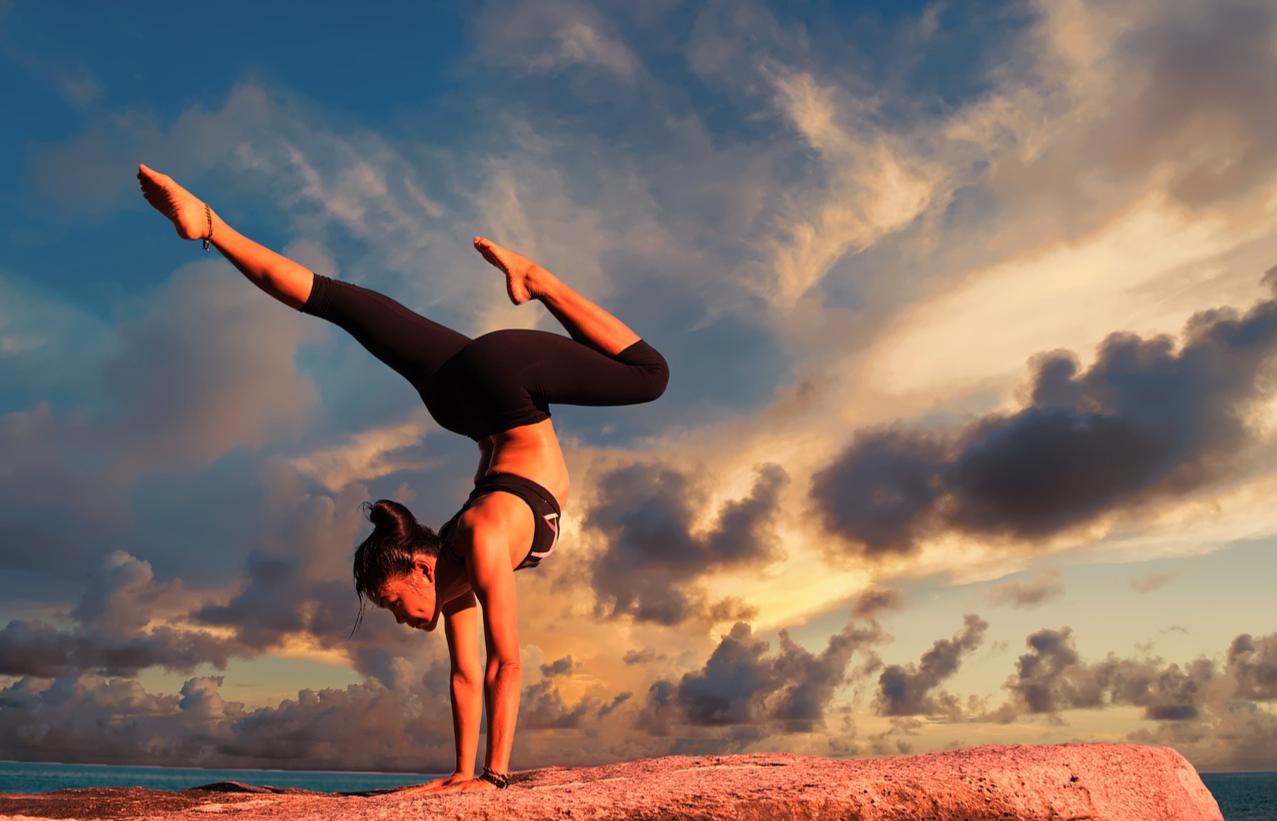


The question “Is yoga demonic?” has sparked heated debates in religious communities for decades. If you’ve heard warnings about yoga’s spiritual dangers or felt conflicted about trying a yoga class, you’re not alone. Millions of people worldwide grapple with concerns about whether this ancient practice conflicts with their faith or opens doors to harmful spiritual influences.
- Quick Answer: Is Yoga Demonic?
- Table of Contents
- Understanding Yoga’s Historical and Spiritual Roots
- Why Some Christians and Other Religious Groups Question Yoga
- The Science Behind Yoga: What Research Actually Shows
- Different Types of Yoga: Religious vs. Secular Approaches
- How to Practice Yoga While Honoring Your Faith
- Expert Perspectives: Theologians and Religious Leaders Weigh In
- FAQ: Common Questions About Yoga and Spirituality
- Conclusion: Making an Informed Decision
In 2026, as yoga continues to grow in popularity—with over 300 million practitioners globally—the conversation has evolved. Modern research, theological perspectives, and firsthand experiences now provide clearer answers to this controversial question. Whether you’re a concerned parent, a person of faith considering yoga, or simply curious about the spiritual dimensions of yoga, this article will help you make an informed decision.
You’ll discover the historical origins of yoga, examine religious perspectives from multiple faiths, explore scientific evidence about yoga’s effects, and learn how to approach yoga in a way that aligns with your personal beliefs.
Quick Answer: Is Yoga Demonic?
No, yoga itself is not inherently demonic. Here’s what you need to know:

- Yoga as exercise (physical postures and breathing) is a secular practice backed by scientific research
- Original yoga philosophy includes Hindu and Buddhist spiritual elements, but these are optional
- Religious concerns are valid and vary by denomination and personal interpretation
- Modern Western yoga is typically stripped of religious content and focuses on wellness
- Personal intention matters: You can practice yoga for health benefits without adopting spiritual beliefs
The answer depends on your religious framework, the type of yoga you practice, and your personal intentions.
Table of Contents
- Understanding Yoga’s Historical and Spiritual Roots
- Why Some Christians and Other Religious Groups Question Yoga
- The Science Behind Yoga: What Research Actually Shows
- Different Types of Yoga: Religious vs. Secular Approaches
- How to Practice Yoga While Honoring Your Faith
- Expert Perspectives: Theologians and Religious Leaders Weigh In
- FAQ: Common Questions About Yoga and Spirituality
Understanding Yoga’s Historical and Spiritual Roots
To address whether yoga is demonic, we must first understand where it came from. Yoga originated in ancient India over 5,000 years ago, rooted in Hindu philosophy and later adopted by Buddhist traditions. The word “yoga” comes from the Sanskrit word “yuj,” meaning “to yoke” or “to unite”—referring to the union of body, mind, and spirit.
The Eight Limbs of Traditional Yoga
Classical yoga, as outlined in Patanjali’s Yoga Sutras (circa 400 CE), consists of eight limbs:
- Yama: Ethical standards and moral disciplines
- Niyama: Self-discipline and spiritual observances
- Asana: Physical postures (what most Westerners think of as “yoga”)
- Pranayama: Breath control
- Pratyahara: Withdrawal of the senses
- Dharana: Concentration
- Dhyana: Meditation
- Samadhi: State of bliss or enlightenment
Only one of these eight limbs involves physical postures. Traditional yoga is fundamentally a spiritual practice aimed at achieving enlightenment or union with the divine (Brahman in Hindu philosophy).
The Journey to Western Yoga
When yoga came to the West in the late 19th and early 20th centuries, it underwent significant transformation. Pioneers like Swami Vivekananda (1893) and later teachers like B.K.S. Iyengar and Pattabhi Jois emphasized the physical aspects to make yoga more accessible to Western audiences.
By 2026, most yoga practiced in Western gyms, studios, and online platforms bears little resemblance to traditional spiritual yoga. It’s been adapted into a fitness and wellness practice, often completely divorced from Hindu or Buddhist religious elements.
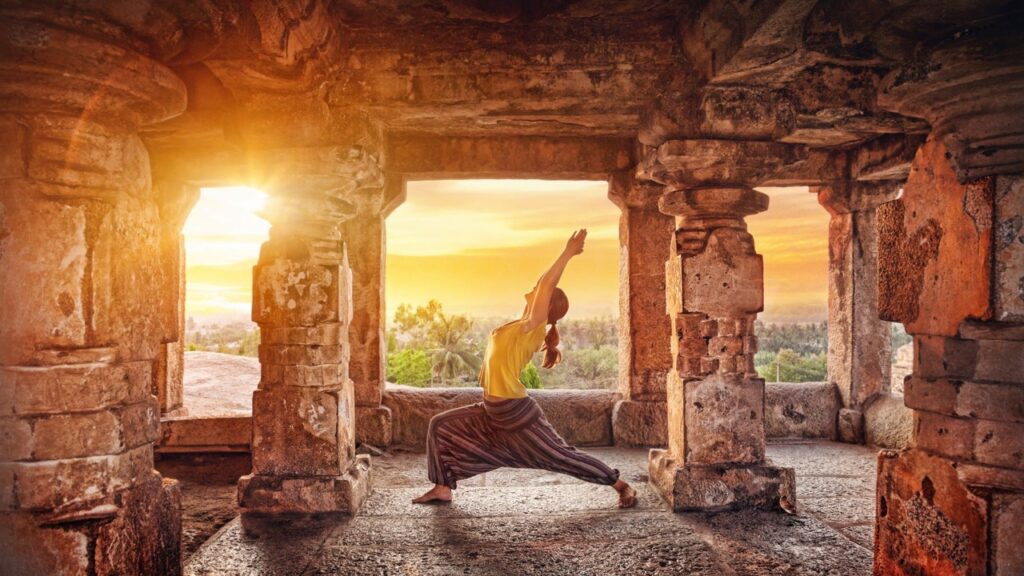
Why Some Christians and Other Religious Groups Question Yoga
Religious concerns about yoga aren’t baseless fearmongering—they stem from genuine theological considerations. Understanding these perspectives helps clarify the “demonic” question.
Christian Concerns About Yoga
Many evangelical and conservative Christian leaders warn against yoga for several reasons:
1. Association with Eastern Mysticism Yoga’s roots in Hindu and Buddhist philosophy conflict with Christian monotheism. Concepts like achieving divinity within oneself contradict Christian doctrine that divinity belongs to God alone.
2. The Practice of Meditation and Mantras Traditional yoga includes meditation techniques and chanting (like “Om”) that invoke Hindu deities. Some Christians believe this opens practitioners to spiritual deception or demonic influence.
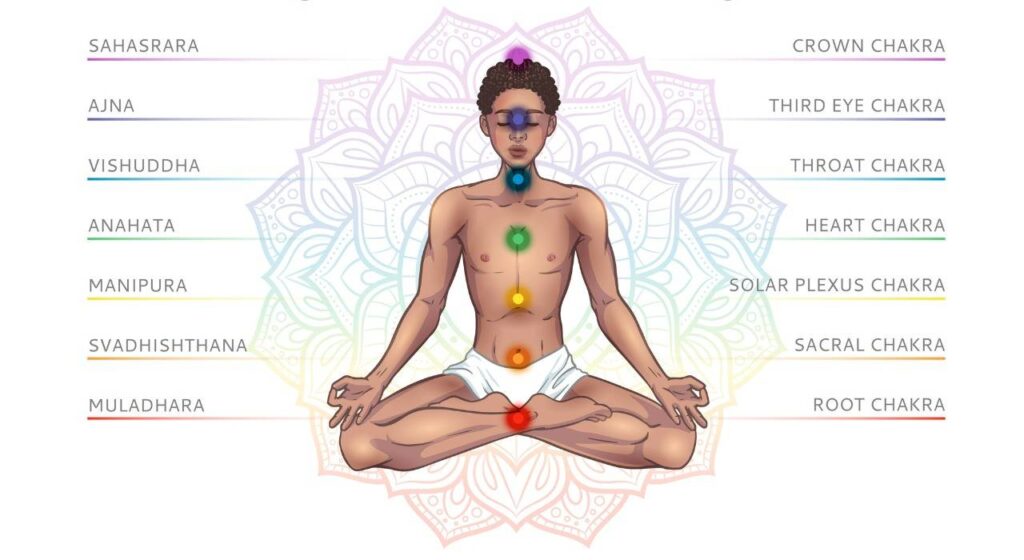
3. New Age Connections Yoga is often packaged with New Age spirituality—crystals, chakras, and energy healing—which many Christians view as incompatible with Biblical teaching.
4. The Concern About “Emptying Your Mind” Some Christian teachers argue that meditation practices that “empty the mind” create vulnerability to spiritual attack, contrasting this with Biblical meditation that focuses on filling the mind with Scripture.
Biblical Passages Often Cited
Critics reference verses such as:
- Deuteronomy 18:9-12 (warnings against divination and occult practices)
- 1 Corinthians 10:20-21 (not participating in pagan sacrifices)
- 2 Corinthians 6:14-17 (not being unequally yoked with unbelievers)
Perspectives from Other Faiths
Islamic Views: Some Muslim scholars express similar concerns, though others accept yoga as beneficial exercise when separated from Hindu religious elements.
Jewish Perspectives: Reform and Conservative Judaism generally have no issue with yoga, while some Orthodox communities remain cautious.
It’s important to note that religious opinions on yoga vary widely even within denominations. Not all Christians reject yoga—some practice “Christian yoga” or “Holy Yoga” that replaces Eastern mantras with Biblical prayers.
The Science Behind Yoga: What Research Actually Shows
Setting aside spiritual debates, what does science say about yoga’s effects on the body and mind?
Proven Physical Benefits
According to research published in the Journal of Alternative and Complementary Medicine (2024), yoga provides measurable health benefits:
- Reduces chronic pain by 32% in lower back pain sufferers
- Improves flexibility and range of motion by 35% after 12 weeks
- Lowers blood pressure by an average of 5-10 mmHg in hypertensive patients
- Enhances balance and reduces fall risk in older adults by 40%
- Strengthens muscles through sustained isometric contractions
These benefits come from the physical movements themselves—stretching, holding poses, and controlled breathing—not from any spiritual component.
Mental Health and Neurological Effects
The National Institutes of Health (NIH) reports that yoga significantly impacts brain function:
- Reduces stress hormones (cortisol) by up to 23%
- Increases GABA levels, the neurotransmitter associated with reduced anxiety
- Improves sleep quality in 65% of participants with insomnia
- Enhances focus and concentration through mindfulness training
A 2025 Harvard Medical School study using brain imaging found that regular yoga practice increases gray matter in regions associated with emotional regulation and self-awareness—changes similar to those from other forms of exercise and meditation.
No Evidence of Spiritual Harm
Importantly, no scientific study has found evidence that practicing yoga postures or breathing exercises causes spiritual, psychological, or physical harm. The concerns about demonic influence fall outside the realm of empirical science and remain theological questions.
The scientific consensus as of 2026: Yoga is a safe, effective form of exercise with mental health benefits comparable to other mind-body practices like tai chi and Pilates.
Different Types of Yoga: Religious vs. Secular Approaches
Not all yoga is created equal. Understanding the spectrum helps you choose a practice aligned with your comfort level.
Spiritually-Focused Yoga Styles
Kundalini Yoga: Heavily spiritual, focused on awakening “kundalini energy” at the base of the spine. Includes chanting, meditation, and visualization of chakras.
Jnana Yoga: The yoga of knowledge and wisdom, emphasizing meditation and philosophical study of Hindu texts.
Bhakti Yoga: Devotional yoga focused on worshiping Hindu deities through chanting and prayer.
Rating for Religious Sensitivity: 🚫 High spiritual content
Moderately Spiritual Styles
Hatha Yoga: Traditional physical yoga that may include some pranayama (breathing) and meditation. Can be taught with or without spiritual elements.
Vinyasa/Flow Yoga: Dynamic sequences linking breath with movement. Usually taught as exercise but may include “Om” chanting or spiritual references.
Rating for Religious Sensitivity: ⚠️ Varies by instructor
Primarily Physical/Secular Styles
Power Yoga: Athletic, fitness-focused yoga developed in the 1990s. Emphasizes strength and endurance.
Yin Yoga: Long-held passive stretches targeting connective tissue. Minimal spiritual content.
Chair Yoga/Gentle Yoga: Adapted for seniors or limited mobility. Purely therapeutic focus.
Christian/Holy Yoga: Replaces Eastern terminology with Christian language. Uses Bible verses instead of mantras.
Rating for Religious Sensitivity: ✅ Safe for most faith traditions
How to Identify Secular Yoga Classes
In 2026, most mainstream yoga studios and fitness centers offer secular yoga. Look for these indicators:
- Classes described as “fitness,” “stretch,” or “wellness” focused
- No mention of chakras, mantras, or spiritual awakening
- Instructors who frame yoga as exercise, not spirituality
- Studios in gyms, recreation centers, or medical facilities
- Online platforms like Peloton, Apple Fitness+, or physical therapy apps
How to Practice Yoga While Honoring Your Faith
If you’re concerned about spiritual implications but interested in yoga’s health benefits, here are practical strategies:
1. Choose Your Instructor Carefully
Ask potential teachers directly:
- “Is this class focused on fitness or spirituality?”
- “Will there be chanting, meditation, or references to chakras/energy?”
- “Can I skip portions that conflict with my beliefs?”
Most instructors respect personal boundaries and will accommodate religious concerns.
2. Focus on Postures and Breathing
You can practice asanas (physical poses) and pranayama (breathing techniques) without adopting Hindu philosophy. Think of it as “yogic exercise” rather than “doing yoga” in the spiritual sense.
3. Replace Spiritual Elements with Your Own Practice
- Instead of “Om”: Say a prayer or affirmation from your faith tradition
- Instead of chakra meditation: Practice Biblical meditation or mindfulness
- Instead of “namaste”: Say “thank you” or a blessing in your language
- Instead of Hindu mantras: Repeat scripture verses or sacred words from your religion
4. Set Your Intention
Your intention matters. Approach yoga as:
- A form of physical therapy for pain relief
- Exercise for strength and flexibility
- Stress management technique
- Body stewardship (caring for the body as a temple)
5. Try Faith-Based Alternatives
Several organizations offer explicitly Christian or faith-neutral yoga:
- Holy Yoga: Founded by Brooke Boon, integrates Christian worship
- Yahweh Yoga: Uses Hebrew scripture and Jewish prayer
- PraiseMoves: Called “the Christian alternative to yoga”
- Pilates or Tai Chi: Similar benefits without yoga’s baggage
6. Educate Yourself
Read books like “Yoga for Christians” by Susan Bordenkircher or “The Christian Yoga Controversy” by Douglas Groothuis to understand different theological perspectives.
The bottom line: You can practice yoga mindfully in a way that aligns with your faith. The physical movements themselves are neutral—the meaning comes from what you assign to them.
Expert Perspectives: Theologians and Religious Leaders Weigh In
The religious community remains divided on yoga. Here’s what various authorities say:
Those Who Warn Against Yoga
Father Gabriele Amorth (former Chief Exorcist of Rome): Called yoga “the work of the devil” and discouraged Catholics from practicing it.
John MacArthur (Pastor and author): Argues that yoga is inherently religious and incompatible with Christianity, even when stripped of obvious spiritual elements.
Albert Mohler (President, Southern Baptist Theological Seminary): States that Christians should avoid yoga because its philosophy is antithetical to Christian theology.
Those Who Accept Yoga with Discernment
Father Thomas Ryan (Catholic priest and yoga instructor): Wrote “Prayer of Heart and Body: Meditation and Yoga as Christian Spiritual Practice,” arguing yoga can enhance Christian faith.
Rick Warren (Saddleback Church): Initially criticized yoga but later clarified that stretching exercises and flexibility training are fine—it’s the spiritual meditation that concerns him.
Tim Keller (Theologian): Suggested Christians can practice yoga if they focus on physical aspects and maintain Christian meditation practices.
Academic Theological Perspectives
Dr. Todd Miles, professor at Western Seminary, offers a balanced view: “The movements themselves—stretching, balancing, breathing—are morally neutral. The question is what worldview you’re practicing them within.”
The 2026 consensus among moderate theologians: Physical yoga practice is acceptable for Christians if approached intentionally and separated from Hindu religious elements. The key is understanding what you’re doing and why.
FAQ: Common Questions About Yoga and Spirituality
Q: Can Christians practice yoga without sinning? A: Many Christian theologians believe Christians can practice yoga as exercise while avoiding spiritual elements that conflict with Biblical teaching. It depends on your denomination, personal conviction, and how you approach the practice. Focus on physical postures, avoid Eastern meditation and mantras, and maintain your Christian devotional practices separately.
Q: What does the Bible say about yoga? A: The Bible doesn’t mention yoga specifically since it was written long before yoga reached the West. Biblical concerns relate to participating in pagan worship (1 Corinthians 10:20-21) and practicing occult activities (Deuteronomy 18:10-12). Whether yoga falls into these categories is debated among Christian scholars.
Q: Is saying “namaste” at the end of yoga class worshiping a Hindu god? A: “Namaste” literally means “I bow to you” and is a respectful greeting in India, similar to “hello” or “goodbye.” While it can have spiritual connotations (“the divine in me honors the divine in you”), in Western yoga it’s often used as a polite closing. You can choose not to say it if it makes you uncomfortable.
Q: Are yoga poses themselves religious? A: Some poses are named after Hindu deities (like Hanumanasana, named for the monkey god Hanuman), but the physical positions themselves are just body movements. It’s similar to how the days of the week are named after Norse gods, but using “Thursday” doesn’t make you a pagan.
Q: What about “opening your chakras” in yoga class? A: Chakras are part of Hindu spiritual anatomy—believed to be energy centers in the body. If your instructor focuses heavily on chakras, you’re in a spiritually-oriented class. For health-focused yoga, choose classes that don’t mention chakras or energy healing.
Q: Can yoga lead to demonic possession? A: There is no documented medical or psychological evidence of yoga causing demonic possession. From a Christian perspective, some believe spiritual practices outside Biblical guidance can create spiritual vulnerability. If this concerns you, stick to purely physical yoga or faith-based alternatives.
Q: Is meditation in yoga different from Christian meditation? A: Yes. Eastern meditation often involves emptying the mind or focusing on mantras to achieve transcendence. Christian meditation involves filling the mind with Scripture and focusing on God. You can practice Christian meditation instead of Eastern techniques during yoga’s meditation portions.
Q: What’s the difference between yoga and Pilates? A: Both involve controlled movements, breathing, and flexibility. Pilates was developed by Joseph Pilates in the early 20th century as a purely physical rehabilitation method, without spiritual roots. If you want the physical benefits of yoga without religious concerns, Pilates is a safe alternative.
Q: Are online yoga videos safer spiritually than studio classes? A: Not necessarily—it depends on the instructor’s approach. However, online classes give you more control to skip spiritual sections, mute mantras, or choose secular instructors. Apps like Peloton and fitness platforms typically offer non-spiritual yoga.
Q: Should I feel guilty about enjoying yoga? A: If you’re practicing yoga as exercise with clear intention and aren’t compromising your core spiritual beliefs, there’s no reason for guilt. Romans 14 teaches that matters of conscience vary among believers. If yoga violates your conscience, don’t practice it. If it doesn’t, and you approach it wisely, there’s no Biblical prohibition against physical exercise.
Conclusion: Making an Informed Decision
So, is yoga demonic? The evidence suggests it’s not that simple. Yoga exists on a spectrum from purely physical exercise to deeply spiritual practice. Whether it’s appropriate for you depends on three factors: the type of yoga you choose, your religious framework, and your personal intentions.
Key Takeaways:
- Yoga’s origins are Hindu, but modern Western yoga is often secular and fitness-focused
- Religious concerns are valid and should be respected, but they vary widely by denomination
- Scientific evidence confirms yoga’s physical and mental health benefits without spiritual harm
- You have options: Choose secular classes, try faith-based yoga, or use alternatives like Pilates
- Your intention matters: Practicing postures for health doesn’t require adopting Eastern philosophy
If you’re still uncertain, start with a gentle stretching class at your gym or try Christian yoga. Consult your spiritual leader if you need guidance. Remember, taking care of your physical body through exercise is Biblical stewardship—the question is finding a form that aligns with your conscience.
For more guidance on practicing yoga safely within your faith tradition, explore our articles on Best Yoga Poses for Back Pain Relief in 2026. Your spiritual health and physical health can work in harmony—you just need to be intentional about how you approach them.
Have you found a way to practice yoga that honors your faith? Share your experience in the comments below.