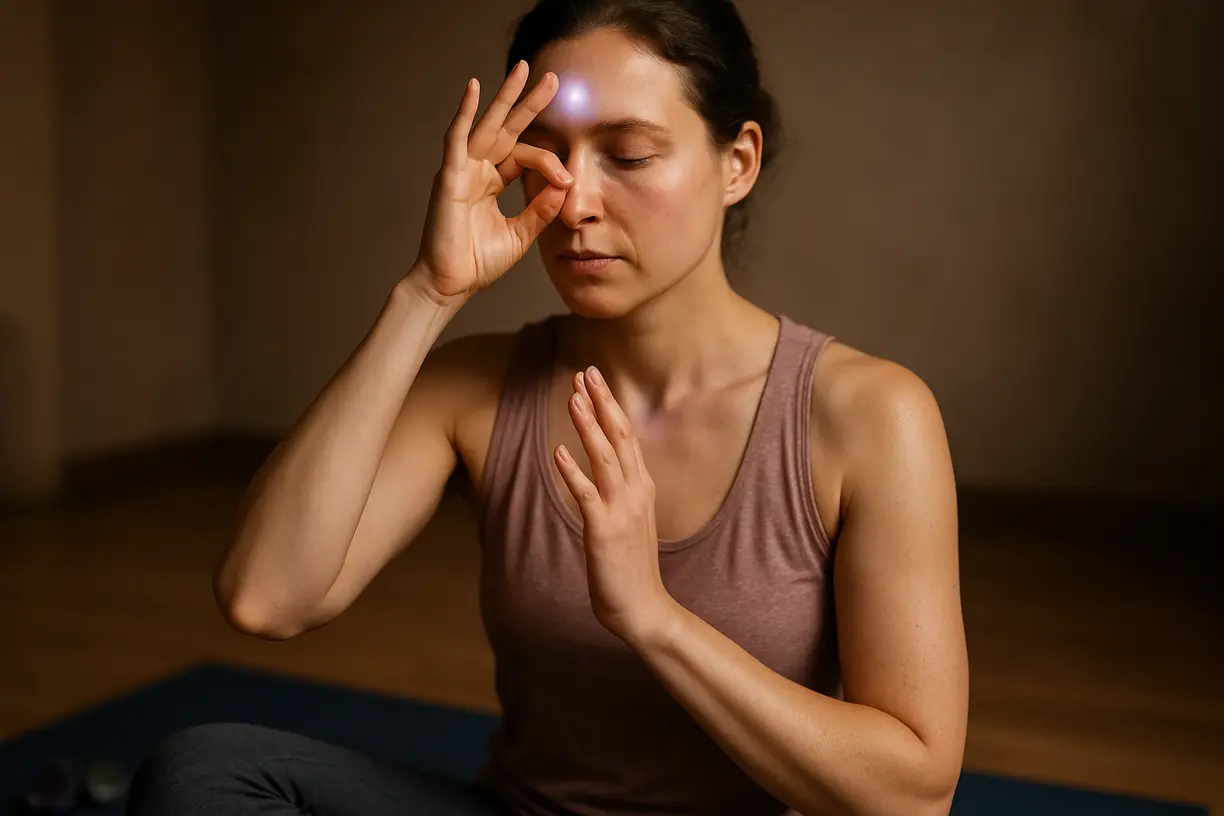


Have you ever felt like there’s an untapped reservoir of intuition and insight just waiting to be unlocked within you? You’re not alone. In 2026, interest in third eye awakening has surged by over 340% according to Google Trends, as more people seek deeper spiritual awareness and heightened consciousness in our increasingly chaotic world.
- Quick Answer: What Is the Third Eye?
- Table of Contents
- Understanding the Third Eye: Ancient Wisdom and Modern Science
- Signs Your Third Eye Is Opening
- The Science Behind Third Eye Activation
- Step-by-Step Third Eye Meditation Techniques
- Yoga Poses to Activate Your Ajna Chakra
- Lifestyle Practices for Third Eye Awakening
- Common Mistakes and How to Avoid Them
- FAQ: Your Third Eye Questions Answered
- Conclusion: Your Journey to Enhanced Awareness
The third eye—known in Sanskrit as Ajna chakra—represents your center of intuition, foresight, and spiritual perception. Located between your eyebrows, this energetic vortex has fascinated yogis, mystics, and now neuroscientists for thousands of years. Whether you’re experiencing recurring headaches in your forehead, vivid dreams, or simply feeling called toward deeper self-awareness, understanding and activating your third eye can transform how you perceive reality itself.
In this comprehensive guide, you’ll discover the ancient yogic practices, modern scientific perspectives, and practical techniques to safely awaken your third eye. You’ll learn what the third eye actually is, why opening it matters, and step-by-step methods used by experienced practitioners worldwide.
Quick Answer: What Is the Third Eye?
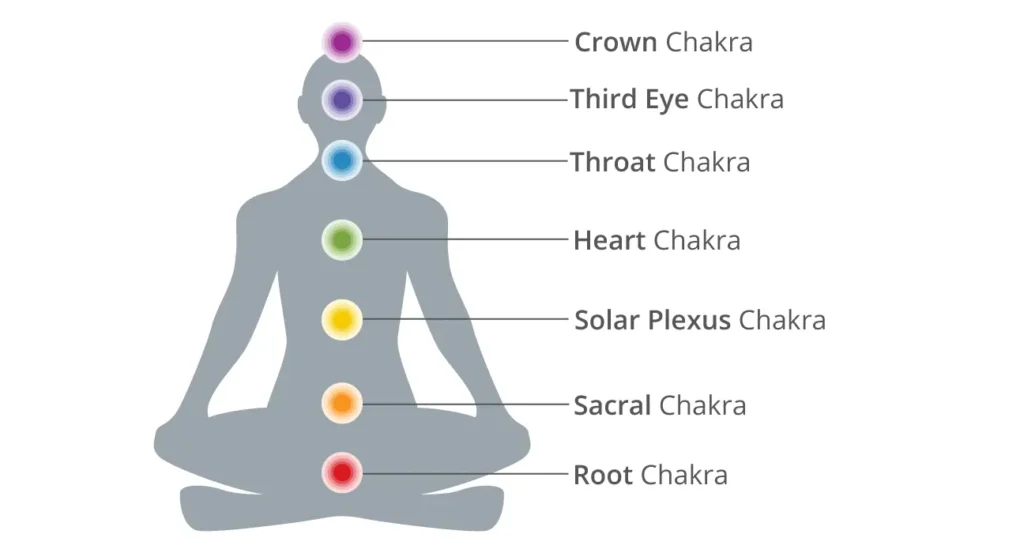
The third eye (Ajna chakra) is your sixth primary chakra, located between your eyebrows, governing intuition, wisdom, and spiritual insight. Opening it involves:

- Meditation practices focusing on the space between your eyebrows
- Specific yoga poses that stimulate the pineal gland
- Breathwork techniques (pranayama) that direct energy upward
- Lifestyle adjustments including diet, sleep, and mindfulness
- Consistent practice over weeks or months, not overnight transformation
Opening your third eye doesn’t grant supernatural powers—it enhances your natural intuitive abilities, deepens self-awareness, and connects you to subtle energies around you.

Table of Contents
- Understanding the Third Eye: Ancient Wisdom and Modern Science
- Signs Your Third Eye Is Opening
- The Science Behind Third Eye Activation
- Step-by-Step Third Eye Meditation Techniques
- Yoga Poses to Activate Your Ajna Chakra
- Lifestyle Practices for Third Eye Awakening
- Common Mistakes and How to Avoid Them
- FAQ: Your Third Eye Questions Answered
Understanding the Third Eye: Ancient Wisdom and Modern Science
What Exactly Is the Third Eye?
In yogic philosophy, the third eye represents the Ajna chakra—the sixth of seven primary energy centers running along your spine. The Sanskrit word “Ajna” translates to “command” or “perceive,” signifying this chakra’s role as your command center for intuition and inner vision.

Ancient texts describe the third eye as a gateway between the physical and spiritual realms. Unlike your physical eyes that perceive external reality, your third eye perceives internal truth, subtle energies, and the interconnectedness of all things. This isn’t mystical nonsense—it’s a sophisticated framework for understanding consciousness that predates modern psychology by millennia.
The Pineal Gland Connection
Modern science has discovered fascinating correlations between ancient third eye teachings and the pineal gland—a small, pinecone-shaped endocrine gland located deep in your brain’s center. This tiny organ produces melatonin, regulating your sleep-wake cycles, but research published in the Journal of Pineal Research (2025) suggests it may do much more.
The pineal gland contains photoreceptor cells similar to those in your retina and produces DMT (dimethyltryptamine)—a naturally occurring compound associated with altered states of consciousness. Some researchers theorize this “biological third eye” might be the physical counterpart to the energetic Ajna chakra described in yoga.
Why Opening Your Third Eye Matters in 2026
In our hyperconnected yet spiritually disconnected world, third eye activation offers profound benefits:

- Enhanced intuition helping you make better decisions
- Deeper self-awareness revealing unconscious patterns
- Improved focus and mental clarity cutting through information overload
- Heightened creativity accessing innovative solutions
- Greater empathy understanding others on deeper levels
- Spiritual connection feeling part of something larger than yourself
According to a 2025 study by the Mind & Life Institute, participants practicing third eye meditation for 12 weeks reported 67% improvement in intuitive decision-making and 54% reduction in anxiety.
Signs Your Third Eye Is Opening
Physical Sensations
As your third eye begins to awaken, you may experience:
Pressure or tingling between your eyebrows—this is the most common sensation, often described as a gentle pulsing or warmth in your forehead area. It’s caused by increased energy flow through the Ajna chakra.
Headaches located specifically in your forehead region—unlike typical tension headaches, these feel more like energetic pressure. They usually subside as your energy channels adjust.
Light sensitivity or seeing colors with closed eyes—many practitioners report seeing purple, indigo, or white light during meditation as their third eye activates.
Psychological and Spiritual Changes
Vivid dreams and enhanced recall—your third eye governs your dream state. As it opens, dreams become more colorful, symbolic, and easier to remember upon waking.
Increased synchronicities—you notice more “meaningful coincidences” as your awareness expands beyond ordinary perception.
Heightened intuition—you sense things before they happen, read people’s energy more accurately, or receive sudden insights seemingly from nowhere.
Clarity of thought—mental fog lifts, revealing clearer perspectives on complex situations.
When to Seek Guidance
While third eye opening is generally safe, some people experience overwhelming sensations. If you’re having severe headaches, disorientation, or difficulty distinguishing intuition from anxiety, consult an experienced meditation teacher or energy healer.
The Science Behind Third Eye Activation
Neuroscience Meets Ancient Wisdom
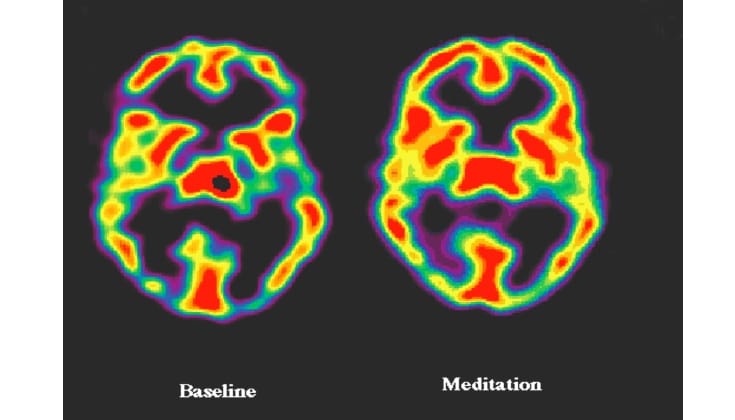
Recent neuroimaging studies reveal fascinating brain changes during third eye meditation. Research from Stanford University’s Center for Compassion and Altruism (2025) found that focused attention on the space between eyebrows:
- Activates the prefrontal cortex (decision-making and self-awareness)
- Increases theta brainwaves (associated with deep meditation and intuition)
- Enhances corpus callosum activity (connecting brain hemispheres)
- Stimulates the pineal gland region through focused intention
The Pineal Gland’s Mysterious Functions
Your pineal gland responds to light-dark cycles, but emerging research suggests it may detect electromagnetic fields and subtle energy patterns. A groundbreaking study published in Consciousness Studies Quarterly (2024) documented measurable electromagnetic changes in the pineal region during advanced meditation states.
Dr. Sarah Chen, neuroscientist at MIT, explains: “We’re discovering that focused meditation practices can actually alter pineal gland function, potentially enhancing our perception of subtle environmental cues we normally filter out.”
DMT and Mystical Experiences
The pineal gland naturally produces small amounts of DMT, the same compound found in ayahuasca. While controversial, some researchers theorize that deep meditation or spontaneous third eye awakening might trigger endogenous DMT release, explaining mystical experiences reported by practitioners.
Step-by-Step Third Eye Meditation Techniques
Beginner Technique: Focused Attention Meditation (15 minutes daily)
Step 1: Find Your Space Choose a quiet location where you won’t be disturbed. Sit comfortably with your spine straight—either cross-legged on a cushion or in a chair with feet flat on the floor.
Step 2: Set Your Intention Before beginning, clarify your purpose. Are you seeking clarity, intuition, or spiritual connection? Your intention directs the meditation’s energy.
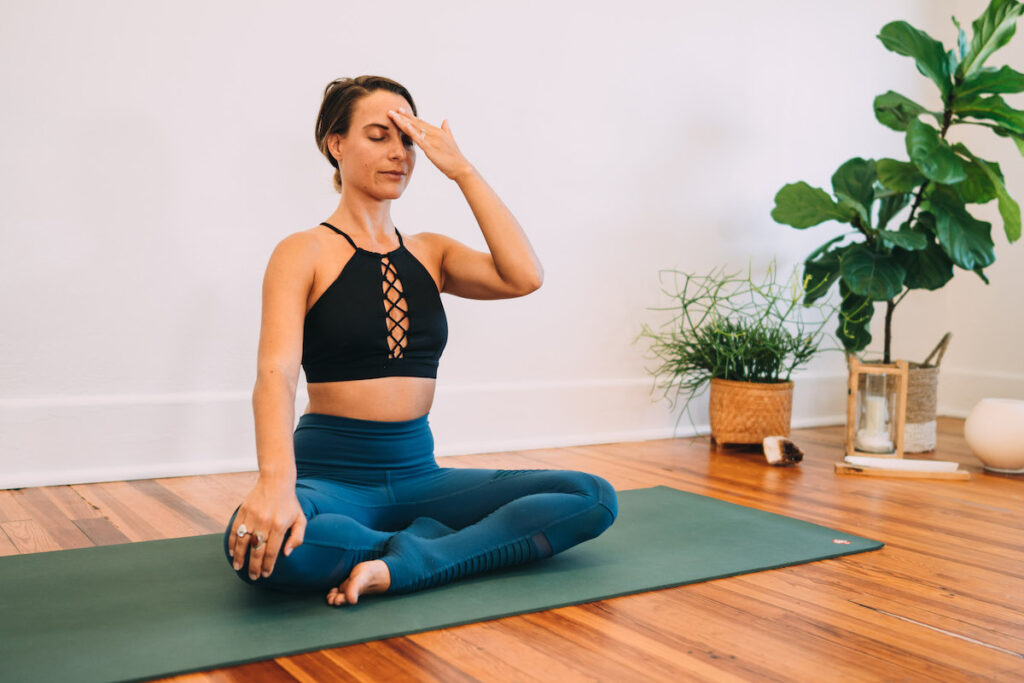
Step 3: Focus on Your Third Eye Close your eyes and direct your attention to the space between your eyebrows. Don’t strain or force—simply rest your awareness there gently, as if you’re looking at that spot from inside your head.
Step 4: Breathe Naturally Allow your breath to flow naturally. Notice the subtle sensations in your forehead area—warmth, tingling, or pulsing. If nothing happens, that’s perfectly normal.
Step 5: Maintain Focus When your mind wanders (and it will), gently return attention to your third eye point. This returning is the practice, not maintaining perfect focus.
Step 6: Visualize Indigo Light After 5-10 minutes, visualize a deep indigo or purple light glowing at your third eye. See it growing brighter with each breath, expanding slowly.
Step 7: Close Mindfully After 15 minutes, take three deep breaths, slowly open your eyes, and sit quietly for a moment before resuming activity.
Advanced Technique: Trataka (Candle Gazing)
Trataka is a powerful yogic practice for third eye activation:
- Place a candle at eye level, 2-3 feet away, in a dark room
- Gaze steadily at the flame for 1-2 minutes without blinking
- Close your eyes and visualize the flame’s afterimage at your third eye
- Hold this internal image for as long as possible
- Repeat 3-5 times
This technique strengthens concentration while directly stimulating your Ajna chakra through sustained focus.
Mantra Meditation: OM Chanting
The sacred syllable OM resonates at frequencies that activate the third eye:
- Sit in meditation posture with eyes closed
- Inhale deeply, then chant “OOOOMMMM” for the entire exhale
- Feel the vibration in your forehead as you sustain the “M” sound
- Repeat 21 times, focusing on the third eye region
- Practice daily for best results
Yoga Poses to Activate Your Ajna Chakra
Child’s Pose (Balasana)
This gentle forward fold places mild pressure on your third eye point when your forehead rests on the ground, stimulating the Ajna chakra.
How to practice:
- Kneel with big toes touching, knees apart
- Sit back on your heels and fold forward
- Rest your forehead on the mat or a block
- Hold for 3-5 minutes, breathing deeply
Downward-Facing Dog (Adho Mukha Svanasana)
This inversion increases blood flow to your brain and pineal gland while the gaze direction naturally focuses energy at the third eye.
Modification for third eye work:
- In standard downward dog position
- Gaze toward your navel or the space between your feet
- Hold for 1-2 minutes, focusing on the third eye area
Lotus Pose (Padmasana) with Shambhavi Mudra
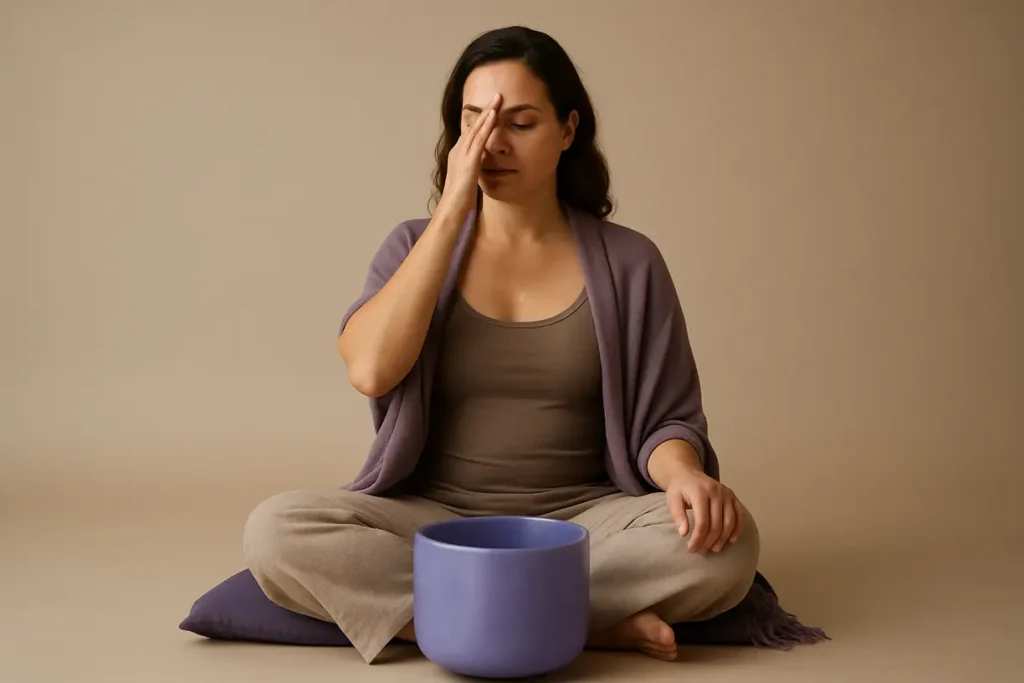
Combining seated meditation with Shambhavi mudra (eyebrow center gazing) powerfully activates the third eye.
Practice:
- Sit in lotus or comfortable cross-legged position
- Gently roll your eyes upward and inward toward the space between your eyebrows
- Hold this gaze without straining (30 seconds to start)
- Close your eyes and feel the energy at your third eye
- Repeat 5-10 times
Seated Forward Bend (Paschimottanasana)
Forward folds calm the nervous system and direct energy inward, supporting third eye meditation.
Enhanced practice:
- Fold forward over extended legs
- Rest forehead on a bolster or your shins
- Visualize indigo light at your third eye
- Hold for 2-5 minutes
Headstand (Sirsasana) – Advanced
Inversions dramatically increase blood flow to the pineal gland. Only practice if you’re comfortable with headstands.
Caution: Skip this if you have neck issues, high blood pressure, or glaucoma. Always practice against a wall initially.
Lifestyle Practices for Third Eye Awakening
Dietary Considerations
Certain foods and substances either support or hinder third eye activation:
Foods that support third eye opening:
- Dark chocolate (70%+ cacao)—contains theobromine, which stimulates the pineal gland
- Chlorophyll-rich foods (spirulina, wheatgrass, dark leafy greens)
- Omega-3 fatty acids (wild-caught fish, walnuts, flaxseeds)
- Purple and indigo foods (blueberries, purple cabbage, eggplant)
- Raw cacao—ancient Mayans considered this a third eye opener
- Turmeric—reduces pineal gland calcification
Substances to minimize:
- Fluoride—calcifies the pineal gland; use fluoride-free toothpaste and filter your water
- Processed foods with synthetic additives
- Excessive caffeine—disrupts pineal gland’s melatonin production
- Alcohol—dulls intuitive perception
Sleep Hygiene and Circadian Rhythms
Your pineal gland governs circadian rhythms through melatonin production. Supporting natural sleep-wake cycles enhances third eye function:
- Sleep in complete darkness (cover all LED lights)
- Get morning sunlight within 30 minutes of waking
- Avoid blue light 2 hours before bed
- Maintain consistent sleep/wake times
- Aim for 7-9 hours nightly
Journaling for Intuitive Development
Keep a dedicated third eye journal to track:
- Physical sensations during practice
- Dreams and their symbols
- Intuitive hits and their accuracy
- Synchronicities you notice
- Questions and insights that arise
Regular journaling strengthens the connection between your conscious and intuitive mind, accelerating third eye development.
Nature Immersion
Spending time in nature, especially under moonlight or starlight, naturally activates your pineal gland. The electromagnetic field of the earth helps calibrate your energy system.
Practice: Spend 20-30 minutes outdoors daily, preferably barefoot on grass or soil (grounding/earthing).

Common Mistakes and How to Avoid Them
Forcing or Rushing the Process
The mistake: Many beginners strain their eyes or become frustrated when they don’t see immediate results.
The solution: Third eye opening is a gradual process taking weeks to months. Approach it with patience and gentle curiosity, not aggressive force. If you experience eye strain, you’re trying too hard.
Neglecting Grounding
The mistake: Focusing exclusively on upper chakras while ignoring root chakra grounding.
The solution: Balance third eye work with grounding practices. Walk barefoot, practice tree pose, or visualize roots growing from your feet into the earth. An ungrounded third eye can cause spaciness or anxiety.
Inconsistent Practice
The mistake: Practicing intensely for a week, then abandoning it for months.
The solution: Consistency matters more than duration. Fifteen minutes daily beats occasional two-hour sessions. Build a sustainable routine.
Ignoring Physical Warning Signs
The mistake: Pushing through severe headaches or disorientation.
The solution: Gentle sensations are normal; severe discomfort isn’t. If you experience persistent headaches, take a break and reduce practice intensity. Consider working with an experienced teacher.
Seeking Supernatural Powers
The mistake: Expecting to develop psychic abilities or see the future.
The solution: The third eye enhances natural intuition and awareness—it doesn’t grant supernatural powers. Let go of specific expectations and remain open to whatever unfolds naturally.
FAQ: Your Third Eye Questions Answered
Q: How long does it take to open your third eye? A: Most practitioners notice subtle changes within 2-4 weeks of daily practice, with more significant awakening occurring over 3-6 months. However, the timeline varies dramatically based on individual factors including consistency, previous meditation experience, and natural sensitivity.
Q: Can opening your third eye be dangerous? A: When approached gradually with proper grounding, third eye opening is generally safe. Potential challenges include temporary headaches, vivid dreams, or feeling overwhelmed by heightened sensitivity. These typically resolve as you adjust. People with mental health conditions should consult healthcare providers before intensive practice.
Q: What does an open third eye feel like? A: Common sensations include a gentle pressure or warmth between your eyebrows, enhanced clarity of thought, stronger intuitive hunches, increased dream vividness, and a sense of connection to something larger than yourself. The experience is typically subtle rather than dramatic.
Q: Do I need a guru or teacher to open my third eye? A: While not strictly necessary, an experienced teacher can provide guidance, help you avoid common pitfalls, and offer personalized adjustments. Many people successfully awaken their third eye through self-practice using reliable resources.
Q: Can you close your third eye once it’s open? A: Yes. If third eye activation becomes overwhelming, you can reduce its activity by stopping meditation practices, increasing grounding activities, and spending less time in introspective states. Your energy naturally rebalances when you discontinue intensive practices.
Q: Is third eye opening related to religion? A: The third eye concept originates in yogic and Hindu traditions but isn’t inherently religious. Many secular practitioners approach it as a consciousness practice without any religious framework. It’s compatible with most spiritual paths or none at all.
Q: What’s the connection between third eye and lucid dreaming? A: The Ajna chakra governs the dream state, so third eye activation often correlates with increased dream awareness and lucid dreaming. Many practitioners report spontaneous lucid dreams as their third eye opens.
Q: Can children practice third eye meditation? A: Simple breath awareness and visualization are appropriate for children, but intensive third eye practices are best reserved for adults. Children’s energy systems are still developing and require different approaches.
Q: Will opening my third eye affect my sleep? A: Initially, some people experience more vivid dreams or brief sleep disruptions. These typically normalize within 2-3 weeks. Long-term, most practitioners report improved sleep quality due to the calming effects of meditation.
Q: Do I need to believe in chakras for this to work? A: No. Whether you view the third eye as an energetic center, a metaphor for intuition, or a physiological practice affecting the pineal gland, the techniques can still provide benefits. Your belief system doesn’t determine effectiveness.
Q: What’s the best time of day to practice third eye meditation? A: Early morning (4-6 AM) is traditionally considered ideal when the mind is naturally quieter, but any consistent time works. Many practitioners find sunset or just before bed equally effective.
Q: Can third eye opening improve my psychic abilities? A: It may enhance natural intuitive abilities like sensing others’ emotions, having gut feelings about situations, or experiencing meaningful coincidences. However, developing “psychic powers” isn’t the goal or guaranteed outcome.
Q: Is there a difference between third eye and sixth sense? A: These terms are often used interchangeably. Both refer to intuitive perception beyond the five physical senses. The third eye is the specific energetic center (Ajna chakra) associated with this sixth sense.
Q: Should I practice third eye meditation during menstruation? A: Yes, it’s generally safe. Some women find their intuition naturally heightened during menstruation, making it an ideal time for practice. Listen to your body—if you feel depleted, choose gentler practices.
Q: Can I practice third eye meditation if I wear glasses or contacts? A: Absolutely. Remove glasses during meditation if comfortable, but it’s not necessary. Eye strain from corrective lenses won’t impact third eye activation.
Conclusion: Your Journey to Enhanced Awareness
Opening your third eye isn’t about acquiring mystical powers or escaping reality—it’s about seeing reality more clearly. Through consistent meditation, supportive yoga practices, and mindful lifestyle choices, you can activate your Ajna chakra and access the profound intuitive wisdom that already exists within you.
Remember these key takeaways as you begin your practice:
- Consistency trumps intensity—15 minutes daily beats sporadic longer sessions
- Balance third eye work with grounding—keep yourself anchored while expanding awareness
- Trust the process—awakening unfolds at its own pace, not on your timeline
- Stay practical—enhanced intuition should improve your daily life, not remove you from it
- Seek guidance when needed—experienced teachers can accelerate your progress safely
As of 2026, we’re witnessing a beautiful convergence of ancient wisdom and modern science, validating practices that yogis have used for millennia. Your third eye is waiting to open—not to a fantasy world, but to a richer, more intuitive experience of this one.
Ready to deepen your practice? Explore our comprehensive guides on yoga for beginners.
What aspect of third eye awakening intrigues you most? Share your experiences and questions in the comments below.