

A good night’s sleep has become harder to achieve — late-night screens, notifications, work stress, and irregular schedules can leave the mind active long after bedtime. Many people struggle with:
- difficulty falling asleep
- waking up at night
- racing thoughts at bedtime
- restless body sensations
Yoga offers a gentle, natural way to help the body and mind transition out of daytime mode and into a more restful state.
This beginner guide covers how yoga supports better sleep, poses you can try at home, breathing techniques to calm the nervous system, and a simple nighttime routine designed to help you wind down.
(Wellness content only — not medical advice.)
How Yoga Helps Support Better Sleep
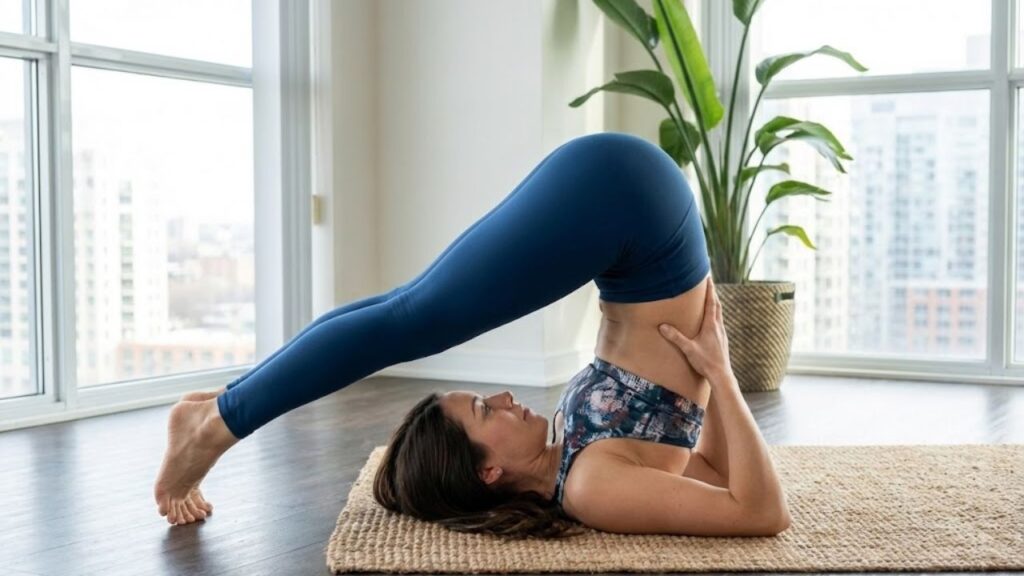
Yoga combines three elements that influence sleep:
✔ Physical movement to reduce body tension
✔ Breath control to calm nervous system activity
✔ Mindfulness to slow down racing thoughts

In today’s fast-paced lifestyle, many people go to bed with:
- tight shoulders and neck
- shallow breathing
- restless legs
- overstimulated brain
Yoga helps shift the body from alert mode to rest mode by:
✔ releasing tension
✔ slowing heart rate
✔ encouraging deeper breathing
✔ creating mental quietness
This makes it easier for the body to prepare for sleep naturally.
Best Yoga Poses for Better Sleep at Night
These poses are chosen specifically for relaxation, not workout intensity:
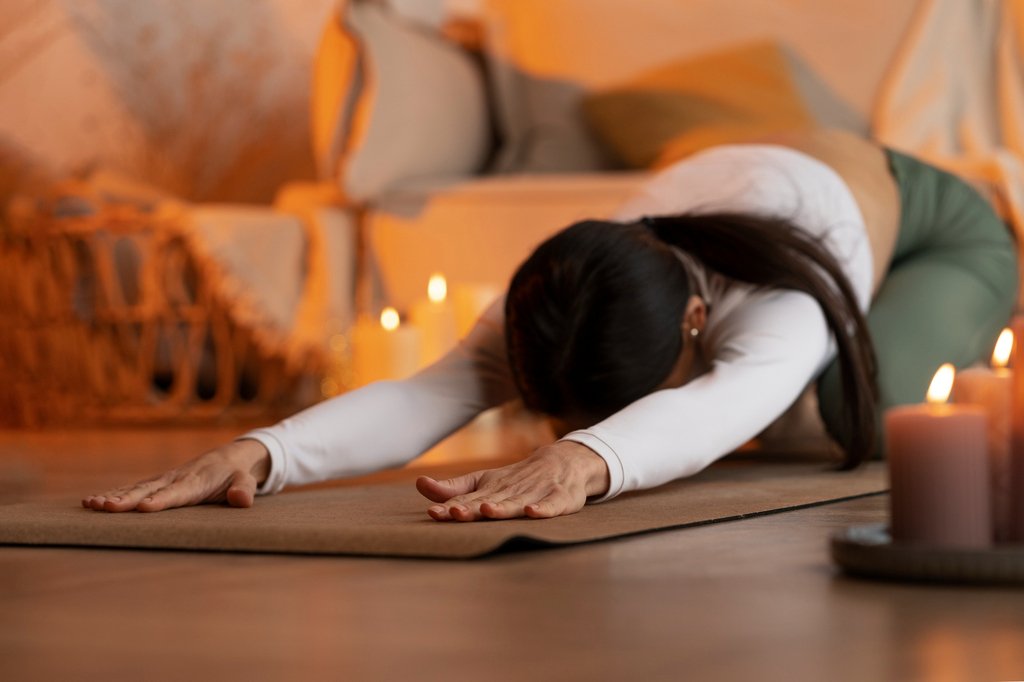
Child’s Pose (Balasana)
Useful for calming the mind and relaxing lower back muscles.
✔ helps reduce tension
✔ supports slow belly breathing
Hold for 1–2 minutes with slow exhalations.
Seated Forward Fold (Paschimottanasana)
A gentle stretch for hamstrings and spine.
✔ encourages stillness
✔ quiets the mind after a long day
Bend knees slightly for comfort.
Reclining Bound Angle Pose (Supta Baddha Konasana)
Opens hips and allows deep relaxation.
✔ supports slow breathing
✔ helps unwind after screen time
Place pillows under knees if needed.
Legs Up the Wall (Viparita Karani)
One of the best restorative poses for sleep.
✔ reduces leg tension
✔ helps blood flow
✔ promotes calming awareness
Stay for 3–5 minutes in silence.
Corpse Pose (Savasana)
Used at the end to transition into stillness.
✔ resets nervous system
✔ quiets thoughts
✔ encourages rest mode
Focus on slow exhale breaths.
Breathing Practices to Calm the Nervous System
Breathing influences stress and recovery.
Slow, controlled breathing activates the parasympathetic (rest & digest) side of the nervous system.
Try these before bed:
Extended Exhale Breathing
Inhale 4 seconds → Exhale 6 seconds.
Longer exhales signal the brain that it’s time to rest.
Belly Breathing (Diaphragmatic)
Place hand on belly → breathe so it rises on inhale, falls on exhale.
Encourages calm and stability.
If you want to learn more breathing techniques, check out our guide on breathing exercises for beginners, which pairs perfectly with nighttime routines.
Nighttime Yoga Routine (10–15 Minutes)
Use this before bed instead of scrolling or watching TV:
- Seated Forward Fold — 1 minute
- Child’s Pose — 2 minutes
- Legs Up the Wall — 5 minutes
- Reclining Bound Angle — 3 minutes
- Savasana — 3 minutes of slow breathing
Keep lights low and screens off during this routine.
Mindfulness Practices That Support Sleep
Mindfulness helps reduce repetitive thinking at night. Try:
✔ focusing on sensation (mat, air, breath)
✔ observing thoughts without reacting
✔ counting slow breaths
✔ scanning muscles from toes to head
These simple practices help the brain shift attention away from anxiety loops.
Helpful Sleep Habits That Make Yoga More Effective
Yoga works best when paired with supportive habits:
✔ consistent bedtime
✔ screen-free last hour
✔ dim lighting
✔ cool & quiet environment
✔ light evening meals
✔ reduced caffeine late in day
Small lifestyle adjustments create big improvements in sleep quality.
Common Beginner Questions
Should I do yoga in bed or on a mat?
A mat is ideal, but gentle poses can be done on a bed.
How long before sleep should I practice?
30–60 minutes before bedtime works well.
Is fast vinyasa yoga good before bed?
Slow restorative poses are better for relaxation.
Can I replace meditation with yoga?
Yoga is a form of moving mindfulness, but both can complement each other.
Do I need to be flexible to start?
No — flexibility develops with consistent practice.
Final Thoughts
Yoga for better sleep isn’t about complex poses — it’s about shifting the body and mind into rest mode.
When combined with slow breathing and mindful awareness, yoga can help create a calm and peaceful transition into nighttime.
Just a few minutes each night can make sleep feel more natural and restorative.