


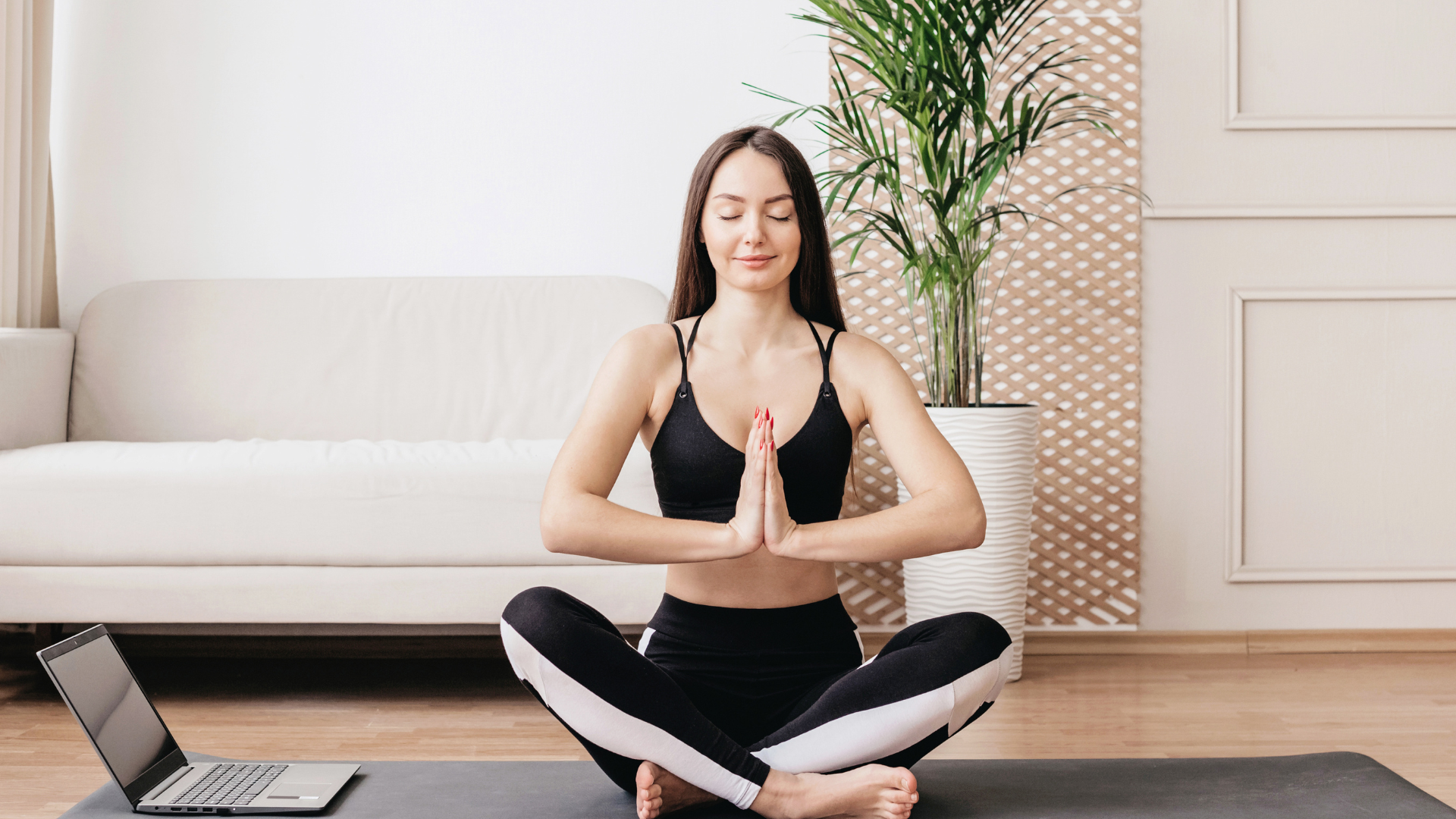


Between busy schedules, constant notifications, and nonstop responsibilities, stress has become part of modern life. Yoga offers a simple way to slow down, breathe, reconnect, and release tension — without needing special equipment or complex routines.
- How Yoga Helps Reduce Stress Naturally
- Mindfulness: The Missing Link in Stress Management
- Best Yoga Poses for Stress Relief (Beginner-Friendly)
- Breathing Techniques to Support Calmness
- Creating a Stress Relief Routine (10 Minutes)
- How Mindfulness Shows Up Off the Mat
- Tips for Beginners
- Common Misconceptions
- Frequently Asked Questions
- Final Thoughts
Whether you’re dealing with work pressure, overthinking, or daily overwhelm, yoga combines movement, breath, and awareness to shift your nervous system from reactive mode to calm mode.
This guide explains how yoga supports stress relief, how mindfulness fits into the picture, and which beginner-friendly poses and breathing techniques you can try at home.
(General wellness content only — not medical advice.)
How Yoga Helps Reduce Stress Naturally
Yoga works on stress through three main pathways:
✔ Movement (Asana) → releases physical tension
✔ Breathing (Pranayama) → regulates nervous system
✔ Awareness (Mindfulness) → improves emotional clarity
Many forms of stress aren’t just mental — they show up in the body as:
- tight shoulders
- stiff neck
- shallow breathing
- clenched jaws
- fast heart rate
Yoga adds balance by encouraging:
✔ slower breathing
✔ smoother movement
✔ steady posture
✔ internal focus
Over time, these encourage the body toward a calmer baseline.
Mindfulness: The Missing Link in Stress Management
Mindfulness means paying attention to the present moment without judgment.
Stress thrives in:
❌ future thinking (what if…)
❌ past replaying (I should have…)
Mindfulness shifts attention to:
✔ breath
✔ sensation
✔ movement
✔ awareness
Yoga is a natural mindfulness tool because you can’t hold a pose, breathe, and check your notifications at the same time — the moment demands presence.
Best Yoga Poses for Stress Relief (Beginner-Friendly)
Here are simple poses that help release physical + mental tension:
Child’s Pose (Balasana)
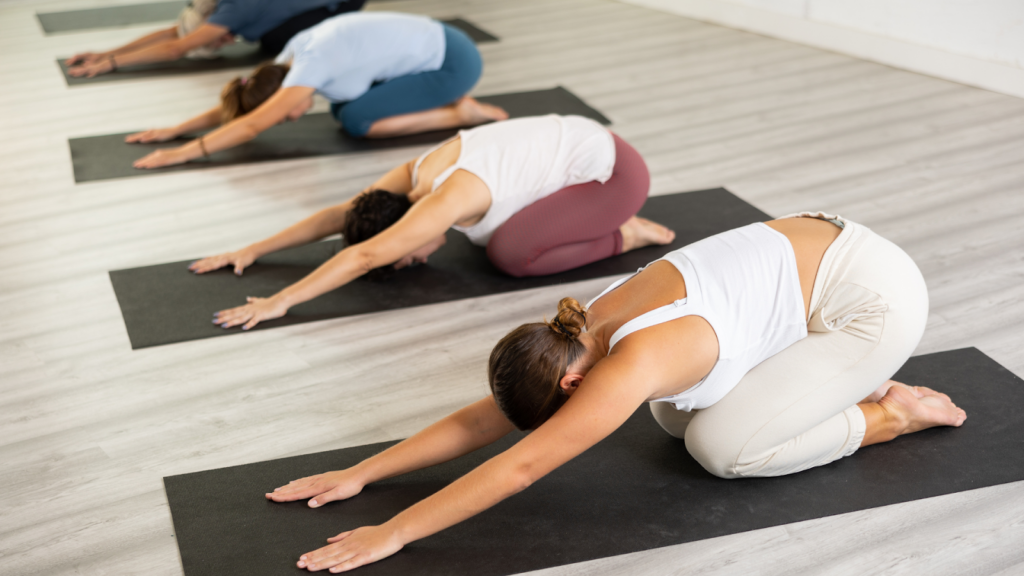
This pose relaxes the nervous system and stretches the back.
Great for: calming the mind during emotional overload.
Forward Fold (Uttanasana)
Gently decompresses the spine and releases hamstring tension.
Great for: soothing busy thoughts and slowing down breathing.
Cat–Cow Flow
Smooth spinal movement loosens stiffness from long sitting.
Great for: releasing neck + shoulder tension caused by stress.
Legs Up the Wall (Viparita Karani)
Supports relaxation by reducing tension in legs and lower back.
Great for: end-of-day restoration & emotional reset.
Corpse Pose (Savasana)
Used at the end of practice to integrate calm and awareness.
Great for: switching off “go-mode” after a stressful day.
Breathing Techniques to Support Calmness
Breath influences the nervous system directly.
Slow breathing signals safety and calm.
Try these beginner-friendly practices:
Box Breathing (4-4-4-4)
Inhale 4 → Hold 4 → Exhale 4 → Hold 4.
Used by athletes and professionals to reduce stress.
Extended Exhale Breathing
Inhale 4 → Exhale 6.
This lengthens the exhale, which encourages nervous system relaxation.
Belly Breathing (Diaphragmatic)
Instead of chest breathing, expand the belly on inhale.
Benefits include:
✔ better oxygen flow
✔ reduced shoulder tension
✔ stabilization for emotions
If you’re new to breathwork, check out our simple guide on breathing exercises for beginners on YogaSniff — a perfect complement to stress-focused routines.
Creating a Stress Relief Routine (10 Minutes)
Try this short after-work or morning routine:
- Cat–Cow (1 minute)
- Forward Fold (45 seconds)
- Child’s Pose (1–2 minutes)
- Legs Up the Wall (3–5 minutes)
- 5 minutes of slow belly breathing
You can add soft music, dim lighting, or candles for a more calming environment.
How Mindfulness Shows Up Off the Mat
Yoga doesn’t just help during the practice — you begin to notice changes outside it:
✔ calmer reactions to stress
✔ improved focus
✔ slower breathing under pressure
✔ more awareness of posture
✔ better emotional clarity
✔ reduced digital overload
These happen gradually through consistent practice.
Tips for Beginners
✔ consistency > intensity
✔ avoid forcing deep stretches
✔ practice in a quiet space
✔ remove phone distractions
✔ use a mat or towel for comfort
Even 5–10 minutes per day can create noticeable differences over time.
Common Misconceptions
“Yoga is only physical stretching.”
Reality: it includes breath and awareness — key stress tools.
“I need to be flexible first.”
Reality: you get flexible through practice, not before.
“I need an instructor to start.”
Reality: beginners can start at home with simple routines.
Frequently Asked Questions
How often should I practice yoga for stress relief?
3–5 times per week works well for beginners.
Can yoga replace meditation?
Yoga includes a form of moving meditation, but seated meditation can be added if desired.
Is yoga or running better for stress?
Both help differently — yoga focuses on breath + awareness, running on endorphins + energy release.
Are fast flows or slow flows better for stress?
Slow flows and restorative poses tend to be better for calming the nervous system.
Final Thoughts
Yoga for stress relief isn’t about perfect poses — it’s about creating a pause in your day where movement, breath, and awareness work together.
If stress has become a daily companion, yoga offers a simple, accessible way to reconnect with your body, settle your mind, and build resilience over time.
Even a few quiet minutes on the mat can make a noticeable difference.
