

Lower back discomfort has become one of the most common issues in modern life — especially for people who:
- How Yoga Helps Support the Lower Back
- Best Beginner Yoga Poses for Lower Back Tightness
- Beginner Routine for Lower Back Comfort (10 Minutes)
- Breathing Support: Why It Matters
- Common Beginner Mistakes to Avoid
- Lifestyle Habits That Support Back Comfort
- Is Yoga Enough by Itself?
- Who Should Be Careful?
- Frequently Asked Questions
- Final Thoughts
✔ sit for long hours
✔ work at desks
✔ drive frequently
✔ use screens daily
✔ have tight hips or hamstrings
Yoga provides a gentle, accessible way to improve mobility, relax tight muscles, and build awareness, without needing heavy equipment or expensive sessions.
This guide explains how yoga supports lower back comfort, the best beginner poses, common mistakes, and how to build a simple routine safely at home.

(Note: This is general wellness info, not medical advice.)
How Yoga Helps Support the Lower Back
Yoga isn’t just stretching — it combines:

✔ controlled movements
✔ gentle strengthening
✔ breathing
✔ posture awareness
All of these support the lower back by addressing contributors like:
- tight hamstrings
- stiff hip flexors
- weak glutes
- rigid spine
- poor sitting posture
Improving mobility around the back often leads to better day-to-day comfort.
Best Beginner Yoga Poses for Lower Back Tightness
Here are beginner-friendly poses you can do at home:
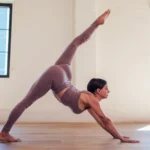
Child’s Pose (Balasana)
This gentle forward fold:
✔ relaxes lower back muscles
✔ stretches spine
✔ calms nervous system
Hold for 30–60 seconds, breathing slowly.
Cat–Cow Flow
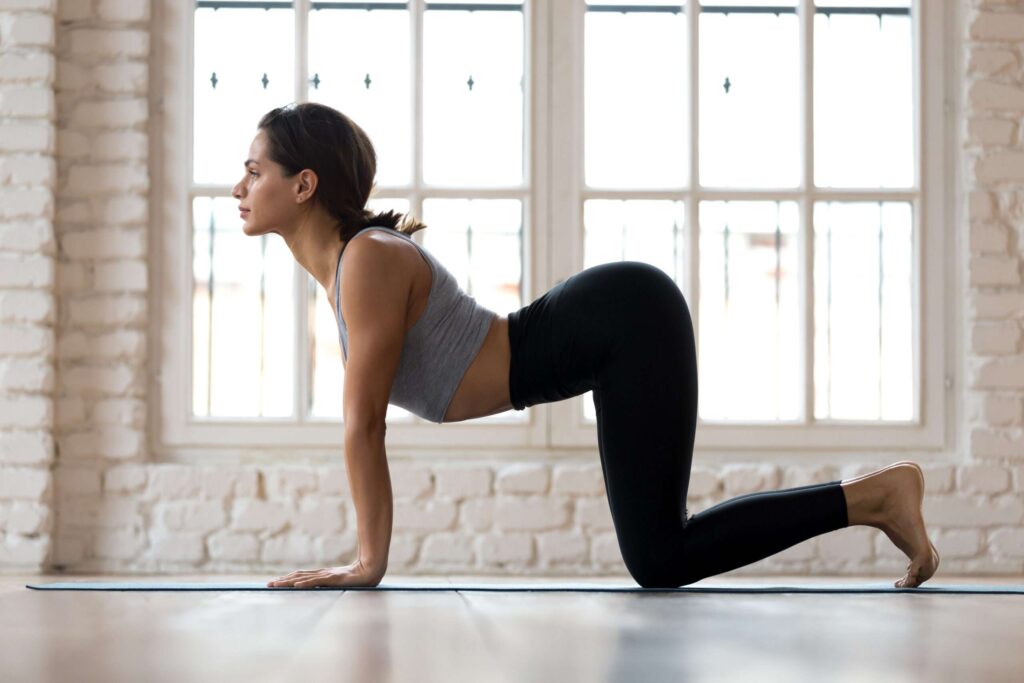
This simple warm-up movement:
✔ lubricates spinal joints
✔ increases mobility
✔ reduces stiffness from sitting
Do 10–15 slow repetitions.
Knee-to-Chest Stretch
While lying on your back, hug one knee in toward the chest.
This movement:
✔ stretches glutes
✔ releases lumbar tension
✔ reduces morning stiffness
Hold for 20–30 seconds each side.
Supine Spinal Twist
This gentle twist:
✔ opens side body
✔ relieves lower back pressure
✔ improves rotational mobility
Keep both shoulders grounded during the twist.
Bridge Pose
Unlike pure stretches, Bridge strengthens:
✔ glutes
✔ hamstrings
✔ lower back
✔ core
Strength + mobility = better lower back support.
Beginner Routine for Lower Back Comfort (10 Minutes)
Use this simple sequence if you want to feel better before or after sitting long hours:
- Cat–Cow (10 reps)
- Child’s Pose (1 minute)
- Knee-to-Chest (30 sec each side)
- Supine Twist (1 min each side)
- Bridge Pose (8–10 reps)
- Child’s Pose (final 1 minute)
No equipment required — just a mat or carpet.
Breathing Support: Why It Matters
Breathing affects tension in the lower back because when stress increases:
- breathing becomes shallow
- shoulders tense
- lower back tightens
Slow diaphragmatic breathing encourages:
✔ muscle relaxation
✔ nervous system regulation
✔ better movement quality
If you’re new to breathwork, explore our simple guide on breathing exercises for beginners on YogaSniff — it pairs perfectly with lower back routines.
Common Beginner Mistakes to Avoid
These are easy to fix:
❌ Forcing deep stretches
❌ Holding breath during poses
❌ Collapsing lower back in forward folds
❌ Skipping warm-up movements
❌ Comparing flexibility with others
Remember: Gentle and consistent beats deep and painful.
Lifestyle Habits That Support Back Comfort
Yoga is powerful, but daily habits matter too.
Helpful adjustments include:
✔ using laptop at eye level
✔ standing up every 45–60 minutes
✔ switching between sitting & standing
✔ avoiding wallet in back pocket when sitting
✔ sleeping with pillow support under knees (if needed)
Small habits often create big relief.
Is Yoga Enough by Itself?
Yoga supports lower back comfort by:
✔ improving mobility
✔ strengthening support muscles
✔ reducing tension
✔ building posture awareness
But it works even better when combined with:
- walking
- hydration
- ergonomic adjustments
- stress reduction
It’s not about doing one big thing, but about many small helpful things consistently.
Who Should Be Careful?
Yoga is generally safe for most beginners, but anyone with:
- recent injury
- intense pain
- numbness
- professional diagnosis
…should consult a qualified provider for personalized guidance.
This blog provides general wellness info, not medical advice.
Frequently Asked Questions
How often should I do yoga for lower back comfort?
3–5 times per week works well for most beginners.
Is stretching enough for back pain?
No — strengthening muscles also helps support the spine.
Can yoga replace physical therapy?
Yoga helps general mobility, but therapy is for specific medical conditions.
Is it normal to feel stiffness in the morning?
Yes — the spine absorbs fluid overnight; movement helps release tension.
Should I avoid forward folds?
Deep folds may add strain — bending knees slightly often feels better.
Final Thoughts
Yoga for lower back relief isn’t about extreme flexibility — it’s about:
✔ gentle movement
✔ coordinated breathing
✔ mindful strengthening
✔ consistent habits
If you’re sitting a lot, scrolling on phones, or working long hours, even 10 minutes a day can make your lower back feel noticeably better.